19.12.18

DEAN FORD - This Scottish Heart


After The Beatles and the acts on the same show at Bradford in December, 1963, and The Rolling Stones at Nelson Imp eight months later, the next professional group I ever saw on stage was The Marmalade, at a dance in Bingley in 1967, at a college for student nurses if I remember rightly. The big difference between The Beatles and the Stones and The Marmalade was that I could actually hear The Marmalade.
         They were a top quality covers band in those days and at the time I was playing in a covers band myself, Sandra & The Montanas, based in the village of Cross Hills, near Skipton where I lived. I couldn’t help but notice how much better than us The Marmalade were; more professional, tighter, better instrumentalists, better vocal harmonies, better rehearsed, better equipment, better everything really. Their singer, in the middle, was a dapper little chap in a blue mohair suit with a Beatles fringe, and he looked and sounded very confident. Lots of young nurses were eyeing him up. For some reason, I remember they played a great version of ‘Stop In The Name Of Love’, by The Supremes, a song I loved at the time and which I wanted the Montanas to cover. I also remember thinking that if a band as competant as this had yet to release records, then my Montanas were unlikely to get anywhere and I might as well hang up my guitar.
         The Marmalade were in the charts a year later, however, with a catchy song called ‘Lovin’ Things’, a cover of a song by California’s Grass Roots who included songwriter PF Sloan among their number, and then they hit number one with a timely cover of The Beatles’ ‘Ob-la-di Ob-la-da’ from the just released White Album. In 1969 they released their best song ever, ‘Reflections Of My Life’, which was written by left-handed guitarist Junior Campbell, who seems to have been the group’s most naturally gifted musician, and the singer, Dean Ford, whose real name is Thomas McAleese. Featuring a lovely little muted guitar solo that is slightly out of phase, ‘Reflections…’ is one of those timeless pop hits by largely forgotten bands that have clung to me forever, gorgeous little one-off pop songs I never tire of hearing, like ‘I Can’t Let Maggie Go’ by Honeybus and ‘(If Paradise Is) Half As Nice’ by Amen Corner. I download them on to playlists that I listen to in my car or when I’m walking my dog.
         Although they had a few more hits, among them the folksy ‘Rainbow’, like ‘Reflections...’ a UK number three, Marmalade were starting to stumble by the time I reached Melody Maker in 1970. They were slipping out of fashion, a bit too swinging sixties, in an era when all we wanted to write about were blazing comets like The Who and Led Zeppelin, or prog bands like Yes and Genesis, or futurists like Bowie and Roxy, or glam rockers like T. Rex and Slade. I think I may have encountered some members of The Marmalade in La Chasse Club on Wardour Street but I didn’t get to know them. Members came and went from the early seventies onwards, and thereafter their family tree got a bit untidy.

The Marmalade in 1968, left to right: Graham Knight, Alan Whitehead, 
Junior Campbell, Dean Ford and Pat Fairly.

         After leaving the group in 1972 Campbell studied composition at the Royal College of Music and went on to become a successful writer and producer; second guitarist Pat Fairly went to LA to open a bar there; Dean Ford struggled to establish a solo career and subsequently also moved to LA; Graham Knight, who played bass, and drummer Alan Whitehead battled on for a while with new members, and eventually Whitehead, one of the first pop musicians to accept tabloid cash for a lurid ‘a different girl every night on the road’-style exposé of pop’s dark sex secrets, quit to go into management and run lap dancing clubs. If Wikipedia is to be believed 14 other members were in and out of the group in later years, among them Dave Dee of Dozy, Beaky, Mick and Tich fame, who took over on vocals for a while, and Hugh Nicholson who left to form Blue which was signed to Elton John’s Rocket Records.
         The fortunes of former pop stars in groups like Marmalade – they dropped the definitive article along the way to appear more fashionable – often make depressing reading. They are contingent on whether or not they clung on to whatever they earned during their heyday, which is rarely the case, and whether or not they wrote the songs and, if they did, managed to retain control of their music publishing. As it happens Pat Fairly looked after the group’s publishing for a while and it is probably thanks to him that Dean Ford, as the co-writer of ‘Reflections…’, managed to stay in the black while pursuing an unproductive solo career in California that was hampered by alcoholism. He eventually joined AA and became dry by the early nineties. In the meantime ‘Reflections…’ had gone on to sell over two million copies worldwide and earn its two writers a citation from BMI, the American performing rights collection agency.
         All of this would not have concerned me were it not for Dean’s collaboration with Joe Tansin, who played guitar in an eighties line-up of Badfinger, another group whose music I like a lot but whose fortunes read like a horror story. Badfinger’s tireless biographer and cheerleader is LA-based Dan Matovina whose 1997 book Without You: The Tragic Story of Badfinger – available only for £100 or more on Amazon nowadays – I edited many years ago. Dan has now become Dean Ford’s producer for this new and ambitious double CD set of mostly original songs by Dean, a sort of journey through life that delves into his Scottish past and looks back nostalgically at a life that has seen more than its fair share of ups and downs. Dan sent me the CD a couple of weeks ago and I’ve been listening to it on and off ever since.
         There are 30 songs on This Scottish Heart, most of them mid-paced and in tranquil keys that sit easily on the ears, some of them in country mould, others with hint of Scottish tradition – there are no bagpipes! – and still more with a driving, boogie rock’n’roll tempo. A handful of the songs are sprinkled with a dash of the faith that has no doubt sustained Dean after his brush with alcoholism.
         The opener ‘A New Day’, an affirming reflection of his battles with the bottle, sets the scene, with programmed drums, electric and acoustic guitars – all played by Dean – and a keening, soulful vocal. ‘Glasgow Night’ is a meditation on a distant but unforgotten night of passion, ‘Bonnie Mary’ his thoughts on the Queen of Scots, ‘Buddy, Roy and Dion’, a tribute to his heroes from the first wave of rock’n’rollers. ‘Nineteen Fifty Three’ is about the time Queen Elizabeth II, newly crowned, visited Glasgow with young Dean – or Thomas – out there in the streets with his mum and dad. ‘Left My Heart In Mexico’, a distant cousin of Lowell George’s ‘Cheek To Cheek’, conjures up the mood south of the border, ‘Dreamland’ is a soothing lullaby and a couple of songs, ‘This Scottish Heart’ and ‘Made In Scotland’, assert Dean’s Scottish roots, as does ‘For McDougal’ which sounds like a requiem for an old friend. Perhaps the most unusual is ‘He’s An Angel’, a homage to the artist Keith Haring, ‘a subterranean wonder boy’, set to the nearest thing on the album to a funky beat.
         Fittingly, the set ends with a newly recorded version of ‘Reflections Of My Life’, with Dean leading on harmonica before sturdy acoustic guitar chords take over and the vocals come in, as strong as they were back in 1969 when I first heard this lovely, albeit rather melancholy, song. At times despairing – ‘This world is a bad place’ – yet finally inspiring – ‘I’m changing… take me back home’ – ‘Reflections…’ seems to sum up not just the record as a whole but Dean’s introspection as a man of his time. 
         This Scottish Heart is a brave, poignant and unquestionably heartfelt set of songs from a man who seems at peace with himself as he looks over his shoulder and, perhaps, considers it a bit of a miracle that he’s still here, and still able to sing and play his guitar with the same measure of confidence that I recognised back in that nurses’ college in Yorkshire more than five decades ago.
          

11.12.18

SIR CLIFF RICHARD: 60 YEARS IN PUBLIC AND IN PRIVATE


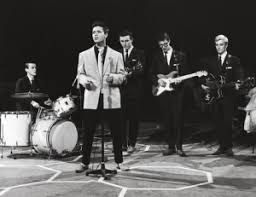
Cool Cliff (nicked from the internet)

Much as I sympathise with Cliff Richard for the shabby treatment he received at the hands of the BBC and Yorkshire Police, I cannot help but think that to some degree he brings his troubles on himself. Set yourself up as a paragon of virtue, as he’s done ever since he made public his Christian beliefs in the mid-sixties, subsequently allying himself with Mary Whitehouse’s moral crusade, and some will seek to claim otherwise. The more you insist on secrecy in your private life, the more some will seek to unlock its secrets. It’s the price of being a celebrity and if you don’t like it, then tough shit – you’ve got millions in the bank, a big house or two and a Roller in the drive, so live with it.
         All of this occurred to me as I watched Sir Cliff Richard: 60 Years In Public and In Private on ITV the other night. In reality it was 60 minutes of obsequious flattery – ‘hagiographic fluff’, as Lucy Mangan called it in The Guardian – designed to promote his new album but the BBC business gave it an angle that was threaded through the film in such a way that, as his story from the Fifties to the present was told, we were brought back to it again and again, largely through interviews with his supporters who expressed their abhorrence at what happened, and Cliff himself who tried very hard to be as generous as he could about it but was clearly equally indignant, as he has every right to be.
         Some interviewees, among them the music journalist Steve Turner and a former ‘Fleet Street editor’, seemed to agree with me, suggesting that Cliff’s eternal bachelor status inevitably leads to suggestions that he might be gay, which may or may not be true, but if he is then this doesn’t chime too well with his religiosity so he’s keeping mum. His live-in companion, we were told, is a retired Roman Catholic priest, so perhaps he’s been minded to take a vow of celibacy. Or perhaps not. Perhaps he keeps a harem of concubines in the Portuguese villa where he tends his vineyards. We’ll never know because he refuses to say, and the longer he refuses to say the more the speculation will continue.
         I am not a fan. I belong to the school of thought that believes Cliff hasn’t improved on ‘Move It’, the first single he ever recorded back in 1958, which was absolutely tremendous and remains, as one of the interviewees – I think it was the erudite Paul Gambaccini – said, ‘the best British rock’n’roll record until The Beatles came along’, or words to that effect. That’s true. Ernie Shear’s guitar intro was a gem, and when Cliff comes surging in on the last line of the first verse – ‘Let me tell you baby it’s called rock and roll’ – it’s as good as anything the Americans were coming up with. Furthermore, the message in the lyrics suggested the cool-looking singer in his white jacket, black shirt and white tie really did have faith in the power of rock. Unfortunately, though the follow-ups ‘High Class Baby’ and ‘Mean Streak’ weren’t bad, the rot set in with record number five, ‘Living Doll’, his first number one, beloved of Andrew Lloyd Webber we learned, and from then on Cliff changed his apparel and set his sights on that dreaded objective, becoming an all-round entertainer, exemplified in this show by an appearance in a pantomime. Thereafter his output descended into North European schlager (‘Bachelor Boy’, ‘Congratulations’, etc), sentimental balladry (‘The Minute You’re Gone’, ‘Miss You Nights’, etc) or God-fearing piety (‘Saviour’s Day’, ‘The Millennium Prayer’, etc), none of which are to my taste. 
         It could be argued, of course, that Elvis did the same when he came out of the army, but at least he left us four or five albums of decent stuff, as heard on the 50’s Masters box set, and he partially redeemed himself with the Memphis sessions in 1968 and ’69. For my money, Cliff’s only subsequent records of merit have been ‘Devil Woman’ in 1976 and ‘We Don’t Talk Anymore’ three years later, unless I’ve missed something which is quite possible as I gave up on him long ago.
         He certainly has a loyal fan base, mostly ladies of a certain age who don’t seem to see the irony in singing along to ‘The Young Ones’, as ghastly a song as he’s ever recorded. Cliff is now a cottage industry in this regard, a cult in a way, set apart from the mainstream music industry insofar as his records and tickets to his concerts can be marketed direct to this fan base without the need to engage with the public at large. Cliff gave the impression he’d like to expand on this, but it doesn’t really matter, not now. He’s 78 after all, but he still plays tennis.
         I am absolutely certain that whatever it was that motivated Yorkshire Police to raid his Surrey home four years ago was based on a pack of lies. He was innocent of whatever it was that someone suggested he did, and the BBC were way out of order in covering the raid in the grotesque manner they did, a dreadful, albeit uncharacteristic, lapse in editorial judgement for which they have rightly been censored. But, gee whizz, Sir Cliff Richard: 60 Years In Public and In Private didn’t half ladle on Cliff’s virtuousness thick. It was even felt necessary to point out that when Cliff generously donated a case of his vintage wine to the doormen at Wimbledon, the bottles would not be opened until they were off duty. Of course not.

5.12.18

SCRIBBLERS, PLUCKERS, THUMPERS & SQUAWKERS


By virtue of my longstanding friendship with Keith Altham, one of the UK’s longest serving music writers and PRs, I have been attending these lunches at the Bull’s Head in Barnes – the Scribblers, Pluckers, Thumpers & Squawkers (Writers, Guitarists, Drummers & Singers) Club – for about a dozen years now. As Lesley-Ann Jones relates above the pictures on my FB page, they began in a small way with Keith at the helm, then grew as others took over the admin, John Pidgeon followed by Ed Bicknell and now LAJ herself, assisted by David Stark and Rab Noakes. They take place twice a year, one in summer and the other in early December, and yesterday someone told me that the waiting list now runs to over 200. The only way get on it is for a regular to die, a bit like the MCC but probably more fun and there’s no dress code.
         The only rule is to leave your ego at the door. In this way those attendees who’ve made a bit of a name for themselves in the world of music are the equals of those who haven’t. In times past Bill Wyman was a regular but he seems to have dropped out, and I seem to recall Roger Daltrey joining us a decade ago. Noddy Holder is a regular, though he hasn’t showed for the last two, but his old drummer – sorry thumper – colleague Don Powell never misses. Reg Presley was a regular until he left us, and we are usually joined by a couple of Shadows, Bruce Welch and Brian Bennett, and three other drummers from the thumpers Hall of Fame, Clem Cattini, late of The Tornados and many more, Rob Townsend of Family, and John Coughlan from the Quo. As a surprise for Clem, LAJ once brought along his old Tornados guitarist pal George Bellamy who brought his son, Matthew, of Muse, probably the biggest ‘young’ star we’ve ever had.
         At first it was an all-male affair. Then I recall that Sandie Shaw once turned up as an honoured guest, which delighted me because Sandie was the first pop star of note that I ever met, back in Bradford in 1968 when she was modelling fashions for a mail-order clothing company based there. As the pop correspondent on the local paper, the Telegraph & Argus, I was assigned to cover her arrival in the city. She was very tall indeed and wore shoes, and quite lovely too. She didn't remember me. 
         But back to Barnes. Sandie opened the floodgates in a way and now the female contingent, all of whom dress exquisitely, number about 25% of us. There are some singers – yesterday we welcomed Madeline Bell, no less, along with the Lewis sisters, Linda, Shirley & Dee, Mari Wilson and Suzie Quatro, who’s become a regular – a couple of glamorous Quo wives, Patty Parfitt & Gillie Coughlan, writers, like my old friend Pauline McLeod, who was on the Daily Mirror when I was on MM, LAJ herself, and PR Judy Totton, who told me she’s working on Joe Brown’s forthcoming tour – and Joe will be 78 next May.
         Frank Allen of The Searchers has been an attendee for longer than I have, and I was saddened to learn yesterday that after a 60-date UK tour that takes place next January, February and March, The Searchers will finally retire, thus bringing a close to a career that began in 1959. “The two hours on stage is still magic,” said Frank. “It’s the travelling we can’t handle any more.”
         Tich (aka Ian Amey), of Dave Dee, Dozy, Beaky, Mick & Tich, is still a regular though his boss, who once graced us with his boisterousness, left us in 2009. Rab Noakes, who now brings his guitar, is another long-standing member, along with singer Billy Nicholls and Mo Foster, who’s played bass on more records than he’ll ever remember, and who once wrote a great book called 17 Watts, all about the gear British would-be rock stars were obliged to suffer before Fenders and Gibsons arrived on these shores. Another regular bassist who joins us is the affable Tom McGuinness, late of Manfred Mann and many others. Yesterday we were joined by Blue Weaver, late of Amen Corner, who played keyboards for The Bee Gees for many years. It was nice to be able to tell him that ‘(If Paradise Is) Half As Nice’ is still of my favourite singles. 
         We also welcomed a couple of DJs, Andy Peebles and Paul Gambaccini, whom I’ve known since he used to be Rolling Stone’s London correspondent back in the '70s, which brings me to my writer friends, John ‘Bizarre’ Blake, his former colleague David Hancock from the Sun and Mirror, Gavin Martin and Chris Salewicz from NME, Phil Sutcliffe from Sounds, the acclaimed author Philip ‘Shout’ Norman, who’s at present working on a book about Jimi Hendrix, and my old MM colleague Chris Welch, next to whom I sat yesterday and, as ever, wallowed in nostalgic reminiscences from the time we sat next to one another in MM’s Fleet Street office.
         Simon Napier-Bell who, on handing over the management of The Yardbirds to Peter Grant famously advised him to fire Jimmy Page because he was a troublemaker, turned up yesterday, having evidently flown in especially from South East Asia. Another hi-octane manager who always joins us, of course, is Ed Bicknell, who managed Dire Straits after a career in the music business that began as the drummer for pop star Jess Conrad way back when. Ed took over the running of the event from the dear departed John Pigeon and, after inaugurating a tradition whereby the names of those in music, performers or otherwise, who’d left us in the last six months are read out, always lightened the mood with a few hilarious stories from his past.
         So I’ll end this little report with one of those, one that I’ve repeated many times now, with apologies to Ed. In 1988, as some may recall, a Nelson Mandela 70th Birthday Tribute Concert was held at Wembley Stadium, and amongst the many star names taking part were Dire Straits and Whitney Houston. Sometime during the course of the day word was passed to Ed that Whitney wished to meet Mark Knopfler with a view to him perhaps playing on a track on her next album. The meeting was duly set up and La Houston arrived at the DS backstage caravan. Amiable conversation ensued during which Mark advised Whitney of his willingness to contribute, it being decided that the details would be confirmed soon through Ed and Whitney’s ‘people’. Just as Whitney was leaving, however, things took a turn for the surreal. “I can’t wait to see Nelson,” she said. “I’ve got all his albums but I’ve never seen him live.”
         No surprise, perhaps, that Mark didn’t contribute after all.
         Apologies to anyone I’ve forgotten to mention. Like all of us, I’m looking forward to the next luncheon immensely, and as ever am grateful to LAJ, David and Rab for their efforts in assuring a splendid time is guaranteed for all.