3.2.22

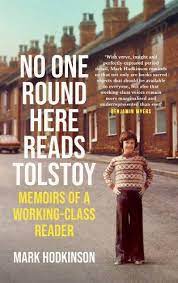
NO ONE ROUND HERE READS TOLSTOY: Memoirs Of A Working-Class Reader by Mark Hodkinson


This is a book about books, acquiring them, reading them, learning from them, collecting them, reviewing them, publishing them, selling them and even loathing them when it’s necessary to recycle piles of unsold ones. Mark Hodkinson, newspaper reporter turned music writer turned football correspondent turned novelist, has written a love letter to them, for they have shaped his life, hauling him from a book-free upbringing to his present home, which he shares with no less than 3,500 of them. 

        I have known Mark since 1989, when I commissioned him to write a biography of The Wedding Present, the Yorkshire band led by David Gedge. Thank Yer, Very Glad was published a year later and I was sufficiently impressed by his work to ask Mark to write several more books for Omnibus Press. They were an eclectic bunch – Marianne Faithfull, Simply Red, Springsteen, Prince and Queen’s early days – and I soon realised that Mark was a bit different from most writers I hired. It wasn’t just his emerging literary skills or willingness to get stuck into fairly deep research, more a sense that his ambitions went quite a bit further than rock biographies or even the football reports and related features he wrote for The Times. No, Mark sought a higher calling, to become a novelist, and to write literary fiction at that, to join the club that included those writers he most admired, the ones from working-class backgrounds similar his own who brought harsh lives to the page and, through their fiction, exposed injustice brought about by systems of government that all too often rewarded those already privileged. 

        This thinking – and these kinds of books – inform No One Round Here Reads Tolstoy, its title an observation uttered to him one day by the proprietor of a second-hand book shop in his home town of Rochdale, where he still lives. Part autobiography, part idiosyncratic literary criticism, part primer to the world of book publishing, its principal message is that even if the house in which you were raised contained only one book you can rise above inbred apathy with imagination and persistence. In Mark’s case the one book his parents owned was a leather-bound volume of questionable merit called Folklore, Myths, and Legends of Britain. “Dad treated it with reverence,” writes Mark, “keeping it on top of the wardrobe with other items of great worth such as their wedding album and my Cycling Proficiency Certificate.” Mark’s book is chock-full of droll memories like that, and often had me chuckling, not least when he enters the world of local journalism, a field I know from long ago.

        Running parallel to Mark’s journey – the kind of word he despises, by the way – is the story of his grandpa, John Duffy, whose descent into dementia is movingly told, all the more so for its lack of sentimentality. We are left in no doubt, however, that in moments of clarity John, a born storyteller, influences his grandson not so much to find a life beyond the grim backstreets of fading Lancashire towns but, more importantly, to discover a better life within them. 


        The bulk of the narrative follows Mark’s progress from school, where the education system deems him suitable only for manual work, through the hurdles he leaps on the way to reporters’ offices at various northern newspapers, and to Omnibus Press, where our lives become briefly intertwined. In the meantime, he’d discovered music, fallen for The Smiths, bought a guitar and formed a band that once memorably supported The Stone Roses. All the while, though, he’s seeking out books, more and more books, mostly old, reading them and forming opinions about their authors. It comes as no real surprise that JD Salinger’s Catcher In The Rye exerts a powerful influence, along with the social realism of the ‘kitchen-sink’ writers like Barry Hines, Alan Sillitoe, Shelagh Delaney and many more.

        Neither does it come as a surprise when he forms his own book publishing company, Pomona, a risky undertaking at the best of times, and though Mark’s heart is in the right place in regard to the type of books he wants to publish, including his own, there’s an element of noble idealism about the enterprise. He reprints books by some of his favourite writers whose work has gone out of fashion – and, unfortunately for him, remains so – and comes up against harsh reality when the one book that might make his fortune – a biography of JD Salinger that, fortuitously, coincided with his death – attracts problems not unconnected with greed that oblige him to relinquish valuable US rights. His wry, often comic and always sincere observations about the authors he meets through Pomona and elsewhere are a highlight of the later chapters, along with some carefully researched facts and figures about the future of the book trade. Like me he loathes Kindle. 

        Mark is now a respected novelist himself*, with many admirers in the sphere of literature. This pleases me immensely, not just because I played a small part in it but, more importantly, because he deserves it. In No One Round Here Reads Tolstoy he has written a wonderful, beautifully sculpted, heartfelt book about climbing a ladder to that place he loves the most, a comfy armchair in which he can lose himself in the imaginary world of a printed page. 

______

*Among them The Last Mad Surge Of Youth, about a fictitious rock star, reviewed here: http://justbackdated.blogspot.com/2014/03/the-last-mad-surge-of-youth-by-mark.html

26.1.22

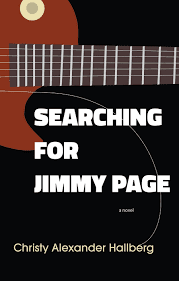
SEARCHING FOR JIMMY PAGE, a novel by Christy Alexander Hallberg


From the mid-sixties onwards, British groups touring America welcomed the attentions of free-spirited girls who hopped into their beds to ease the strain of being far from home in a foreign land. It was, I suppose, one of the perks of the job and it’s surely not unreasonable to suppose that during the early years of this touring era, when reliable birth control was not readily accessible to single women, such liaisons resulted in a few births to mothers who opted to keep the identity of the father to themselves. 

This is the premise on which Christy Hallberg has created her book, a coming-of-age tale about a go-getting girl from a redneck background in North Carolina called Luna. Just before she died, gratuitously violently by her own hand, Luna’s mother Claudia gave her daughter ambiguous reason to believe that her father might be Jimmy Page, a suggestion given credence by Claudia’s fondness for Led Zeppelin’s music and a photograph of Page, all in white with raven-black curls, she hung over her bed. This happened when Luna was quite young and now, having turned 18, she resolves to embark on a quest to discover the truth behind her mother’s claim, a voyage of discovery that takes her from the far-from-idyllic American home she shares with her grandparents to London, where she seeks out the former Zep guitarist – but I’ll stop there so as not to spoil the ending for anyone who might care to read the book for themselves. 

It’s very melodramatic, a rather spooky tale which, like the aura surrounding Led Zeppelin and their music, strays into areas of mysticism, tarot cards and scary things that happen at night beneath a full moon, with screeching owls and old men who stoop like the wood-gathering hermit on the cover of Led Zeppelin IV. The name Luna, of course, is a bit of a give-away. 

As you would expect, the story is liberally seasoned with references to Led Zep, carefully researched biographical details, song titles for its four parts, plus a Coda, but no lyrics, of course, lest copyrights are infringed, a bit of a sensitive issue these days what with that business over the origin of the descending arpeggios that introduce ‘Stairway To Heaven’. 

        Set in 1988, the book follows Luna from America to the UK where the story picks up pace and becomes more engrossing. She visits Page’s homes in London, hanging around outside Tower House in Holland Park, and also Windsor, where she glimpses Page’s then pregnant wife Patricia. She even takes trips to Rushock, where she nicks whiskey bottles from John Bonham’s grave, and to Headley Grange, the former workhouse in Hampshire where much of Led Zeppelin IV was written and recorded. Now a private home, she is invited inside by its owner, ‘A distinguished-looking gentleman with sprigs of grey hair around his temples… a tall, reedy man, tidy and austere, his navy cardigan buttoned to the neck, his khaki trousers smartly pressed. “You’ve come to see the stairway, haven’t you?” he asked.’

         Impressed by the detail and accurate Zep research, I felt these were the book’s strongest scenes. 

        ‘Four Sticks’, the song about owls crying in the night, is a recurring theme, along with Luna’s aspirations to become a writer, all of which suggests an element of autobiography, it being assumed that the author is a die-hard Zep fan who in researching her book has visited the locations mentioned in her story. 

It’s an intriguing scenario with intriguing characters, stylishly written. Luna’s a bit of a misfit, bullied by more conservative peers, her only friend a coloured girl called Connie, and her need to exist outside of conventional society is reflected in the Mohican hairstyle she adopts for the trip. She’s also a bit careless, which leads her into financial difficulties, but she’s rescued by a bisexual London boy who works at the hotel in which she stays and becomes her friend and guide.

Searching For Jimmy Page is not fan fiction per se – Page himself appears only briefly and doesn’t speak – and the book pays no homage to anything previously published. Instead, it uses the mythology of Led Zeppelin as the landscape for a novel about one woman’s need to discover the truth about who she is and where she came from, a not uncommon scenario in literature old and new. Not overly long, it is slightly let down by substandard production, probably for reasons of economy, but Zep fans will love it. 


25.1.22

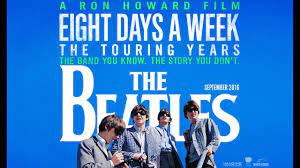
THE BEATLES: EIGHT DAYS A WEEK – THE TOURING YEARS


First released in 2016, this movie grabbed my attention last week when it was shown on Sky. Although much of the footage is familiar from other Beatles documentaries, authorised or otherwise, it was the first time I’d watched the whole 97 minutes, and what a gas it was.

        It’s incomprehensible nowadays to watch the chaos The Beatles caused across those countries in which they performed at the height of their extraordinary popularity. Through no fault of their own, other being themselves, they were responsible for massive, industrial-scale upheavals at airports, in city centres and whenever and wherever they appeared on stage (or off, if fans got to hear about where they happened to be). It was dangerous too, a miracle there wasn’t a fatality amidst the turmoil that followed The Beatles everywhere they went.   

        In the 21st century it’s no doubt possible to fake this kind of thing or, at the very least, to edit in footage from elsewhere in order to create an illusion, to manufacture the scenes so as to exaggerate the situation. But this wasn’t faked. Those scenes really happened. It was on the news and on the front pages, almost daily during 1963 and 1964. Hundreds, if not thousands, of girls from the age of 12 upwards really did become wildly hysterical if they caught a glimpse of them. The level of mayhem inspired by John, Paul, George and Ringo far and away outstrips anything that has occurred since for any other act, group, boy band or solo singer, that has followed in their wake over the past 60-70 years. Everything else, from The Monkees to One Direction, is simply tame by comparison.

        The film benefits from the presence of Larry Kane, the only broadcast journalist to travel with The Beatles on their US tours in 1964 and 1965. Kane was told by his superiors not to bother, that The Beatles would be forgotten about in six months’ time. In the film, however, he compares his experience on tour with the group to every other major world event in the second half of the 20th Century, from the assassination of JFK to the fall of the Berlin Wall, and feels uniquely privileged to have witnessed it. 

        It was nice to see the unflappable Derek Taylor telling a vast crowd of hysterical girls in some American city to calm down. “The Beatles have come a long way to play for you tonight,” he implores in his smooth British accent. “But they can’t if you don’t go back to your seats.” Others who worked with them, notably Brian Epstein and George Martin, are also featured, and there was a brief glimpse of Neil Aspinall, but I felt that their contributions, filmed long before the film was conceived, had been shoehorned in and therefore seemed slightly out of kilter with the live footage. Also, no one really thought to film The Beatles in the recording studio, not until much later in their career, which meant that when it skipped, perhaps unnecessarily, from the live footage to recording, Eight Days A Week had to rely largely on still photographs from Abbey Road, all of which had been seen many times before.

        But these are minor quibbles. The joy was seeing The Beatles performing on stage, in the UK, Europe, America, Japan and Australia, and to see the happiness they brought to the world during the three years when they were an active touring band. It all happened a long time ago now but I still find it enormously heart-warming to see John, his legs apart, his small guitar held high, singing his heart out; and Paul, shaking the long neck of that violin bass, and his hair, as he joins in on the other side of the stage; and George, dwarfed by his big Gretsch, concentrating on his lead lines then stepping forward to the microphone to join Paul; and Ringo at the back, his hair flopping about, bashing away, grinning like there’s no tomorrow.

        Because the film was authorised by them, there would have been an opportunity to improve the live sound, which was uniformly good, and I have no way of knowing whether it was enhanced or not. Either way, they sounded pretty damn good to me, especially when you consider the conditions in which they performed, the relatively inferior amplification equipment they were using compared to today and the tiny road crew that supported them. 

        And the audiences, crikey! It’s no wonder George wanted out, as did they all really. It couldn’t continue but while it did it was wonderful, as I saw for myself at Bradford 58 years ago last month. 

        The Beatles. The first. The best. Always. 


21.1.22

IT’S ALWAYS SUMMER SOMEWHERE: A Matter of Life & Cricket by Felix White


“When an old cricketer leaves the crease, you never know whether he’s gone

“If sometimes you’re catching a fleeting glimpse of a twelfth man at silly mid-on.”


The Who and others at the Oval, pictures of Jimmy Page and Elton padded up in cricket whites, a Wishbone Ash LP called There’s The Rub. Cricket and rock didn’t often collide when I was batting for Melody Maker, but the chorus of Roy Harper’s ‘When An Old Cricketer Leaves The Crease’ was warmly reassuring for a cricket fan like me when I first heard it in 1976. 

Nowadays, of course, The Rolling Stones have a private box at Lords where Mick and his guests can watch Test matches but he kept his fondness for the game to himself when the Stones were in the ascendant, probably because the sport then seemed deeply unfashionable in rock circles. It probably still is, as cricket-loving Felix White readily acknowledges in his entertaining, witty and deeply personal book about how the game has impacted on his life. In making me remember these odd occasions when the only sport I truly love wormed its way into music, It’s Always Summer Somewhere not only reinforced my belief about cricket’s life-affirming virtues but promotes the theory that sports teams are much like rock bands; groups of people thrown together with one common goal who must weather success and failure together, travel to distant shores, and enjoy periodic moments of triumph yet grin and bear it when things don’t go their way. 

Felix White, of course, was the lively, left-handed guitarist with The Maccabees who in 2017 disbanded by common consent at the height of their popularity, a decision initiated by singer Orlando ‘Land’ Weeks, and accepted by colleagues that included Felix’s younger brother Hugo. Since then, Felix has cemented his relationship with cricket with Tailenders, the hugely successful podcast in which he is joined by Jimmy Anderson, England’s most successful bowler ever, and Radio One DJ Greg James. It’s Always Summer Somewhere is much like Tailenders, quirky, unpredictable and funny, albeit it in a sort of bittersweet way as it lurches from his feelings about the death of his mum to the rise and fall of The Maccabees and musings on his own character and place in a world he often finds difficult to understand.

        Part autobiography, part confessional, part revelation, we learn much about the inner workings of Felix’s group, how they came together, how they survived for a dozen years and how they created the four albums they released. As a candid account of how rock groups go about their business, his behind-the-scenes, fly-on-the-wall tales take some beating. Meanwhile, from the age of about six Felix has become fascinated by cricket, which acts as a constant safety net into which he can disappear when the mood takes him. Like all English cricket fans, he anguishes over the team’s defeats, especially against Australia, and delights in their victories, occasionally with undisguised astonishment. 

        Brutally self-critical about his personal flaws, Felix escapes into cricket at every available opportunity. While well aware that his preoccupation isn’t shared by others, he becomes absurdly knowledgeable about the game and feels utmost sympathy for those players who don’t quite come up to expectations, most especially bowlers whose ranks he once aspired to join. To this end, the linear first-person chronology of the book is interrupted by shortish chapters devoted to interviews with several of his cricketing heroes – among them Phil Tufnell, Chris Lewis, Michael Atherton, Nassar Hussain, Ashley Giles and Kumar Sangakkara – in which Felix teases interesting admissions about their great moments on the field, the importance of self-confidence and reactions to failure. 

        In between times we learn about Felix’s family, his love of his grandparents – his gran was Palestinian – the heart-breaking death of his mother following a lengthy battle with MS and how he dealt with it, and the entry into his life of three significant others, among them Florence Welch whose initials he shares and who, conveniently, lived close to the Kennington Oval. Among the book’s funniest moments is a dialogue between them in which Florence – bless her for trying – attempts to analyse the game. 

        Felix’s prose is intensely moving, carefully constructed and always evocative, quite unlike any rock memoir I’ve ever read before. Favouring emotion over facts, it takes you into the heart of his world, his thoughts and his demons, and at the end – which coincides with England’s heart-stopping victory New Zealand in the 2019 World Cup Final at Lords – you feel you’ve explored his soul and, like him, come out a winner. All thanks to cricket. 

        Highly recommended. 


17.1.22

FROM THE FLOORBOARDS UP! The Fans’ Perspective by Jon Abett


The sad passing of Charlie Watts left more than simply a vacancy on the Rolling Stones’ drum stool. Charlie was also, unquestionably, Britain’s best-dressed male rock star, a devout believer in good tailoring, a role in which he excelled for over 50 years. Meanwhile, nattily-suited Paul Weller, snapping at Charlie’s well-polished heels since first emerging with The Jam in 1977, staked his claim as heir. 

Now, with sad inevitability, Weller has succeeded Charlie in this coveted spot, and the evidence is there for all to see in this 428-page photo book in which he is never less than smartly turned out, on stage at least, though I sometimes get the feeling that no matter where he is, even at the breakfast table, Weller checks the mirror to make sure his trousers are creased and that his shirt conforms to a high standard of sartorial elegance before slicing the top off his boiled egg.

        Since all those drawn to this remarkable book will already be well familiar with its subject, I suppose the publishers thought it unnecessary to mention Weller’s name in the title or even anywhere on the front cover. ‘From The Floorboards Up’ is a short, sharp, guitar-driven song on Weller’s 2005 album As Is Now and The Fans’ Perspective acknowledges the source of its contents: page after page of photographs of Weller on stage with his favourite guitars, from 1990 until 2019, every one of them taken by fans who sent them to author/compiler Jon Abnett, who took a fair few himself, and also designed the book. Former Mojo editor Pat Gilbert contributes the lion’s share of text that in three parts proficiently tracks Weller’s career moves during the eras covered by the book’s many photos. 

        Jon Abnett and I first crossed paths when the Kent-based print company of which he is a director produced several books published by Omnibus Press. As such I was able to offer some slight assistance in the birth of this book, suggesting a publisher and putting him in touch with Roger Daltrey, who contributes a brief but heartfelt foreword that salutes Weller’s role in the Teenage Cancer Trust concerts that The Who’s singer has regularly staged at London’s Royal Albert Hall.

        We begin at a Paul Weller Movement concert at the Manchester Academy on 25 November, 1990, with Paul in striped top playing Stratocasters, and end at Edinburgh Castle on 11 July, 2019, with Paul in black shouldering an Epiphone Casino. In between times only his hair has changed, growing longer and greyer, while his favoured guitar over the years seems to be a classic blonde Telecaster with black scratch plate. It’s noticeable, too, that the musicians behind him are no slouches in the wardrobe department either. 

        We see also how Weller has evolved from the young-looking idealist seeking a new path after The Jam and Style Council to the mature musician he is today, never content to rest on his laurels and, the odd encore aside, determinedly reluctant to look back. By diligently following his instincts, Weller has become a bridge between the idols of his teenage years, most noticeably The Who, and musicians many years his junior, like Oasis and Stereophonics, who have been inspired by his pragmatic approach and refusal to bend in the face of fleeting fads. Once a Mod, always a Mod.  

        It is a testament to the esteem in which he is held by fans that this book exists in the first place. I don’t think they are professional photographers but many of the shots, most in fact, look like they’ve been taken by pros, especially in the second half of the book. In an era when anyone with a mobile phone can become a photographer, I get the impression from the definition and pinpoint focus, including several close-ups, that fans were wielding Lumix, Canon and Nikon as opposed to Apple, Samsung and Sony.

        As well as the pictures there’s memorabilia galore, tickets, backstage passes and set lists. Printed on good quality art paper, the book is, like it subject, stylishly attired with a stiff cover, inside of which, at the back, are 128 pictures of PW posing with fans. From The Floorboards Up! is a treat for them all. 


13.1.22

RONNIE SPECTOR (1943-2022)


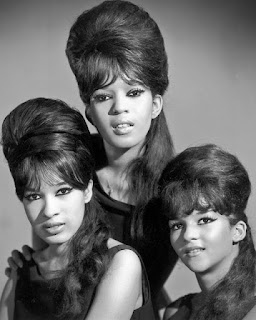
        I didn't know what a goddess looked like until I saw a picture of The Ronettes, three of them virtually identical, in the NME towards the end of 1963. 

        Brian Wilson believes ‘Be My Baby’ to be the greatest pop record ever made and claims to have listened to it every day of his life. My kids thought it – and its follow-up ‘Baby I Love You’ – were Christmas songs because the first time they heard Phil Spector’s Wall of Sound was on his Christmas album. I’ve loved both songs since I first heard them aged 16 in that coffee bar in Skipton, the one where I shovelled threepenny bits into a jukebox until I ran out. And they’re playing right now, as I type this tribute to Ronnie Spector whose death I learned about this morning on the internet.

It is indicative of the sudden domination of beat groups in the early sixties that those magic recordings reached only numbers four and 11 respectively in the UK charts. Above ‘Be My Baby’ at number four on November 21, 1963, were Gerry & The Pacemakers, The Beatles and The Searchers, while above ‘Baby I Love You’ at number 11 on February 27, 1964, were The Bachelors, The Searchers, The Dave Clark Five, The Merseybeats, Gerry & The Pacemakers, Manfred Mann and Brian Poole & The Tremeloes. Topping the charts that week was Cilla Black with ‘Anyone Who Had A Heart’, originally recorded by Dionne Warwick.

Nevertheless, it’s a pound to a penny that every single member of all those groups, and Cilla of course, would doff their hat to Ronnie Spector, or Ronnie Bennett as she was then, the lead singer on both the records. 

“When The Ronettes made their public debut with their first single, it was immediately obvious that they were to the bright, chirpy little Crystals what Elvis was to Pat Boone,” writes my former Melody Maker colleague Richard Williams in his Phil Spector book Out Of His Head. “The year they hit the chart, Helena Rubinstein’s profits certainly doubled. They looked dangerous, a threat to any average male’s self-esteem, but despite the challenge in their eyes they performed love songs in which they pleaded with their boys… This marvellously piquant contract between promise and performance was made possible because of the emotions roiling within Ronnie Bennett’s hugely quavering, massively sexy voice, a pure pop instrument the like of which no one had ever heard before. [Phil] Spector had found his instrument, and she had found her setting.”

Estelle, Ronnie & Nedra

Ronnie was 19, her sister Estelle was 20 and their cousin Nedra Talley was just 18 when they recorded these two songs. All three girls had jet black bouffant hair piled way up high, wore tight dresses in shiny material or slinky pants suits and looked simply gorgeous, their bloodline a mixture of white American, black African and a hint of Irish. Their eyes, beneath the mascara and false lashes, bore through you. Their sound was that of a massed choir, backed by Spector’s multi-instrument landscape, the biggest reverb in the world, part gospel, part Wagner, part symphonic, seductive yet yearning, beguiling, breathless and oh so seductive. They danced with Ringo at the Peppermint Lounge and when they toured the UK with The Rolling Stones in 1964 Phil Spector tagged along as chaperone in case Mick and Keith had ideas. 

The Ronettes went on to make many more great records, as did Ronnie on her own, but none sounded as good as these two. Ronnie married Phil, or rather Phil imprisoned Ronnie in the unhappiest of marriages, but she escaped and became the legend she deserved to be. I saw her once, in 1976, when she performed at the Bottom Line in New York with Southside Johnny & The Asbury Dukes. It was, of course, a night of nostalgia but anyone who was anyone in NY turned out to see her that night, and she sang the songs we wanted to hear. 

        “They could sing right through a wall of sound,” said Keith Richards who recalled that 1964 tour when he inducted The Ronettes onto the Rock and Roll Hall of Fame on 2007. “They touched my heart there and then, and they touch it still.” 

(I found both the photos on the internet uncredited. I think the bottom one is a promo shot taken for Philles Records in 1963, with the top one taken a bit later.)

4.1.22

MONEY, MONEY, MONEY

The news that David Bowie’s heirs have sold the rights to his music for something in the region of $250 million comes as no surprise to me. His catalogue is just the latest in a long line of work by ‘heritage’ acts, some dead, some alive, whose music has been snapped up by large corporations in the hope they’ll get their money back many times over through streaming, dwindling sales of CDs, mechanical copyright earnings, song publishing revenues and exploitation in movies, TV and advertising usage.

        Some people ask why. My guess is that David’s widow Imam, now in her sixties, their daughter Lexi, and David’s son Duncan Jones, simply don’t want to be bothered with the effort and expense involved in exercising control over the music that their husband and father left behind. Far better to bank (and enjoy) the money than to spend years fretting over how best to administer and make use of the legacy themselves. This would require difficult decisions, loads of meetings, reams of paperwork, expensive lawyers and constant policing, a heap of headaches best left in the hands of persons better qualified for this kind of work than themselves. Banking a pirate’s treasure certainly looks like the better option to me. 

        I find it less surprising that Bowie’s heirs have taken this decision than the similar deals that have been made by artists still living. Bruce Springsteen remains creative into his seventies, one of few big acts of his generation to maintain a steady output of quality new material, so the reason for his decision to sell, along with, say, Neil Young, another perennial achiever – who sold 50% of his catalogue about a year ago – is less clear. It’s not as if Bruce needs the money, topping the list with a reputed $500 million in his case, and I’ve long maintained the view, perhaps naively, that he was never in it for the money in the first place. Maybe he just wants to make sure that none of his descendants wind up like father Doug, bitter and twisted after years in that dead-end factory job, his anger and frustration the source of so many of his son’s songs.

        In fact, the list of acts who’ve sold their catalogues is virtually endless. Anyone interested can visit a website* which lists 54 acts, ranging from Bob Dylan to Bing Crosby, most with the price attached, and a further thirty-odd who’ve sold portions of their catalogues for undisclosed sums. I don’t think it’s a complete list either, as there’s no sign of Pete Townshend on it, nor of Dusty Springfield who, unless I’m mistaken, was one of the first artists to enter into this kind of deal, thus ensuring she could spend her final years without a care in the world at a very pleasant cottage near Henley. 

        It’s perhaps more pertinent to note who hasn’t sold their work, and there are some big names holding out, all of them British, which suggests that American acts are more inclined to bank the cash than the Brits. Paul McCartney isn’t on the list, and neither are The Rolling Stones, Pink Floyd, Led Zeppelin, Ray Davies, Elton John or Rod Stewart. U2 and R.E.M. are also absent. It might be the case that some act’s catalogues aren’t theirs to sell, insofar as somewhere along the line they lost control of their work or, like Elvis – see below – were swindled out of it by some nefarious wheeler-dealer. Asked recently about the issue, Elton’s manager David Furnish said it was “unthinkable” for his client and partner to sell his songs, adding: “I can’t think of anything more agonising, and neither can Elton, than sitting and watching someone else take his and Bernie [Taupin’s] songs and do what they want with them.”

        I know, or I think I know, how that might feel. David would certainly wince if an enterprising confectionary brand launched a chocolate bar called Heroes and promoted it with David’s song of the same name, or a toy company produced an astronaut doll they called The Starman. 

        All of this ties in quite neatly into a book I’m reading right now called Leaving The Building: The Lucrative Afterlife of Music Estates by Eamonn Forde, a music biz expert whose last book The Final Days of EMI: The Selling Of The Pig I edited while at Omnibus Press. Leaving The Building takes as its starting point the remarkable rehabilitation of Elvis Presley’s estate which, at the time of his death in 1977, was almost threadbare, at least by the standards you would expect of a singer who’d sold nigh on a billion records in his lifetime.  

        Though it’s likely he didn’t realise what was going on, Elvis was quite probably the first artist to enter into a deal along the lines of the one that David Bowie’s heirs have just concluded. In 1972, with sales of Elvis’ records in terminal decline, Col Tom Parker, his manager, reached an agreement with RCA Records that he and Elvis would relinquish all future royalties on Elvis’ back catalogue sales in exchange for $5 million in cash that was split 50/50 between them. Naturally Elvis paid tax on his share – leaving him with just over $1 million for his life’s work, a paltry sum in view of its significance and heritage. From RCA’s point of view, however, this deal was as sweet as they come – they now owned Elvis’ back catalogue outright – and for Parker the deal provided a handsome nest egg for his eventual retirement. 

        Happily, Priscilla Presley, acting on behalf of their daughter Lisa Marie, rescued the estate – and turned around that awful deal with RCA – but that didn’t stop Lisa from selling out eventually anyway.

        I called this post Money, Money, Money, after the song by Abba, another act whose catalogue is doubtless worth a nine-figure sum. So I’ll close by mentioning that Voyage became the fastest-selling album of 2021, which can’t have done their stock price any harm at all. When Björn and Benny decide the time is right, will Abba’s catalogue top Bruce’s $500 mil? My money says it will. 

*https://www.ajournalofmusicalthings.com/heres-a-running-list-of-artists-who-have-sold-some-or-all-of-their-song-catalogues-to-a-new-breed-of-company/


31.12.21

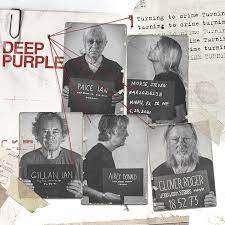
DEEP PURPLE – Turning To Crime


Obliged by Covid-19 to self-isolate and therefore work individually – as opposed to writing new material together in the studio, their customary procedure – Deep Purple early this year opted to record an album of covers, with each member of the group transmitting their contributions to the Anarchy Remote Studio, a digital facility in cyberspace where producer Bob Ezrin assembled the parts like a jigsaw. The result is Turning To Crime, a 12-track CD of songs “that shaped us over the years”, according to a brief note on the accompanying booklet. In reality it’s more than 12, for it concludes with a five-song medley, among which is Led Zeppelin’s ‘Dazed And Confused’, of which more later.

        Unless I’m mistaken, the last cover version recorded by DP was ‘Lalena’, by Donovan, which appeared on their largely ignored third LP, simply titled Deep Purple, in 1969. Prior to that the first DP group had recorded plenty of covers, not least their debut US hit ‘Hush’, by Joe South, and others by Neil Diamond, Lennon & McCartney and whoever claims to have written ‘Hey Joe’. Once they got into their stride, however, original material prevailed, and this coincided with singer Ian Gillan and bassist Roger Glover joining the core trio of organist Jon Lord, guitarist Ritchie Blackmore and drummer Ian Paice. This quintet, which in my 1983 biography of the group I refer to as DP Mark II, enjoyed enormous success and is still widely regarded as the ‘classic’ line up. 

        Gillan, Glover and Paice remain today, joined on guitar by Steve Morse and on keyboards by Don Airey. With Paice now the only member of the group to have played in its every incarnation since DP formed in 1968, Morse and Airey are by no means newcomers. The former has been with them since 1994, replacing the eternally capricious Blackmore, and the latter came on board in 2002 when Lord, their statesman-like elder, retired from rock to concentrate on serious music. Sadly, he died in 2012. 

        The choice of material on Turning To Crime throws up plenty of surprises and a handful of songs that might be expected. Among the latter is the opener, Love’s ‘7 And 7 Is’, at one second shy of two and half minutes the album’s shortest track but by many mph the fastest. Its inclusion offers strong evidence of where DP were coming from by the time they recorded their breakthrough LP In Rock, the relentless pace (no pun intended) of the drums leading the way over a thumping beat, crunch guitar and indecipherable lyrics, DP’s version differing from the original only in that they chuck in characteristic guitar and organ solos and omit Love’s thunderous explosion and Arthur Lee’s slow blues-based coda.

        Ian Gillan long ago betrayed his influences in the lyrics to ‘Speed King’, which referenced Little Richard who was knocking around New Orleans in 1957 when Huey ‘Piano’ Smith recorded ‘Rockin’ Pneumonia And The Boogie Woogie Flu’ there. This paean to chest ailments given the rock’n’roll cure offers Don Airey a chance to show off his honky-tonk chops, and to cheekily incorporate the riff from ‘Smoke On the Water’ into one of his solos. Freed from the need to sprint, Ian Paice shows himself to be a fine and steady rock’n’roll stickman. He has some previous on this kind of material, having been a member of Paul McCartney’s ‘Rock and Roll Band’, playing alongside David Gilmour, Mick Green, Pete Wingfield and Chris Hall, not to mention the former Beatle, at the Cavern in Liverpool in 1999.  

        A reverent take on Fleetwood Mac’s ‘Oh Well’ follows, fairly true to the original, with about a minute of the haunting ‘Part 2’ coda slapped on the end. Next up is ‘Jenny Take A Ride’, by Mitch Ryder & The Detroit Wheels, its opening section perhaps better known as ‘CC Rider’, much performed by Elvis, which morphs into ‘Jenny, Jenny’ whom Mitch invites to take a ride, before slipping back to ‘CC’. This is great boozy bar band music, the kind of thing that Springsteen favours for encores, so here we have DP channelling with some distinction hitherto unrealised E Street Band leanings. 

        ‘Watching The River Flow’, an anomaly in Dylan’s catalogue in that it was a one-off blues-based single, seems like an unlikely cover and may have been suggested by Bob Ezrin who joins Gillan on vocals. There’s a hint of gospel in DP’s version which in an oblique way pays tribute to the full-on sound of Leon Russell, who played on Dylan’s original, and his Mad Dogs & Englishmen retinue, not least in the 30-second keyboard sign off. 

        We’re back in New Orleans for ‘Let The Good Times Roll’, which sounds to me like it could have come from the soundtrack to Kid Creole, Elvis’ fourth (and best) movie. Joined by saxophone and trumpet, DP take it at a medium pace, with a bluesy guitar solo and churchy keyboards adding to the southern fried flavour, Airey switching to honky-tonk at one point thought the brass is never down in the mix. 

        Taking on Little Feat is a fearsomely bold move but Don Airey has Bill Payne’s tinkly keyboard part off pat, and the whole band swing their way through ‘Dixie Chicken’ respectably enough. Morse is great on the slide solo, and my only gripe is that Ian Gillan’s Brit voice sounds a bit strained next to Lowell’s sly, loose-limbed, shuffle delivery. Still, it’s refreshing to learn that DP were influenced by one of my favourite American bands, and I tip my hat to Morse for the solo at the close.

In the never-ending discussion as to the origins of heavy metal, or hard rock as it was before Black Sabbath became ‘Paranoid’, The Yardbirds’ ‘Shapes Of Things’ merits a sub-section of its own, and although Jeff Beck was in the group when it was originally recorded, its composition is actually credited to Keith Relf, Jim McCarty and Paul Samwell-Smith. Still, it’s a minor psychedelic masterpiece, with Beck’s guitar hovering between distortion and the mysterious East, and lyrics that pre-empt the present-day climate crisis. DP take it at a slightly slower pace than The Yardbirds, but are dutifully reverent in their approach, though Morse, ever anxious to inject something distinctive, gets a long solo before the whole thing grinds to a suitably rave-up style halt.

Hearing Lonnie Donegan’s version of ‘Rock Island Line’ on the radio when he was about 10 led to Roger Glover becoming who he is now, so it’s no surprise that he shares the vocals, leading on the first verse, with his old Episode Six partner Ian Gillan on ‘The Battle Of New Orleans’, a hit for Lonnie in 1959, and probably the least likely cover on Turning To Crime. Joined by violin and accordion, no one in a million years would guess this hoe-down romp was Deep Purple.

‘Lucifer’, a Bob Seger song from 1970 when he led a group called The System, is the only track here with which I was unfamiliar, a mid-tempo rocker typical of the Silver Bullet work that brought him no little success as the seventies progressed. DP give it their all, but of greater merit is their take on Cream’s ‘White Room’, a far more interesting song. Another dose of psychedelia with a hint of discord on the vocals and slabs of twisty guitar, DP match Eric, Jack and Ginger bar for bar, no mean feat. 

Finally, we reach what DP call ‘Caught In The Act’, their medley of five songs, the first four instrumentals, with Gillan joining in only on ‘Gimme Some Lovin’’, Steve Winwood’s tour de force when he was the star attraction in The Spencer Davis Group. Airey opens the show, a ragtime figure leading into Freddie King’s bluesy ‘Going Down’, which leaps into ‘Green Onions’, funky and straight like the MGs until Morse adds some twists, then ‘Hot ‘Lanta’, on which DP somehow manage to sound awfully like The Allman Brothers jamming away on stage. Next up is an instrumental of Zep’s ‘Dazed And Confused’, opening not with the familiar descending bass line but a passage from later, then the descent before  instruments take over the call and response. This leads neatly into the enormous ‘Gimme Some Lovin’’ riff, played well, and after two and a half minutes the whole business grinds to a halt, a few drum beats the last thing we hear. What fun they must have had. 

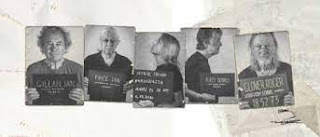
Also available is a 40-minute DVD The Making Of Turning To Crime, which is precisely what the title says, those responsible having concluded it was a crime for a group of DP’s stature to record an album of covers. This perhaps explains why on the sleeve they are photographed as if in a police line-up, every one of their mug shots resembling the sort of threatening ne’er do wells you’d cross the road to avoid.

When Covid is over, will they play these songs on stage? 


28.12.21

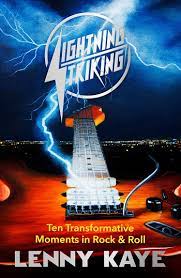
LIGHTNING STRIKES: Ten Transformative Moments in Rock’n’Roll by Lenny Kaye


“The screams may be predominantly female, but the boys look under the hood, at the way the engine is sparking. At least that was how it was for me, and I’m the guy who collects vintage spark plugs.” That’s how Lenny Kaye reacted to seeing The Beatles for the first time, on February 9, 1964, on the Ed Sullivan Show in a USA that was soon at their mercy.

        I know exactly what he means but I’ve never seen it scripted in terms of garage mechanics before, a lovely choice of metaphor. The girls wanted to marry them and the boys wanted to be them, but first we had to learn how to play the guitar, which is precisely what Lenny did. 

        The arrival of The Beatles is the fourth transformative moment in Lightning Strikes, after 1954 (Elvis and Memphis), 1957 (Little Richard and New Orleans) and 1959 (Alan Freed and Bandstand, Philadelphia), though ‘moments’ might better translate as ‘periods’ in this warm, lovingly composed book about those special sets of circumstances that collided to move rock’n’roll forward in shuddering, epoch-defining jolts. 

        Lenny, of course, was the compiler of Nuggets, the double LP of under-the-counter garage/punk classics, released by Elektra in 1972, an absolutely fabulous collection of tracks by American groups of the mid-sixties, many inspired by The Beatles, Stones and Yardbirds, who struck lightning at least once in careers that invariably imploded soon afterwards. An early contributor to Rolling Stone and fringe music mags, Lenny first entered my consciousness through his superbly informative sleeve notes on a 1972 Eddie Cochran Legendary Masters compilation, another double LP I treasure. We first met when I went to live in New York in 1973, when he was working behind the counter in Village Oldies, a collectors’ dream of a record shop on Bleecker Street in Greenwich Village. More famously, in 1971 he was asked by Patti Smith to play guitar as she read her poetry, initially for one gig only. He’s done it ever since.

        It follows, then, that Lenny became a mastermind on all things rock and pop, so it comes as no surprise that his new book rocks along like a vintage record of the highest quality. It’s the way he writes, a sort of Kerouac meets Hunter ST meets every great rock writer you care to name, mixing personal experiences with what was happening at rock’s all-important moments, his role where applicable and how they affected him and informed his life. It’s very juicy and great fun, and after Liverpool we move to San Francisco for the Summer of Love, then on to Detroit for MC5 and Iggy, with a sideways swerve to fellow travellers the Velvets in NY, then New York proper where Lenny finds himself drawn towards CBGB, and becomes Patti’s accompanist, which in many ways is the heart of the matter. Lenny’s real time, no bullshit account of Patti’s emergence and acceptance, along with his on-the-spot coverage of the rise of the Ramones and Television, and to a lesser extent Blondie and Talking Heads, is worth the price of the book in itself. 

        London’s punk upheaval a couple of years later, metal in LA (1984) and Norway (1993), not really my bag, follow and the book closes in Seattle in 1991 with Nirvana and all things grunge. 

        The moments that Lenny writes about are prefaced by the events that led up to whatever happened and their aftermaths, and in this respect, he demonstrates not just his vast knowledge of the art form in which he has lived his life but excellent taste as well. His love for his medium simply bounces off the page, which means he’s largely unaffected by commercial trends and studiously avoids what might be considered uncool. You won’t find any boy bands or much prog in Lightning Strikes, but you will find four pages on Joe Meek, the English Phil Spector, an old obsession of mine and evidently Lenny’s too. 

        “In the early 1990s I visited the site of [Meek’s] Holloway Road studio to pay my respects, standing it the doorway of 304, stepping in his vanished footprint,” he writes. “Behind me, in a red London call box, the phone began to ring. I picked it up. There was no dial tone, only a silence that seemed enclosed, like a reverb chamber waiting for its sound to enter.” 

        It was probably Joe calling from a Telstar orbiting the earth. 


26.12.21

THE WAR ON DRUGS – I DON’T LIVE HERE ANYMORE


Most review of albums by Adam Granduciel’s War On Drugs project focus on lyrics that invariably describe some kind of struggle, whether it’s the vicissitudes of romance, the trials of living in the modern world or a life burdened with more than its fair share of despair. But it wasn’t the lyrics that drew me to WOD, it was the music, the aural landscape in which Granduciel frames his tales of woe. 

  Indeed, there are so many things to like about the music on I Don’t Live Here Anymore, the most recent WOD album, that it’s hard to know where to start, but how about the moment on its second track ‘Harmonia’s Dream’, about three minutes in, when the already busy backdrop is joined by a piercing keyboard that on first hearing reminded me of a fairground, the soundtrack to a carousel, or maybe even that wistful electronic sound on Del Shannon’s original recording of his signature song ‘Runaway’. Back then that seductively original organ part was created by Max Crook, who takes credit for having invented the Musitron on which he played it, but if WOD master craftsman Granduciel has somehow found a Musitron of his own he’s keeping mum, and from the credits I don’t know whether Dave Hartley or Robbie Bennett, both of whom are acknowledged as keyboard players on track two, are contributing this passage.

        Either way, this shrill but irresistible sound lifts an already impressive track up into the stratosphere, and I can even forgive Granduciel for the U2-like fall away a minute later when the whole galloping big music affair disappears, only to rise up again, this time joined by an electric guitar that traces a descending figure and resolves on a bent note country and western lick worthy of James Burton. The organ/guitar duet is the icing on the cake as the whole wondrous episode is repeated in a minute-long coda that fades out ever so gradually.

        It occurs to me that what Granduciel is doing here is taking something old – the organ sound and the country lick – and turning them into something very new and relevant to the modern era, and in doing so he unites old time rock lovers like me, with 60 years of listening behind us, with newer souls who maybe first heard WOD in the 21st Century. To bridge such a generation gap is a fine achievement.

        All this new album is great, really, just like the rest of the War On Drugs’ small but perfectly formed catalogue, but this little bit of music had me smiling for the last few weeks every time the track played in my car and living room, and my guess is it’ll continue to do so well into the New Year.