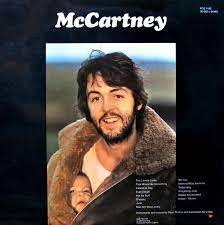
In a month when Paul McCartney releases his first new album since 2021, I have it on good authority that it’s not much fun being his manager. He’s demanding, difficult to please and inclined towards throwing tantrums behind closed doors. He doesn’t like to lose money on tour or be told that, heaven forbid, a new song he’s just written isn’t quite as good as some he’s written in the past. He loves applause but doesn’t like the word no. When Richard Ogden, who managed Paul from 1987 to 1993, suggested he needed a yes-man as a manager, Paul responded by saying that a yes-man was better than a no-man.
When Ogden finally threw in the towel his relationship with McCartney had deteriorated to the extent that they were barely speaking. “Dealing with him had become even more difficult than it was when I first started,” he writes in his self-published memoir of a lifetime in the music industry, “and his dissatisfaction with me was affecting Linda who, as everybody who worked at MPL [McCartney Productions Ltd] knew, tended to ‘get it in the neck’ first when the boss was unhappy… it wasn’t unusual for my ‘McCartney hotline’ phone to ring first thing and for a tearful Linda to warn me that all was not well with His Nibs.”
Richard Ogden began his long career in music as the Press Officer for United Artists Records at the start of the seventies and ended up promoting massive concerts in Brazil, a country where he lives for some of the year today and clearly loves. In the meantime, as head honcho at various record labels his paths crossed professionally with any number of A-list superstars, and his book is unusually honest, truth to power that spares no blushes when it comes to revealing precisely how everyone – including himself – behaves in the music industry, not just the stars but their entourages, their agents and promoters, record company minions and, sometimes, even their romantic partners. Also, and rarely for this kind of book, we get a taste of the money involved, not just what Richard earned but also pretty much everyone else.
The four chapters that deal with McCartney are at the heart of the book and, in light of McCartney’s enormous fame, the most interesting. Indeed, the book’s title is a quote from Paul himself, shouted to Ogden after a concert in Brazil that, at the time, attracted the biggest paying audience in the history of rock. The way Ogden tells it, the issues surrounding that concert alone would put anyone off managing a big rock star for life, even if he did meet his future wife from among the local promoter’s staff.
Elsewhere, you can read about Ogden’s encounters with The Rolling Stones, Black Oak Arkansas, Black Sabbath, The Motors, that troublesome Michael Jackson statue, Aerosmith, Ricky Martin, eternally unsociable Van Morrison and many more. He has a chatty, informal style of writing and is inclined to veer off at tangents, leaving his readers momentarily wondering quite where they are, but above all there’s an honesty – we learn about his mistakes as well as his achievements – to his writing that is too often lacking in books where the author in disinclined to offend anyone. Richard Ogden evidently doesn’t give a hoot whether or not he upsets people, famous or otherwise, which gives his book a refreshing dose of authenticity. These days, he’d have been asked to sign an NDA and, though most of what Ogden writes about occurred long before celebrities sought to rigorously enforce confidentiality among their employees, it’s perhaps convenient for him that there is no extradition treaty between the UK and Brazil.
Finally, I should mention that, like many self-published books, Bigger Than The Beatles suffers from sloppy production, poor photo reproduction and inadequate indexing. Nevertheless, it has 438 pages, making it good value for a tenner, and can be obtained at: https://www.thegreatbritishbookshop.co.uk/products/bigger-than-the-beatles-sixty-years-in-showbusiness?_pos=1&_sid=dbc6035c2&_ss=r