Showing posts with label Phil Spector. Show all posts

11.1.23

SPECTOR – Sky Documentary

There was no more pathetic sight than the prison shots of Phil Spector, wrinkled and bald, his dignity in ruins, his vanity undone, his arrogance tamed; the great record producer – some say the greatest ever – reduced to little more than a husk. Most of the interviewees in Spector, the Sky documentary film aired this week, believe he got his just deserts and it’s hard to argue with them, though his daughter Nicole does her best and a handful of figures from his past, musicians and studio hands who’d worked with him long ago, draw more attention to his accomplishments than to the way it all ended.

        The story unfolds over four hour-long episodes: how Lana Clarkson was simply in the wrong place at the wrong time, working on the door at the Los Angeles House of Blues when Spector, whom she failed to recognise, turned up very late and very drunk. Two ‘dates’ had already abandoned him that night but he was still on the prowl for female company, so he coerced Clarkson into accompanying him back to his palatial home where he shot her in the mouth, the penalty for declining to accompany him to the bedroom, as was alleged in court at two separate trials, the second of which saw Spector found guilty of second-degree murder and sentenced to 19 years in prison, where he died in 2021.

        On the previous day, The Sunday Telegraph Magazine had published an interview Spector gave to the writer Mick Brown a few weeks before. It was the first interview the famously reclusive Spector had given in 25 years, and when news of Clarkson’s murder reached the Telegraph’s offices in London Brown’s colleagues were concerned that something he had written might have triggered events. Brown, who went on to write the book Tearing Down The Walls Of Sound: The Rise & Fall of Phil Spector, is the most prominent, and lucid, of all the interviewees in the documentary because he straddles both camps, acclaiming Spector’s ‘Wall of Sound’ production style, as do many in the film’s first hour, yet siding with the prosecution as Clarkson’s fate and its consequences dominate the film’s later episodes. He’s also eloquent on Spector’s madness, or eccentricity, or genius, or whatever you want to call it. 

        The producers go to great lengths to avoid the errors of judgement that clouded those Spector obituaries that devoted the lion’s share of space to his music while mentioning Clarkson merely as a footnote. Over the four hours we learn as much about the life and career of Lana Clarkson as we do about the life and career of Phil Spector, his far greater celebrity of less weight than the need to present an evenly-balanced portrayal, with comments by Spector acolytes repeatedly countered by those who knew and admired Clarkson, among them her mother. The oft-used, pejorative, description of her as a ‘B-movie actress’ is soundly disparaged by her friends, as are suggestions by Spector’s defence team that she was ‘washed up’ and might have had reason to deliberately kill herself. 

        I would have been 11 years old when Phil Spector first arrived in my consciousness. ‘To Know Him Is To Love Him’ was playing on the jukebox in the coffee bar just across Mill Bridge in Skipton, where I often listened to records in those days. The melody was very simple, trite even, but there was something about the way it was recorded, a haunting quality that accentuated the love-struck singer’s palpable sincerity, that appealed to me, and I liked the way the middle-eight ramped up the emotion, that soaring high note, and how it resolved into the final verse via a tidy descending run. Within a month I had badgered my parents into buying it for me, a 7-inch single on the invariably dependable black and silver London American label, same as Jerry Lee, Eddie Cochran and the Everly Brothers. I have loved the records that Spector made ever since, including those by Beatles John and George. 

        In a December 24 post about the virtues of Spector’s A Christmas Gift For You, I recalled that around 44 years after first hearing ‘To Know Him Is To Love Him’, on February 3, 2003, I was having lunch with Richard Williams, an old Melody Maker colleague, at the precise moment – 5am in California, 1pm in London – when Clarkson was shot. The purpose of our lunch was to discuss Omnibus Press, of which I was editor, republishing Phil Spector: Out Of His Head, Richard’s critical study of Spector’s work, first published in 1972 and long out of print. While unbeknownst to us Spector was being taken into custody, Richard and I were concluding an agreement that saw Out Of His Head, with a new introduction and revised conclusion, appear in the shops later that year. Cynics no doubt thought its reappearance was motivated purely by the events of that day in LA but this was not the case – it really was an astonishing coincidence – though I can’t deny the circumstances didn’t strengthen my resolve to get the new edition out promptly. Today, almost twenty years later, its still in print. 

        Nevertheless, the timing of our lunch was still a bit weird, but weirdness clung to Spector like a limpet, as this documentary makes clear, and maybe this happenstance was simply another manifestation of Spector-related weirdness. This is a repeated theme in the film and it connects with Spector’s credo that timing, good and bad, is what really matters in life; not just Hal Blaine’s immaculate sense of timing as his snare launches the chorus of a fabulous Ronette’s record, or how A Christmas Gift For You was stymied through being released on the same day that JFK was shot, or even how Mick Brown’s interview appeared the day before Clarkson lost her life, but how the timing and sequence of unforeseen events really does govern our lives. This gripping documentary hinges on that exact same premise  a tragedy of timing for everyone involved.


24.12.22

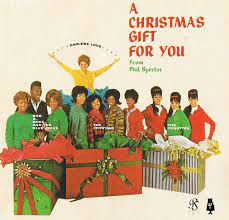
PHIL SPECTOR: A CHRISTMAS GIFT FOR YOU

It was Derek Taylor, the eminent Beatles PR, who gave me my first copy of A Christmas Gift For You, Phil Spector’s classic Christmas LP. It was 1972 and Derek was working for WEA (Warner-Elektra-Atlantic) Records at the time, head of Special Projects I think, but had taken it upon himself to promote a record on a competing label. The edition Derek gave me was a reissue on Apple Records, which had nothing to do with Warner Bros, but he had no compunction about moonlighting for his old chums since Spector, who had produced records by John and George, was sort of family I guess. More to the point, Derek believed in the record and felt, rightly, that it deserved the second chance this Apple reissue offered. 

        Before we go any further with this I ought to state that what follows does not in any way excuse Phil Spector’s conviction for the killing of 40-year-old actress Lana Clarkson, following which he was sentenced to 19 years to life, dying in a prison hospital in 2021. Whatever opprobrium was deservedly heaped upon Spector, however, does not reduce the merits of A Christmas Gift For You nor his skills as a record producer, and Derek Taylor had died six years before all this happened. 

        Recorded at Gold Star Studios in Los Angeles over many sessions during the summer of 1963, A Christmas Gift For You was first released in the US on Philles, Spector’s own label, on November 22 that year, by a quirk of fate the same day that President John F. Kennedy was assassinated in Texas. America was in no mood for festive fun, and Spector’s masterpiece died a death as a result. Which is why I was unaware of it until I happened to be in Derek’s office in the week before Christmas 1972. 

        I was too late to join in the merriment to be found in Derek’s Apple office, described in jaw-dropping detail by ‘office hippie’ Richard DiLello in his book The Longest Cocktail Party, but Derek continued to host lower-key, early evening soirees in his corner office at WEA, sitting in his peacock chair and pouring drinks for visiting music writers. It wasn’t unusual for members of The Faces to be hanging out in Derek’s office as they were favourites with the girls who worked there, along with his PA Mandi Newall and the more jovial members of his staff like dapper promo man Des Brown. 

Derek in his peacock chair

        The LP, now retitled Phil Spectors Christmas Album, was playing when I arrived for my festive drink and when I remarked on it, Derek extracted a copy for me from a box of them on the floor beside his desk. “Happy Christmas, old boy,” he said with a twinkle in his eye as I left with it tucked under my arm. When I got back to my flat in Bayswater, I played it for the first time. And I’ve been playing it ever since, though nowadays it’s more likely to be the CD enclosed within the 1991 Back To Mono Spector collection of three separate CDs, 60 tracks in all. 

The Apple reissue I was given 

        A Christmas Gift For You contains 13 tracks; only one of them, the closing ‘Silent Night’ with its monologue by Phil himself, sacred, and from a glance at the titles, you could be forgiven for assuming it was all a bit cheesy. ‘Frosty The Snowman’, ‘Rudolph’ and ‘Marshmallow World’ might appear childish, but from the opening notes of opener ‘White Christmas’, an ascending line on the bass notes of a piano, and Darlene Love’s pronunciation of ‘I’m’ as ‘Ahiyam’, the stage is set for a Christmas record like no other. The wall of sound thunders in and after a couple of verses steps back. “The sun is shining, the grass is green,” Darlene tells us, half talking, half singing. “The orange and palm trees sway. There’s never been such a day in old LA. But it’s December 24th and I’m longing to be up north. So I can have my very own White Christmas. Oooohh yeahhhh… Ahiyam dreaming…” and off we go again, another verse with a closing nod to ‘Jingle Bells’.

        Almost all the tracks are prefaced by brief, melodic orchestral preludes before the Spector mix of guitars, horns, pianos, bass, drums and additional strings kick in, and every track is a joy. “He had a grand idea,” writes my former Melody Maker colleague Richard Williams in Out Of His Head, his Spector book first published in 1972. “He wanted to make a Christmas album. It sounded like a terrible, corny idea, but Spector knew different: playing on the sentimental core hidden inside his freakishness, he decided he wanted to take all the usual Christmas songs and, using all his artists, really do them over differently.”

        Nowadays they’re not so much different as standard, at least in our house. That’s because it’s been played more often than any other Christmas record, so much so that my kids actually assumed that similar sounding ‘wall-of-sound’ tracks by The Ronettes, like ‘Be My Baby’ and ‘Baby I Love You’, and by The Crystals, like ‘Then He Kissed Me’ and ‘Da Doo Ron Ron’, were Christmas songs too, at least until I pointed things out. 

        “It was an artistic triumph,” writes Richard. “He truly captured the secular spirit of Christmas. Listen to The Ronettes’ ‘Sleigh Ride’, to the care with which it is produced, to the bells and horses’ hooves, and to the way Ronnie sounds like she’s singing from inside a big fur coat. Listen to ‘The Bells Of St Mary’, on which Bobby Sheen sings his McPhatterish heart out over one of [Jack] Nitzsche’s most brain-storming arrangements, with an occasional interjection from Darlene and [drummer] Hal Blaine at his wildest on the fade.”

        I couldn’t agree more and this was why I determined to put Richard’s Spector book back into print while I was running Omnibus Press. To this end, Richard and I met in an Indian restaurant on Soho’s Bateman Street and over lunch agreed terms for a new, slightly revised edition of Out Of His Head. The date was February 3, 2003, but little did we know that at the exact moment we were digesting our chicken tikkas, over in LA Phil Spector was being arrested for murder. Some coincidence.

The original UK edition of Out Of His Head, published by Abacus in 1974

The Omnibus Press edition of Out Of His Head, published in 2003

        We emailed one another the next day, both of us astounded by this quirk of fate, one that surely ranks with the original release date of A Christmas Gift For You. 

        As Richard writes: Just as A Christmas Gift For You was hitting the shops, the new came that John F. Kennedy had been assassinated in Dallas. Suddenly no one wanted tinkling glockenspiels and horses hooves and songs about Mommy kissing Santa Claus. Phil Spectors magnum opus was dead in the water. It would take ten years and the patronage of The Beatles before the album emerged from the status of collectors item to claim a permanent as a seasonal favourite.


13.1.22

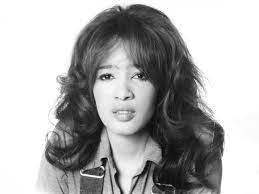
RONNIE SPECTOR (1943-2022)


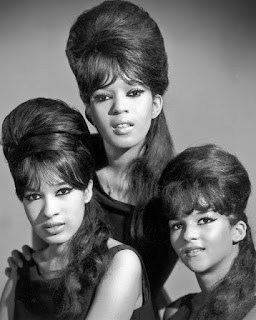
        I didn't know what a goddess looked like until I saw a picture of The Ronettes, three of them virtually identical, in the NME towards the end of 1963. 

        Brian Wilson believes ‘Be My Baby’ to be the greatest pop record ever made and claims to have listened to it every day of his life. My kids thought it – and its follow-up ‘Baby I Love You’ – were Christmas songs because the first time they heard Phil Spector’s Wall of Sound was on his Christmas album. I’ve loved both songs since I first heard them aged 16 in that coffee bar in Skipton, the one where I shovelled threepenny bits into a jukebox until I ran out. And they’re playing right now, as I type this tribute to Ronnie Spector whose death I learned about this morning on the internet.

It is indicative of the sudden domination of beat groups in the early sixties that those magic recordings reached only numbers four and 11 respectively in the UK charts. Above ‘Be My Baby’ at number four on November 21, 1963, were Gerry & The Pacemakers, The Beatles and The Searchers, while above ‘Baby I Love You’ at number 11 on February 27, 1964, were The Bachelors, The Searchers, The Dave Clark Five, The Merseybeats, Gerry & The Pacemakers, Manfred Mann and Brian Poole & The Tremeloes. Topping the charts that week was Cilla Black with ‘Anyone Who Had A Heart’, originally recorded by Dionne Warwick.

Nevertheless, it’s a pound to a penny that every single member of all those groups, and Cilla of course, would doff their hat to Ronnie Spector, or Ronnie Bennett as she was then, the lead singer on both the records. 

“When The Ronettes made their public debut with their first single, it was immediately obvious that they were to the bright, chirpy little Crystals what Elvis was to Pat Boone,” writes my former Melody Maker colleague Richard Williams in his Phil Spector book Out Of His Head. “The year they hit the chart, Helena Rubinstein’s profits certainly doubled. They looked dangerous, a threat to any average male’s self-esteem, but despite the challenge in their eyes they performed love songs in which they pleaded with their boys… This marvellously piquant contract between promise and performance was made possible because of the emotions roiling within Ronnie Bennett’s hugely quavering, massively sexy voice, a pure pop instrument the like of which no one had ever heard before. [Phil] Spector had found his instrument, and she had found her setting.”

Estelle, Ronnie & Nedra

Ronnie was 19, her sister Estelle was 20 and their cousin Nedra Talley was just 18 when they recorded these two songs. All three girls had jet black bouffant hair piled way up high, wore tight dresses in shiny material or slinky pants suits and looked simply gorgeous, their bloodline a mixture of white American, black African and a hint of Irish. Their eyes, beneath the mascara and false lashes, bore through you. Their sound was that of a massed choir, backed by Spector’s multi-instrument landscape, the biggest reverb in the world, part gospel, part Wagner, part symphonic, seductive yet yearning, beguiling, breathless and oh so seductive. They danced with Ringo at the Peppermint Lounge and when they toured the UK with The Rolling Stones in 1964 Phil Spector tagged along as chaperone in case Mick and Keith had ideas. 

The Ronettes went on to make many more great records, as did Ronnie on her own, but none sounded as good as these two. Ronnie married Phil, or rather Phil imprisoned Ronnie in the unhappiest of marriages, but she escaped and became the legend she deserved to be. I saw her once, in 1976, when she performed at the Bottom Line in New York with Southside Johnny & The Asbury Dukes. It was, of course, a night of nostalgia but anyone who was anyone in NY turned out to see her that night, and she sang the songs we wanted to hear. 

        “They could sing right through a wall of sound,” said Keith Richards who recalled that 1964 tour when he inducted The Ronettes onto the Rock and Roll Hall of Fame on 2007. “They touched my heart there and then, and they touch it still.” 

(I found both the photos on the internet uncredited. I think the bottom one is a promo shot taken for Philles Records in 1963, with the top one taken a bit later.)

6.8.14

TO KNOW HIM IS TO LOVE HIM


Every so often as I listen to my iPod on my daily commute a song crops up that stops me dead. Sometimes it’s new, sometimes it’s something fairly recent I haven’t heard in a long time and sometimes it’s an oldie that I simply can’t resist. So it was that as I sped through Clapham Junction yesterday morning the opening lines of ‘To Know Him Is To Love Him’ took me back more than half a century.
         I would have been 11 or 12 when I first heard this song, the original version by an American trio, two boys and a girl, called The Teddy Bears and I remember well the huge impression it made on me. It is a record that I never tire of hearing, a pop classic, and like so many great singles of the era it was on the black and silver London label. I seem to recall that it stayed on the jukebox in the coffee bar by the Mill Bridge in Skipton for almost all of 1959, and that I played it constantly as I sipped my coke or espresso, forever lost in its wistful charms. Soon enough I owned a copy. 
         Of course I knew absolutely nothing about The Teddy Bears, who they were, or its producer Phil Spector, but then again neither did anyone else for this was Spector’s grand entrance into the pop world. All I knew was that this record had a depth to it that was delightfully addictive; the haunting melody and confident ascent into the middle-eight (‘Why can’t he see…’), the simplicity and innocence of its lyrics and the slightly reticent delivery on the verses; all this adding up to the kind of recording that made almost all British productions of the period sound awfully clumsy by comparison, lacking sincerity and somehow second rate. It wasn’t that ‘To Know Him Is To Love Him’ was a brilliant Spector production, though it was certainly one of his building blocks, but there was something about the way it was recorded that made it stand out, that made it different, that made it compelling. Well, it captivated me anyway, even though my favourite records in those days tended to be rock’n’roll. Only much later did I discover that Spector, one of the two boys in the group, had taken the title from the words on his father’s gravestone.
     Writing about ‘To Know Him Is To Love Him’ in his Phil Spector book Out Of His Head*, my former Melody Maker colleague Richard Williams argues convincingly that, whether intentional or not, teenagers were drawn to the record through what adults might perceive as its imperfections, and that this was the key to its success (number one in the US, two in the UK). “[Annette] Kleinbard’s voice, taking the lead, has a charming artlessness; the two male voices, echoing her in the repetitive chorus (‘and I do and I do and I do and I do’), are hardly more assertive,” he writes. “The flimsy rhythm section could be in a different room. At best it sounds like a demo, and a particularly hesitant one. But that was the beauty of pop music in 1958. It was such a powerful expression of the new teenage consciousness that flimsiness and naivety actually made music more appealing, not less. Annette Kleinbard singing ‘To Know Him Is To Love Him’ with Phil Spector and Marshall Leib in support sounded exactly like the people – immature, unformed, full of tentative romantic hopes and dreams – who would hear and respond to the record when, eventually, it was heard on the radio. Devoid of calculation, it simply was its audience.”
     I was 11, going on 12, hardly yet full of romantic hopes and dreams, but this makes perfect sense to me; and it’s just about as perfect a critique of this lovely song as I’ve read anywhere.
     Back on the iPod, The Teddy Bears’ recording is actually one of four versions I have of ‘To Know Him…’, with others by The Beatles, the trio of Dolly Parton, Linda Ronstadt & Emmylou Harris, and a rather anonymous instrumental played on electric guitar with wafting strings.
     By their standards The Beatles are a bit hesitant, perhaps taking their cue from Spector’s production, and they change the lyrics to ‘To Know Her Is To Love Her’. John, singing lead, could have opened up a bit more on the middle-eight, as he did on the similarly paced ‘This Boy’, but it’s clear they revere the song, John’s sincerity shining through with Paul and George offering equally respectful vocal back-up. This version comes from the Beatles Live At The BBC, and was recorded at the BBC Paris Studio in London on July 16, 1963, but there’s also Beatle versions available on the unofficial Decca Sessions album, recorded during their unsuccessful audition for the label on January 1, 1962, and the (now) pirate Live At The Star Club, recorded in Hamburg on December 31, 1962, when they were gagging to get back to the UK and launch their assault on the world. I had both these on vinyl once but they haven’t made their way on my iPod since I don’t have them on CD.
     The version by Dolly, Linda & Emmylou is equally respectful, stately paced, charming too, albeit it a bit long, with a slightly Hawaiian sounding slide guitar solo, and the instrumental track on my iPod is surplus to requirements really. I have no doubt there are many other cover versions out there that I haven’t heard, but nothing, not even The Beatles, can beat The Teddy Bears and how the song seeped its way into my consciousness all those years ago and, like all the very best in pop, stays there today.


* In the autumn of 2003 Omnibus Press published a new edition of Richard’s book that first came out in 1972. Earlier that year, on Monday, February 3, he and I went out for lunch to an Indian restaurant that was close to my office to discuss the book. By a strange coincidence this was the same day/night that the actress Lana Clarkson died from gunshot wounds at Spector’s home in Los Angeles, a crime for which he was subsequently jailed for 19 years to life. So, LA being eight hours behind the UK, at the exact same moment as Richard and I were tucking into our poppadums and onion bhaji, over in LA Lana Clarkson’s body was being removed from Phil Spector’s palatial home and the great record producer was being taken into police custody.