Showing posts with label Record Reviews. Show all posts

23.9.24

CROWDED HOUSE – GRAVITY STAIRS

Not content with sounding a bit like The Beatles, the cover of the new Crowded House album, Gravity Stairs, looks a bit like the cover of Revolver and, what’s more, it opens with a bit of studio weirdness, a bit like ‘Taxman’, before settling down into familiar Crowded House territory that is sustained throughout the entire record; a change, then, from many of the tracks on the last two CH albums that sounded to me as if Neil Finn was groping around looking for something beyond the perfect pop style he’d perfected for the group he’s led since 1986. I’m glad he’s back where he belongs and looking forward to seeing him and the latest edition of CH in Brighton next month, a review of which will appear on Just Backdated in due course.

In the meantime, we have Gravity Stairs, recorded by Finn with long serving bass player Nick Seymour, also responsible for graphics, ergo the Revolver look, Finn’s sons Liam, on guitar and vocals, and Elroy, on drums, along with Mitchell Froom, producer of four CH albums, who now plays keyboards with the group. Tim Finn, Neil’s brother, adds occasional backing vocals, and the blend of the brother’s voices here and there is probably responsible for the new record sounding as pleasing to these ears as 2007’s Time On Earth, the last CH album I really liked, and that bit more enjoyable than the two that followed it, Intriguer (2010) and Dreamers Are Waiting (2021).

Crowded House still sound a bit like The Beatles, which is no bad thing of course. This stems not just from the vocal harmonies which can, at times, appear inspired by the second side of Abbey Road, but how Nick Seymour’s lyrical bass lines underpin many of the songs on Gravity Stairs in ways that echo Paul McCartney’s sense of melodicism and occasional flights of unexpected fancy. The overall emphasis on song writing is a CH trait that goes back to their first hit ‘Don’t Dream It’s Over’, still their best known-song, which may or may not be infuriating for Neil Finn.

After the studio trickery, the new record opens with ‘Magic Piano’, a wistful song brimming with optimism, its inscrutable lyrics giving the album its title and setting the scene for songs that for the most part seem to float on the breeze, tranquil, unhurried, considered, this latest alignment of CH comfortable in its own skin but not afraid to add a touch of weirdness here and there to spice the pie. 

        ‘Life’s Imitation’, which follows, is a tad quicker, driven by a rhythmic acoustic guitar, its lyrics similarly enigmatic, its title appearing on my computer as ‘Teenage Summer’, a repeated phrase among words that seem like an apology for absence. ‘The Howl’, the first single from the album, written by Liam Finn, takes its cue from past CH endeavours, underlined by one of those sparkling guitar figures that inhabit so many CH songs, before it slips further into familiar territory on a soaraway chorus featuring high harmonies. ‘All That I Can Ever Own’ sees Neil musing on his past on an anthemic ballad in the same vein as ‘How Will You Go’ from Woodface, while ‘Oh Hi’, not a million miles away from Bowie’s ‘Everyone Says Hi’ on Heathen, boasts another catchy chorus. The midpoint is reached by trilling mandolins that lead into ‘Some Greater Plan (For Claire)’, a gorgeous, luscious ballad, a love song, the slowest song on the album, quite lovely, and to these ears the album’s key track. It’s certainly superior to the three that follow, neither of which reach the standard set thus far. Indeed, ‘Blurry Grass’ by Elroy and his dad, sounds like an outtake. Happily, Gravity Stairs is redeemed by the two closing songs, ‘Thirsty’ and ‘Night Song’. The former features female voices quite prominently – there are hints of them elsewhere on the record, some belonging to Finn’s wife Sharon – which I believe is first for Crowded House. After a bit of weirdness ‘Night Song’ opens dreamily but gathers pace to bring the album to an eccentric conclusion. 

        Anyone seeking more CH gems like ‘Weather With You’, ‘Distant Sun’ or ‘It’s Only Natural’ might not find it amongst these songs but I’m not bothered. Gravity Stairs is beautifully produced pop record by a group led by a craftsman. 


9.2.24

The Last Dinner Party – Prelude To Ecstasy

I am far more than 10 minutes fashionably late for this particular dinner party but until I read about The Last Dinner Party, a quintet of women who perform, dress and behave most extravagantly, I was unfamiliar with the term ‘industry plant’. Turns out it is a derogatory expression meaning an act that has been calculatingly nurtured for instant success by power brokers in the music business, managed by a heavy hitter, signed to a label with clout and given the sort of VIP fast-lane treatment that assured wealthy Tory spivs of lucrative contracts to supply PPE equipment during the 2019 Covid outbreak, the most prominent of whom is the shameless Baroness Michelle Mone. 

    In my day ‘industry plant’ was called hype, and once this label attached itself to an act they had a hard time overcoming it. It took Brinsley Schwartz several years to live down the decision to fly music writers to New York to see them at the Fillmore in 1970, and among others that spring to mind are Sigue Sigue Sputnik, Transvision Vamp and Gay Dad, all of whom fell by the wayside pretty quickly. Then again, when you look at the circumstances surrounding their arrival, Led Zeppelin had all the advantages of an ‘industry plant’: powerful management, Atlantic Records and plenty of publicity. The big difference, of course, was that Jimmy Page and John Paul Jones were seasoned musicians. And they did it the hard way, by gigging like fuck. 

    The members of The Last Dinner Party sound like seasoned musicians too. Their guitar player Emily Roberts paid her dues in a Queen tribute band while keyboard player Aurora Nishevci – and I hope to hell that’s her real Christian name – sounds like no stranger to the conservatoire. The focal point, however, is singer Abigail Morris, a Helena Bonham Carter lookalike, who channels Kate Bush and Florence Welch in athletic grace while reaching for high notes like Dusty, who always seemed to me like she was plucking them from the air above her beehive. 

    They’ve been around since 2021, sensibly putting in the work – and gathering a following – before recording Prelude To Ecstasy, their debut album, which was released to some fanfare earlier this month, and it’s shot into the album charts at number one, hence the ‘industry plant’ allegation. By all accounts, however, they honed their craft during Covid lockdown and emerged as fully-grown birds of a feather, drawing attention to themselves with their flamboyant period dress sense, all flounce and ladylike, Bennet Sisters meet Emma Stone in Poor Things, with added quirkiness.

    The music they produce is as flamboyant as their look, a careful blend of prog rock, sweet(ish) harmonies and songs with unexpected twists and turns, Sparks meets early Roxy Music with Kate Bush taking over from Russ and Bryan. The first time I heard ‘Nothing Matters’, their single rising in the charts, however, I thought it was Abba, or at least Frida, letting loose on a variation of ‘Our Last Summer’, until it reached the chorus, a rip-roaring singalong that’s quite irresistible. “I will fuck you, like nothing matters,” sings Abigail, and I’m still trying to work out whether this means she’ll do so with extreme vigour or without a second thought, or both. Either way, it’s an impressive, seductive debut, and for safety’s sake they deliver a more decorous G-rated version – “I will hold you, like nothing matters” – where appropriate.  

    I first saw TLDP performing ‘Nothing Matters’ on Jools a couple of weeks ago and was struck by their look as well as its hook. I’ve now invested in the album and I’m not disappointed. It opens and closes with dramatic, orchestral fanfares, a bold start, like arriving on stage on a zip wire, which I wouldn’t put past them, or something like that. The songs that follow are produced to an exceptionally high standard of clarity by James Ford, whose CV reads like a Who’s Who of the best of this century’s British pop, and who has injected a dollop of Florence Welch’s melodrama into TLDP. There’s a gothic, slightly tragic quality to the lyrics, plenty of blood, some throat ripping, and while none of the choruses are as immediate as ‘Nothing Matters’, it’s growing on me, especially ‘Our Lady of Mercy’, ‘Burn Alive’ and ‘Beautiful Boy’, with its lilting melody and a touch of Godfather soundtrack in its haunting intro. Gjuda’, sung in Albanian, is a choral wash that leads directly into the pulsating Sinner, another likely stage favourite. 

    A glance at TLDP’s website tells me they’re booked up to October when concerts at what used to be the Hammersmith Odeon (it’s called the Eventim Apollo now and holds 5,000) are already sold out. Before that they’re touring heavily in Europe and the US, all of which leads me to believe that they are approaching their calling by performing anywhere and everywhere. I take my hat off to them for doing it the hard way. As Led Zeppelin and a few of their peers knew, nothing matters beyond gigging like fuck. 


19.1.24

MUIREANN BRADLEY – I Kept These Old Blues

If, like me, you were out on the lash on New Year’s Eve and as a result missed Muireann Bradley on Jools’ hootenanny I can only hope that, like me, you took the trouble to record it in the hope that a gem might be lurking among the more predictable turns. Seems I did the right thing for about half way through, after Rod Stewart and others, the stage was cleared and the lights dimmed for a single spotlight to pick out a shy looking teenage girl sat on a stool, her long dark hair solemnly centre-parted, her acoustic guitar looking way too big for her. 

Moments later she was picking away like a lonesome old blueswoman, midnight on a Mississippi porch with nuttin’ but a jar of moonshine and a hungry bobcat for company. Candyman,’ she sang in a high-pitched, girly voice, ‘salty dog,’ repeating those lines two or three times, shifting up to a higher register now and then, while her fingers did the business. Three and a half minutes later she closed out the song with a nifty little bent note up on the fifth fret. ‘I wish I was in New Orleans, just sittin’ on a candy stand.’ The applause was the loudest of the night.

Muireann turned 17 in December. According to her notes on I Kept These Old Blues, her debut album, which I ordered on January 2, she grew up steeped in old blues thanks to her dad, who played this style of music on his guitar and, starting when she was nine, taught his daughter to play too. She honed her skills during Covid when her preferred pastime of combat sports was curtailed by lockdown. Beyond the health benefits, it’s hard to pinpoint how lockdown advanced lives but Muireann’s accomplished guitar picking is certainly among them. 

Researching ‘Candyman’ I got confused. It’s the title of a song by Mississippi John Hurt (1893-1966) but what Muireann played was ‘Candyman Salty Dog’, a tune by the Rev Gary Davis (1896-1972), a blind bluesman much admired by Bob Dylan and others. It’s the opening song on her record, 12 tracks in all that show off her dexterity and, to an extent, playfulness among blues and ragtime classics by Hurt, Elizabeth Cotton and others, her arrangements inspired by Stefan Grossman, Dave Van Ronk and John Fahey, whose records I’ve savoured since the early seventies when I was given one to review. In an era dominated by bland televised talent shows, there’s something enormously reassuring about how this music has been interpreted so wholeheartedly by a teenage girl from Ballybofey in County Donegal. 

Grossman has evidently given Muireann the nod of approval, which isn’t surprising as her Travis picking style is way up there on the instrumentals ‘Vestapol’ and the quicker ‘Buck Dancer’s Choice’. Also, it’s rather charming to hear one so young sing, “All my life, I’ve been a travelling gal” on ‘Police Sergeant Blues’, while the expressive strength she brings to ‘Delia’, a song about the murder of a 14-year-old girl covered by Bob Dylan and, of all people, Pat Boone, belies her age too. The closing track is a beguiling take on ‘Freight Train’, ever so cleanly picked, which I first heard in 1957, aged ten, by Chas McDevitt’s Skiffle Group, sung by Nancy Whiskey. On the internet, though not on this CD, you can see her tackle ‘When The Levee Breaks’  by Memphis Minnie and Kansas Joe McCoy, famously covered by Led Zeppelin, not that their version sounds remotely like Muireann. 

        While the CD might open Muireann to accusations that her work is little more than an imitation of the musicians that have inspired her, her friskiness suggests otherwise. Here and there she jumps out at you with an unexpected lick or vocal tease. To me, the record is more a tribute, while her skills suggest it won’t be long before she creates her own body of work in this style. If I’m still on the porch with my moonshine I’ll be buying it.


7.8.23

THE ENDLESS COLOURED WAYS: The Songs Of Nick Drake

Considering the esteem in which Nick Drake is now held, there is a paucity of albums by various artists covering his songs. Perhaps it’s because they are a bit tricky to play and sing, or maybe too personal. Some years ago, I bought one called Way To Blue which features recordings from concerts in Melbourne and London, assembled by Joe Boyd, Drake’s original producer, which is superb. Now, along comes another, The Endless Coloured Ways, which is equally lovely.

        Available in a variety of formats, which suggests Chrysalis is rather milking the concept, The Endless Coloured Ways is quite different from Way To Blue insofar as almost all these cover versions are designed to enhance, as opposed to replicate, the originals. It offers 25 Drake songs in total, across two CDs, in four ‘episodes’, A, B C and D, designed to create a seamless flow, all performed with instructions from producer and Drake estate manager Cally Callomon to the artists to ignore the original versions and perform them in their own styles. “We asked the contributors to adopt each song as if it were their own,” writes Calloman in the accompanying booklet. “Not only do the songs stand up as great songs in themselves, regardless of the original recordings by Nick, we believe the results are typical of each performer.” 

        Which is precisely what the artists do, in some cases turnings songs inside out, in others adding layers of inventive instrumentation, in others taking turns where Nick stayed straight. The most notable feature to these ears, though, is how the lyrics seem clearer in almost every song. While veneration of Nick Drake appears endless, if there was a flaw in the 60-odd recordings he made during his lifetime it was his uncertain enunciation. This tendency to mumble meant the words were lost amidst the maestro-like guitar picking and orchestration, so on many songs, oblique as they are, we can’t grasp what he’s singing about. Without exception on this tribute set, all the singers involved, many of them women, enunciate with far greater clarity. Most of them aren’t from the UK either which makes it all the more intriguing. 

        As a prelude, we hear an a cappella verse from ‘Voice From A Mountain’ before Fontaines DC rattle off ‘Cello Song’/’Strange Face’, drums establishing a brisk pace behind a distorted guitar, with Nick or Robert Kirby’s cello part now a choral backdrop as part of a 90-second prologue before the vocals enter. Accustomed over time to hearing Nick’s rather plummy accent, it comes as a bit of a surprise to hear Grian Chatten’s Irish brogue. An extended outro replicates the intro. French singer Camille follows with a delightfully fragile ‘Hazy Jane II, backed by guitar and what sounds like a plucked cello. 

        Elbow’s Guy Garvey interprets ‘Saturday Sun’ in the blunt drawl he applies to his day job, the tempo so slow it almost grinds to a halt with a minute to go, followed by a coda of Lennon-like dissonant noise. ‘Road’, by Bombay Bicycle Club & The Staves, is another brisk outing, enhanced by a lovely acoustic guitar figure, while ‘From The Morning’ by Let’s East Grandma is set to a drum machine and synths, Jenny Hollingworth’s vocal soaring over the top.

        David Gray sings ‘Place To Be’ over a stark accompaniment, as does Stick In The Wheel’s Nicola Kearey on a spooky stab at ‘Parasite’. Aside from when he sings in a higher register towards the end, Ben Harper’s turn on ‘Time Has Told Me’ is one of few tracks that differ only slightly from Nick’s recording, while Emile Sandé skates nicely through ‘One Of These Things First’, complete with metronomic programmed drums. This is followed by a truly lovely reading of ‘Northern Sky’ by Scotland’s Karine Polwart and Kris Drever, perfect harmonies enhanced by a melancholy trumpet. 

        Of all the songs that Nick Drake wrote and recorded, none are bleaker than ‘Black Eyed Dog’, a meditation on depression that dances around a simple guitar figure, at least by Drake’s standards, with spare lyrics and sparser instrumentation that foresee imminent mortality. Nick sang this song in a high, plaintive voice that left little doubt he was singing about his own isolation, the incessant harmonic of his ringing strings and occasional frayed note adding to the tension. Over now to Craig Armstrong featuring Self Esteem who add plenty of echo to the haunting guitar lines, taking the song from its skeletal blueprint into something altogether richer, with double-tracked, whispered vocals, a false ending to herald a slide back to the start, and that nagging guitar figure which on this reading somehow reminded me of U2’s ‘Bad’ from The Unforgettable Fire

        CD2 opens with another a cappella chant, this time ‘Road’, reprised by Bombay Bicycle Club & The Staves, followed by a gorgeous ‘Poor Boy’ by Nadia Reid and the ringing acoustic guitar of Christian Lee Hutson accompanying himself and Elanor Moss on a reverent ‘Which Will’. Skullcrusher & Gia Margaret offer up a delicate ‘Harvest Breed’, as does Katherine Priddy on ‘I Think They’re Leaving Me Behind’ and Norway’s Aurora (aka Njål Paulsberg) on a brief ‘Pink Moon’. 

        There is no better example of the clear enunciation I referred to earlier than Joe Henry and Meshell Ndegeocello’s lovely ‘Time Of No Reply’, enhanced by an alto saxophone. Famous Blue Cable, with Leslie Feist on vocals, tackle ‘River Man’ delicately, played largely on fretless baritone guitar with brushed drums. Liz Phair swings nicely through ‘Free Ride’, Radiohead drummer Philip Selway takes the vocals on ‘Fly’, fragile, almost spoken, and Icelandic John Grant takes us on a mysterious ride for ‘Day Is Done’ before the CD concludes with a reprise of ‘Voices’ from The Wandering Hearts.

        I’ve been playing this CD at home and in our car for the last two weeks, enjoying it more and more each time. If you like Drake you'll like this too. 


3.4.23

BRUCE SPRINGSTEEN & THE E STREET BAND – Live in Tampa, Florida, February 1, 2023

The Castilles in 1965. 
George Theiss stands at the back in the centre, with Bruce at the front left. 

“We named ourselves The Castilles, after a bottle of shampoo,” Bruce Springsteen told his audience at the opening night of his current US tour. He was introducing ‘Last Man Standing’, a song from his 2020 album Letter To You, inspired by visiting fellow-Castille George Theiss on his deathbed in 2018. George died two days later, making Bruce the last surviving member of his first rock’n’roll band. “It was,” he said, “the greatest adventure of my young life.”

This was the only melancholy moment in the latest instalment of Bruce’s ongoing great adventure, which visits the UK this summer. Daunted by the price of tickets for his Hyde Park concerts*, however, I offset my disappointment, at least partially, by ordering a recording of this concert at the Amalie Arena in Tampa on February 1. Nugs, the online store specialising in live concert streaming, offered the 3CD set of Bruce and the expanded E Street Band for £28, which is several hundred pounds cheaper than tickets, assuming you can find any now.

        I know it’s a poor substitute, but I’m not regretting the purchase, even though it becomes the eighth live Springsteen set in my collection, second only to a score or more live Who albums, authorised or otherwise, almost all of which date from 1969 to 1976 and therefore offer roughly the same sets of songs. The same cannot be said of Bruce, however, as my first dates from 1978, while his ever-expanding catalogue is now at least three times that of The Who, and there’s a few surprises in his current show. 

        Much of this is due to the increasing size of the E Street Band, which now numbers 19, including The Boss. There’s five back-up vocalists (making 10 singers in all), and a four-piece brass section, plus Jake Clemons, nephew of sadly departed Clarence, on tenor. This E Street growth spurt has changed the character of the band insofar as it’s more multi-racial than ever, and now features five women, and also the character of the band’s music, on certain songs anyway, of which more later.

        Some things stay the same, however, like leaping out of the starting blocks at a terrific rate, roaring into a medley, with the first nine songs – yes, nine this time – played back to back, without pause. First up is ‘No Surrender’, which, like ‘Ghosts’ that follows, seems deliberately autobiographical with its references to drums and guitars; an opening salvo that lays down the marker for what Bruce’s show is really all about, a celebration of all that is good about rock’n’roll bands and, especially, playing on stage with one thats really good at doing what they do. ‘Prove It All Night’, which follows, is a mission statement disguised as a love song. The E Street Band would play – or prove it – all night if they really had to, and ‘you’ can be interpreted as those out there in the audience. Outstanding is Candys Room, an exhausting workout for drummer Max Weinberg, though Kittys Back strays into jazzy Chicago-style territory and, at almost 12 minutes, rather outstays its welcome. 

        The roar of the long opening medley softens marginally for ‘Letter To You’, the title track from the 2020 album, power-packed yet hinging on contrasts. It’s one of six songs from an album that Springsteen evidently feels the need to showcase on a show that in total features 28 songs in two hours and 43 minutes. Much of it, as ever, features long-standing fan favourites, among them ‘The E Street Shuffle’ and ‘Rosalita (Come Out Tonight)’ from way back, both re-arranged in part to feature the horns prominently, giving the E Street Band a distinctive new twist, a fatter, big-band resonance somewhat out of kilter with what long time Springsteen watchers might expect. At times it reminded me of the backing that Elvis used for 1958’s King Creole movie and LP, his first to feature anything other than guitar, bass and drums, and how (even at 11!) I wasn’t entirely pleased with this development.

        Still, Bruce has every right to make whatever changes he feels are necessary to retain his spark after more than 50 years of touring, and the brass section is less obtrusive in other gems from the back catalogue, like ‘Backstreets’, ‘Badlands’, ‘Because The Night’ and a thumping, aggressive ‘She’s The One’, possibly designed to bring Bo Diddley back from the dead.  

        The show features two songs, ‘Nightshift’ and ‘Don’t Play That Song’, from Only The Strong Survive, Springsteen’s recent album of soul covers, both performed as elegantly and expressively as you would expect. On both the vocals are enhanced by Curtis King from what Bruce calls ‘the E Street choir’, and the brass section is prominent, in characteristic soul revue fashion. The horn’s greatest incursion, however, comes on ‘Johnny 99’, once a mournful, acoustic-led track in keeping with others from Nebraska, now an all-out, action-packed jamboree. 

        Disc 3 of the set features what, from the setlist above, seems to have been the encores, a further seven songs, all bar the closing ‘I’ll See You In My Dreams’, delivered with the boundless sense of euphoria that Bruce and his group have brought to the final laps of his shows ever since I first witnessed one 49 years ago last January. Included among them are ‘Born To Run’, ‘Glory Days’ and ‘Dancing In The Dark’, with ‘Dreams’ saved to the end as a sort of benediction, perhaps even a promise that as long as fans are prepared to come out and see him, no matter what the cost, he’ll keep playing. I hope he does. 

*https://justbackdated.blogspot.com/2023/02/bruce-springsteen-price-you-pay.html


24.12.22

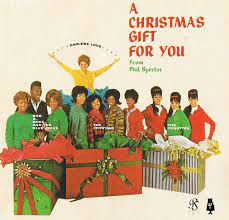
PHIL SPECTOR: A CHRISTMAS GIFT FOR YOU

It was Derek Taylor, the eminent Beatles PR, who gave me my first copy of A Christmas Gift For You, Phil Spector’s classic Christmas LP. It was 1972 and Derek was working for WEA (Warner-Elektra-Atlantic) Records at the time, head of Special Projects I think, but had taken it upon himself to promote a record on a competing label. The edition Derek gave me was a reissue on Apple Records, which had nothing to do with Warner Bros, but he had no compunction about moonlighting for his old chums since Spector, who had produced records by John and George, was sort of family I guess. More to the point, Derek believed in the record and felt, rightly, that it deserved the second chance this Apple reissue offered. 

        Before we go any further with this I ought to state that what follows does not in any way excuse Phil Spector’s conviction for the killing of 40-year-old actress Lana Clarkson, following which he was sentenced to 19 years to life, dying in a prison hospital in 2021. Whatever opprobrium was deservedly heaped upon Spector, however, does not reduce the merits of A Christmas Gift For You nor his skills as a record producer, and Derek Taylor had died six years before all this happened. 

        Recorded at Gold Star Studios in Los Angeles over many sessions during the summer of 1963, A Christmas Gift For You was first released in the US on Philles, Spector’s own label, on November 22 that year, by a quirk of fate the same day that President John F. Kennedy was assassinated in Texas. America was in no mood for festive fun, and Spector’s masterpiece died a death as a result. Which is why I was unaware of it until I happened to be in Derek’s office in the week before Christmas 1972. 

        I was too late to join in the merriment to be found in Derek’s Apple office, described in jaw-dropping detail by ‘office hippie’ Richard DiLello in his book The Longest Cocktail Party, but Derek continued to host lower-key, early evening soirees in his corner office at WEA, sitting in his peacock chair and pouring drinks for visiting music writers. It wasn’t unusual for members of The Faces to be hanging out in Derek’s office as they were favourites with the girls who worked there, along with his PA Mandi Newall and the more jovial members of his staff like dapper promo man Des Brown. 

Derek in his peacock chair

        The LP, now retitled Phil Spectors Christmas Album, was playing when I arrived for my festive drink and when I remarked on it, Derek extracted a copy for me from a box of them on the floor beside his desk. “Happy Christmas, old boy,” he said with a twinkle in his eye as I left with it tucked under my arm. When I got back to my flat in Bayswater, I played it for the first time. And I’ve been playing it ever since, though nowadays it’s more likely to be the CD enclosed within the 1991 Back To Mono Spector collection of three separate CDs, 60 tracks in all. 

The Apple reissue I was given 

        A Christmas Gift For You contains 13 tracks; only one of them, the closing ‘Silent Night’ with its monologue by Phil himself, sacred, and from a glance at the titles, you could be forgiven for assuming it was all a bit cheesy. ‘Frosty The Snowman’, ‘Rudolph’ and ‘Marshmallow World’ might appear childish, but from the opening notes of opener ‘White Christmas’, an ascending line on the bass notes of a piano, and Darlene Love’s pronunciation of ‘I’m’ as ‘Ahiyam’, the stage is set for a Christmas record like no other. The wall of sound thunders in and after a couple of verses steps back. “The sun is shining, the grass is green,” Darlene tells us, half talking, half singing. “The orange and palm trees sway. There’s never been such a day in old LA. But it’s December 24th and I’m longing to be up north. So I can have my very own White Christmas. Oooohh yeahhhh… Ahiyam dreaming…” and off we go again, another verse with a closing nod to ‘Jingle Bells’.

        Almost all the tracks are prefaced by brief, melodic orchestral preludes before the Spector mix of guitars, horns, pianos, bass, drums and additional strings kick in, and every track is a joy. “He had a grand idea,” writes my former Melody Maker colleague Richard Williams in Out Of His Head, his Spector book first published in 1972. “He wanted to make a Christmas album. It sounded like a terrible, corny idea, but Spector knew different: playing on the sentimental core hidden inside his freakishness, he decided he wanted to take all the usual Christmas songs and, using all his artists, really do them over differently.”

        Nowadays they’re not so much different as standard, at least in our house. That’s because it’s been played more often than any other Christmas record, so much so that my kids actually assumed that similar sounding ‘wall-of-sound’ tracks by The Ronettes, like ‘Be My Baby’ and ‘Baby I Love You’, and by The Crystals, like ‘Then He Kissed Me’ and ‘Da Doo Ron Ron’, were Christmas songs too, at least until I pointed things out. 

        “It was an artistic triumph,” writes Richard. “He truly captured the secular spirit of Christmas. Listen to The Ronettes’ ‘Sleigh Ride’, to the care with which it is produced, to the bells and horses’ hooves, and to the way Ronnie sounds like she’s singing from inside a big fur coat. Listen to ‘The Bells Of St Mary’, on which Bobby Sheen sings his McPhatterish heart out over one of [Jack] Nitzsche’s most brain-storming arrangements, with an occasional interjection from Darlene and [drummer] Hal Blaine at his wildest on the fade.”

        I couldn’t agree more and this was why I determined to put Richard’s Spector book back into print while I was running Omnibus Press. To this end, Richard and I met in an Indian restaurant on Soho’s Bateman Street and over lunch agreed terms for a new, slightly revised edition of Out Of His Head. The date was February 3, 2003, but little did we know that at the exact moment we were digesting our chicken tikkas, over in LA Phil Spector was being arrested for murder. Some coincidence.

The original UK edition of Out Of His Head, published by Abacus in 1974

The Omnibus Press edition of Out Of His Head, published in 2003

        We emailed one another the next day, both of us astounded by this quirk of fate, one that surely ranks with the original release date of A Christmas Gift For You. 

        As Richard writes: Just as A Christmas Gift For You was hitting the shops, the new came that John F. Kennedy had been assassinated in Dallas. Suddenly no one wanted tinkling glockenspiels and horses hooves and songs about Mommy kissing Santa Claus. Phil Spectors magnum opus was dead in the water. It would take ten years and the patronage of The Beatles before the album emerged from the status of collectors item to claim a permanent as a seasonal favourite.


17.12.22

TOM PETTY & THE HEARTBREAKERS – Live at The Fillmore, 1997


“Oh, baby doll,” exclaims Tom Petty in his endearing Southern drawl at the start of this 2-CD set drawn from six of the 20 nights he and his Heartbreakers played at San Francisco’s Fillmore West between January 10 and February 7, 1997. Then they’re off and into ‘Jammin’ Me’, the song he wrote with Bob Dylan and ace guitarist Mike Campbell, followed by ‘Listen To Her Heart’, two of the 14 originals offered up here alongside a host of well-chosen covers.

    The six Fillmore shows can be found on two packages released last month, a 4-CD deluxe package with bells and whistles and a more user-friendly double CD set that I’ve been playing for the past couple of weeks. It offers a generous two hours plus of music and proves beyond any doubt that Tom’s Heartbreakers vie with Bruce’s E Street men for gold in the US bar-band Olympics. 

    Indeed. Live At The Fillmore 1997 establishes a copper-bottomed claim that Tom and his men are the best tribute band in the world. Between stage patter – “This is going out on the internet… whatever that is” – we get Chuck (‘Around And Around’ and ‘Bye Bye Johnny’), Kinks (‘You Really Got Me’), Stones (‘Time Is On My Side’, ‘Satisfaction’ and ‘It’s All Over Now’), Byrds (‘It Can’t Be Wrong’, ‘You Ain’t Going Nowhere’ and ‘Eight Miles High’, with Roger McGuinn), Led Zep (‘Black Dog’, disguised as ‘Ugly Homecoming Queen’), Them (‘Gloria’) with a touch of Dylan (‘Knocking On Heavens’ Door) and even a sprinkling of Who (‘Shakin’ All Over’, as a Pirates/Who fusion). 

    Almost all of these are performed true to the originals. Mike Campbell pays homage to the group’s heroes by lovingly replicating guitar solos as you expect to hear them, deftly recreating Dave Davies’ ‘ripped speaker’ solo on ‘You Really Got Me’ and getting the fuzz tone dead right on ‘Satisfaction’. Tom pronounces the heavenly door as ‘dooer’, and for my money has always sounded a bit like Roger McGuinn, while the group can sound uncannily like The Byrds when they want to anyway.

    The fun they had is reflected in ‘Heartbreakers Beach Party’, which Tom claims they never played before, and the grungy ‘Louie Louie’ which morphs into ‘Gloria’ but for all the fun and games the highlight of CD1, and for my money the entire set, is the golden triptych of Angel DreamThe Wild One, Forever and a delicious acoustic take of ‘American Girl’, all three drenched in emotion, tenderness and the same brand of understated eloquence that Tom brought to I Need You at the Concert For George in 2002. 

    Playing nightly for a week or more in the same venue is not a new concept. It happens in Vegas all the time and early on The Beatles did pretty much the same thing, first in Hamburg, then at UK seaside resorts during 1963 and finally at their Christmas shows at the Finsbury Park Astoria. The Who tried it at the Young Vic in London in early 1971, an ambitious experiment by Pete Townshend that didn’t really work out, and Eric Clapton did it for years at the Royal Albert Hall. Still, Petty & The Heartbreaker’s stint at the Fillmore West was clearly something extra special, for both the band and the audience.

    Tom wanted to get away from the soulless stadiums he and his band had graduated towards, and the whole crew felt the need to do something other than play the same set, their best-known songs, night after night, as they had felt obliged to do when facing audiences of 10,000 or more. This is the result, loving compiled by Mike Campbell now that his boss is no longer with us. “I will always remember those nights with joy and inspiration,” he writes in a preface to the top notch booklet notes by Joel Selvin, rock critic on the San Francisco Examiner


17.11.22

BRUCE SPRINGSTEEN – Only The Strong Survive


I remember... I was introduced to soul music through Geno Washington & The Ram Jam Band whose 1966 album Hand Clappin’ Foot Stomping’ Funky-Butt… Live! retains a cherished place in my diminishing LP collection, and back then I always headed for the dance floor at the sound of Stax and Motown. That album formed the basis of sets performed by The Black Sheep, the premier band in my home town of Skipton, and no one sat down as they raced nonstop through ‘Ride Your Pony’, ‘Up Tight’, ‘Hold On I’m Coming’, ‘You Don’t Know Like I Know’ and a dozen more soul classics. 
        It was somehow very cool to like soul music in those days and on the cover and accompanying artwork of Only The Strong Survive, Bruce Springsteen looks fabulously cool as he leans against a cucumber-green Pontiac GTO*, its lines as sleek, smooth and retro as the music within. Like the music, this model Pontiac was produced in the sixties, between 1963 and 1974; a classic car to frame 15 classic soul covers, a few well-known, most not so, all performed with affection and enthusiasm, a lockdown inspired left turn from Bruce’s role as leader of the E Street Band, though their horns feature prominently, alongside producer and multi-instrumentalist Ron Aniello and engineer Rob Lebret. 
        It was a labour of love for this trio, of course. Their respect for this music is evident from the attention to detail – the arrangements don’t stray much from the originals – and the depth of feeling Bruce injects into the songs. On Graham Norton’s BBC TV chat show last Friday night, looking a bit uneasy alongside an eye-catchingly underdressed Anya Taylor-Joy, star of The Queen’s Gambit, he explained how soul music was his musical education, and how it has informed his work ever since. Come to think of it, the E Street Band has always played more like a soul revue than a basic rock unit. Nowadays there’s at least ten of them, often more if you count the fluid brass section. The Black Sheep only managed six, but they did have Kevin on trumpet.


        “I remember,” the opening words of the opening title track, sung by his female backing vocalists, sets the scene for all that follows, in this case a nostalgic wander down memory lane to where music made largely within a 100-mile radius of Memphis somehow managed to combine romantic heartbreak with a pulsating beat drawn from gospel churches where praising the Lord was and remains a serious business. The more enthusiastic the congregation, the more likely they were to ascend their stairway to heaven. 
        Bruce’s covers are immaculate, as you would expect, the music uplifting, joyful, a free and easy journey into Bruce’s treasure chest of favourites. There’s no attempt to update or put his own stamp on the original recordings and the emphasis is on Bruce’s vocals. He’s joined by Sam Moore on a couple but on his own for the rest, singing like a soul veteran with a direct line to the spiritual origins of Wilson P, Eddie F, Joe T, Otis R and all the rest of those guys who ushered us on to the dance floor in the sixties.
        Of the songs with which I am most familiar, ‘The Sun Ain’t Gonna Shone Anymore’ doesnt stray from the arrangement used by The Walker Brothers but loses the theatrics; ‘7 Rooms Of Gloom’ lacks The Four Tops’ silken vocals but adds drama; ‘What Becomes Of The Broken Hearted’ is throatier than Jimmy Ruffin but just as despairing; and ‘Someday We’ll Be Together’, the closer, is chock full of longing, just like Diana.
        Of the rest, I’m now a fan of ‘Nightshift’, the Commodores elegy for Marvin and Jackie, and ‘Do I Love You’, the Northern Soul classic originally recorded by the little-known Frank Wilson, for which Bruce has filmed an energetic video with a gospel choir. But the truth is every track is a winner on a gloriously uplifting side project from the man who simply doesn’t know how to stop.


*I am indebted to my old pal Frederic Manby for identifying the make and model of the car, though he had to consult another car expert, Phil Huff. Frederic and I worked together long, long ago and he went on to distinguish himself as the long-serving motoring correspondent for the Yorkshire Post. He, too, danced to The Black Sheep back in the day. 

6.11.22

REVOLVER RE-EVOLVED


Marginally more accomplished that Rubber Soul and without the flamboyance of Sgt Pepper, Revolver is widely acknowledged as The Beatles’ masterpiece, an opinion with which I concur, especially after listening to this sparkling remix and the revealing ‘work in progress’ tracks on the bonus second disc included in the 2-CD package I opted for, as opposed to the £100+ 5-CD set with all sorts of extras.

        It was 1966. The Beatles took the first three months of the year off, their first real holiday since Beatlemania broke out in 1963. Taking advantage of EMI’s generous but fiscally motivated offer of unlimited studio time at Abbey Road, they recorded the songs that appeared on Revolver between April and June, then embarked on their ill-fated final world tour in July and August. They must surely have known their touring days were coming to an end, for almost all the tracks on their seventh album were unsuitable for performing on stage with the equipment that was available to them in those days. Can you imagine Ringo yelling “Backwards guitar, George!”? None of Revolver’s songs were ever performed by The Beatles before an audience, though ‘Paperback Writer’, the single recorded concurrently, appeared in their concert sets that year.

        So much for the back story, let’s begin at the beginning. The fabulous Paul McCartney bass line on ‘Taxman’ that Weller shamelessly co-opted for ‘Start’ is even more fabulous, a deep sensuous groove that matches anything Duck Dunn played with the MGs, while George’s voice and choppy guitar benefit from a thorough clean-up. Always a terrific opener, everyone’s disapproval of Mr Wilson and Mr Heath is considerably more apparent and Paul’s short, sharp guitar solo simply explodes. More importantly, however, the off-putting stereo separation on the Revolver CD I bought 25 or more years ago, wherein the vocals are skewed towards the left speaker, has been junked in favour of a far more equitable mix across the audio spectrum. In a nutshell, it brings everything up to date. 

        Stereo remix engineer/producer Giles Martin, son of George, clarifies the technicalities of this in the accompanying booklet, explaining how modern technology enabled him to separate each recorded element – instruments and vocals – and reposition them, this despite the songs having been recorded on four-track tape. He refers to it as ‘de-mixing’, applying to Revolver the same process used during the production of the recent Beatles Get Back movie to restore inaudible dialogue on film.

        And on we go. The strings on ‘Eleanor Rigby’, Paul’s weeping widow, ring out like never before. John sounds sleepier, foggier, than ever on ‘I’m Only Sleeping’, while Ringo’s cymbals glisten and the nifty little five-note bass link between verses is deeper, craftier too. George’s sitar is spikier in ‘Love You Too’, and in the accompanying booklet tabla player Anil Bhagwat assures us it really is George playing the sitar. 

        The lovely ‘Here, There And Everywhere’ sounds like it was a recorded last week, a sumptuous ode to his love for Jane that glides like a gondola, its harmonies on a par with anything on Abbey Road’s long medley. No wonder Brian Wilson was inspired. ‘Yellow Submarine’ is almost profound and certainly happier. The guitar part in ‘She Said She Said’ is crisper, John’s vocal seemingly up in the mix, more urgent, a bit frightening actually.

        Side two and Paul’s happier, the sun shining brighter as he wishes it good day. George’s lovely cascading guitar part in ‘And You Bird Can Sing’ has more bite. You can taste Paul’s tears in ‘For No One’, its horn part blowing clear and true. ‘Doctor Robert’ bounces merrily along, John’s vocal more distinct. ‘I Want To Tell You’ sounds like it was recorded for All Things Must Pass. ‘Got To Get You Into My Life’ swings like never before. Finally, ‘Tomorrow Never Knows’ sounds more unsettling, John more persuasive, the shrieks more piercing, Ringo’s tom-tom remorselessly tolling the end of the beginning. 

        Remarkably, these 14 Revolver tracks last precisely 34 minutes and seven seconds, its longest track three minutes, its shortest just two. There’s no filler. Thats how it was done in those days. A superb album sounds even more superb. 

        It’s probably been said before but after listening to this new mix for three days, at home and in my car, I couldnt help but admire how on his Revolver songs Paul demonstrates a remarkable ability to switch moods, from the melancholia of ‘Eleanor Rigby’ to the romanticism of ‘Here, There...’, from the gloom of ‘For No One’ to the optimism of ‘Good Day Sunshine’ and feel-good vibe of ‘Got To Get You…’, with its Stax-like disco strut. Meanwhile, John is less quixotic but far more philosophical, pondering the meaning of life from an acid-drenched stupor, the pessimistic observer resigned to his lot (until Yoko came along to snap him out of it).

        The second CD in the package I bought opens with vibrant remixes of ‘Paperback Writer’ and its B-side, ‘Rain’, one of many contenders for the ‘Best Beatles B-side’ award, which is a whole other issue but, for the record, in a tight contest my vote would go to ‘Don’t Let Me Down’. Then there’s 13 outtakes, all of which sound somehow unfinished but are not without interest. John often tops and tails things with a quip, sometimes waspish, sometimes gleeful. The brass part on ‘Got To Get You Into My Life’ began as fuzz-tone guitar played by George, ‘And Your Bird Can Sing’ had McGuinn-like chiming guitars throughout and in ‘Taxman’ John and Paul sang the line ‘Anybody got a bit of money’ in falsetto. We hear John muck things up in ‘I’m Only Sleeping’, Paul’s melodious piano on the backing track to ‘For No One’ and ‘Yellow Submarine’ without the sound effects. 

        But of all these extras the best is the take of ‘Here, There And Everywhere’, spare and intimate, sounding a bit like a demo. “If pushed,” says Paul in the booklet notes, “‘Here, There And Everywhere is my own favourite of all my songs.” 


23.9.22

CREEDENCE CLEARWATER REVIVAL AT THE ROYAL ALBERT HALL

Alerted to this CD some weeks ago by Amazon, who thought I might ‘like’ it, I was rather hoping it was recorded during Creedence Clearwater Revival’s concert at the RAH on 27 September 1971, which I attended. It’s not. It’s from a show in April 1970 when CCR was a four piece, and probably all the better for it, though the show I did see – with CCR as a trio – was memorable too, and not just because I watched it from behind them, sat with no one around me on those big steps where choirs stand during the Proms. I can’t remember why, maybe it was because the show was a sell-out and no one thought to send review tickets to Melody Maker until the last minute. Or maybe I blagged my way in on the strength of my MM credentials because I really wanted to see a band whose singles I loved in those days. I still do for that matter.

        Formed at high school in 1959, almost a decade before fame beckoned, firstly as The Blue Velvets, then as The Golliwogs, by the time they became CCR they had accumulated more chops than all their Bay Area rivals combined. This wasn’t the only thing that set them apart from their flower-powered contemporaries. They weren’t improvising country bluesmen like the Dead, psychedelic travellers like the Airplane or blues revivalist like Janis, and they dressed in denims, not yellow kaftans and billowing flares. They were radio-friendly, more AM than FM, and were retro if retro equates as having a foundation in basic rock’n’roll but, 12-bars aside, I’d lean more towards power pop before the term was invented, rock songs that were catchy, short and snappy, with great hooks, fat productions with a churning forward momentum supplied by a rhythm section that rarely took its foot off the pedal. Chooglin’ they called it.

        It wasn’t particularly fashionable but it was popular. I’d hazard a guess that no US band’s top ten hits – they had 13 between 1968 and 1971 – were played more on barroom juke-boxes than those by Creedence. They inspired at least a couple of convincing sound-alike records, among them The Hollies with Long Cool Woman In A Black Dress and a short-lived British trio called Christie whose CCR pastiche ‘Yellow River’ reached number one in the UK charts in 1970. So uncanny was the resemblance that when I saw CCR at the RAH, some audience members actually called out for ‘Yellow River’ during the show. 

        The mastermind of CCR was writer, singer and lead guitarist John Fogerty whose voice seems to me now like a soulful growl somewhere between Joe Cocker and Bruce Springsteen with a teaspoonful of Richard Penniman here and there. On rhythm guitar was his elder brother Tom, soon to leave, alongside bassist Stu Book and drummer Doug Clifford. They sounded like a well-drilled bar band, with fewer personnel than Springsteen’s E Street men but with the same temperament, the same hard-won skills, the same allegiance to rock’s honourable past.

        The new RAH CD contains just 12 songs and clocks in at less than 45 minutes, its longest track the encore, a mammoth eight minutes plus of ‘Keep On Chooglin’, its shortest ‘Travelin’ Band’ at 2.11, which qualifies it for inclusion on a Ramones album. Six songs are less than three minutes, but this parsimony in heft (by today’s CD standards) must not to be mistaken for a lack of quality. On the contrary, every track is rattled off in a seemingly effortless display of rock’n’roll know-how, the kind of flawless perfection that only groups with a thousand or more gigs under their belt can deliver. More importantly, all the way through they sound like they’re truly enjoying themselves playing like this, spurred on by a wildly enthusiastic crowd. 

        They open the show at a relatively modest pace with ‘Born On The Bayou’, introduced by Fogerty’s lead guitar riff. Drums and bass quickly assert the group’s signature sound before Fogerty sings, ‘When I was just a little boy…’, beginning at the beginning as it were, taking his audience to the area of America that inspired so many of CCR’s songs, not light and sunny California but the dark and swampy Deep South where hound dogs bark and hoodoos are chased. At 5.13, it’s the second longest track on the CD, enhanced by between-song guitar parts at a marching-band tempo that are designed not to enable the guitarist to grandstand but to enhance the song. Showboating has no place in CCR. ‘Green River’ follows. 

        My CCR companion for the past 30-odd years has been a 20-track compilation called Chronicle which lacks ‘Tombstone Shadow’, track three on the RAH CD. A mid-tempo 12-bar, it’s the only track that seems a bit like filler to me.

        The pace ramps up considerably for ‘Travelin’ Band’, augmented by some Little Richard-style hollering, which is over in the blink of an eye, and doesn’t let up for ‘Fortunate Son’, their sharp, politically-motivated comment on who gets drafted to Vietnam and who doesn’t. While much is made of San Francisco bands’ commitment to love and peace, CCR were – in their own way – on the side of the righteous too, albeit without wearing their hearts on their sleeves. ‘Who’ll Stop The Rain’ – not, alas, included here – is a good an allegory the futility of war as anything recorded by their peers.

        ‘Commotion’ whips by before we reach ‘Midnight Special’, recorded by all and sundry, and CCR give the old folk song an almost spiritual feel, at least by their reckoning. Two of their biggest hits, ‘Bad Moon Rising’ and ‘Proud Mary’ follow back to back, both duplicated note for note from the records, both received rapturously, short and sweet but CCR nirvana on the night. 

        They are followed by ‘The Night Time Is The Right Time’, a slow blues written by Lew Herman, aka Herman Lubinsky, the founder of Savoy Records, which dates from 1957. Now thoroughly warmed up, Fogerty gives it his all while the band echo him in an atypical call and response routine. Accelerating into the home straight, they rattle off Little Richard’s ‘Good Golly Miss Molly’ much like The Beatles essayed ‘Long Tall Sally’ and close the show with the eight minutes plus of ‘Keep On Chooglin’’, its rhythm worthy of Little Feat, the pace never letting up for a moment even if the drumming sounds like Doug Clifford was banging a dustbin lid.  

        The booklet notes include an extract from a review by Miles Kingston of The Times who reported that a standing ovation lasted throughout the National Anthem (!) and for a quarter of an hour after that. God save CCR indeed.


31.12.21

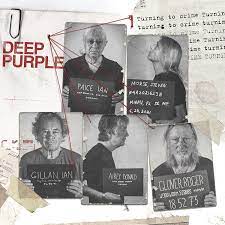
DEEP PURPLE – Turning To Crime


Obliged by Covid-19 to self-isolate and therefore work individually – as opposed to writing new material together in the studio, their customary procedure – Deep Purple early this year opted to record an album of covers, with each member of the group transmitting their contributions to the Anarchy Remote Studio, a digital facility in cyberspace where producer Bob Ezrin assembled the parts like a jigsaw. The result is Turning To Crime, a 12-track CD of songs “that shaped us over the years”, according to a brief note on the accompanying booklet. In reality it’s more than 12, for it concludes with a five-song medley, among which is Led Zeppelin’s ‘Dazed And Confused’, of which more later.

        Unless I’m mistaken, the last cover version recorded by DP was ‘Lalena’, by Donovan, which appeared on their largely ignored third LP, simply titled Deep Purple, in 1969. Prior to that the first DP group had recorded plenty of covers, not least their debut US hit ‘Hush’, by Joe South, and others by Neil Diamond, Lennon & McCartney and whoever claims to have written ‘Hey Joe’. Once they got into their stride, however, original material prevailed, and this coincided with singer Ian Gillan and bassist Roger Glover joining the core trio of organist Jon Lord, guitarist Ritchie Blackmore and drummer Ian Paice. This quintet, which in my 1983 biography of the group I refer to as DP Mark II, enjoyed enormous success and is still widely regarded as the ‘classic’ line up. 

        Gillan, Glover and Paice remain today, joined on guitar by Steve Morse and on keyboards by Don Airey. With Paice now the only member of the group to have played in its every incarnation since DP formed in 1968, Morse and Airey are by no means newcomers. The former has been with them since 1994, replacing the eternally capricious Blackmore, and the latter came on board in 2002 when Lord, their statesman-like elder, retired from rock to concentrate on serious music. Sadly, he died in 2012. 

        The choice of material on Turning To Crime throws up plenty of surprises and a handful of songs that might be expected. Among the latter is the opener, Love’s ‘7 And 7 Is’, at one second shy of two and half minutes the album’s shortest track but by many mph the fastest. Its inclusion offers strong evidence of where DP were coming from by the time they recorded their breakthrough LP In Rock, the relentless pace (no pun intended) of the drums leading the way over a thumping beat, crunch guitar and indecipherable lyrics, DP’s version differing from the original only in that they chuck in characteristic guitar and organ solos and omit Love’s thunderous explosion and Arthur Lee’s slow blues-based coda.

        Ian Gillan long ago betrayed his influences in the lyrics to ‘Speed King’, which referenced Little Richard who was knocking around New Orleans in 1957 when Huey ‘Piano’ Smith recorded ‘Rockin’ Pneumonia And The Boogie Woogie Flu’ there. This paean to chest ailments given the rockn’roll cure offers Don Airey a chance to show off his honky-tonk chops, and to cheekily incorporate the riff from ‘Smoke On the Water’ into one of his solos. Freed from the need to sprint, Ian Paice shows himself to be a fine and steady rock’n’roll stickman. He has some previous on this kind of material, having been a member of Paul McCartney’s ‘Rock and Roll Band’, playing alongside David Gilmour, Mick Green, Pete Wingfield and Chris Hall, not to mention the former Beatle, at the Cavern in Liverpool in 1999.  

        A reverent take on Fleetwood Mac’s ‘Oh Well’ follows, fairly true to the original, with about a minute of the haunting ‘Part 2’ coda slapped on the end. Next up is ‘Jenny Take A Ride’, by Mitch Ryder & The Detroit Wheels, its opening section perhaps better known as ‘CC Rider’, much performed by Elvis, which morphs into ‘Jenny, Jenny’ whom Mitch invites to take a ride, before slipping back to ‘CC’. This is great boozy bar band music, the kind of thing that Springsteen favours for encores, so here we have DP channelling with some distinction hitherto unrealised E Street Band leanings. 

        ‘Watching The River Flow’, an anomaly in Dylan’s catalogue in that it was a one-off blues-based single, seems like an unlikely cover and may have been suggested by Bob Ezrin who joins Gillan on vocals. There’s a hint of gospel in DP’s version which in an oblique way pays tribute to the full-on sound of Leon Russell, who played on Dylan’s original, and his Mad Dogs & Englishmen retinue, not least in the 30-second keyboard sign off. 

        We’re back in New Orleans for ‘Let The Good Times Roll’, which sounds to me like it could have come from the soundtrack to Kid Creole, Elvis’ fourth (and best) movie. Joined by saxophone and trumpet, DP take it at a medium pace, with a bluesy guitar solo and churchy keyboards adding to the southern fried flavour, Airey switching to honky-tonk at one point thought the brass is never down in the mix. 

        Taking on Little Feat is a fearsomely bold move but Don Airey has Bill Payne’s tinkly keyboard part off pat, and the whole band swing their way through ‘Dixie Chicken’ respectably enough. Morse is great on the slide solo, and my only gripe is that Ian Gillan’s Brit voice sounds a bit strained next to Lowell’s sly, loose-limbed, shuffle delivery. Still, it’s refreshing to learn that DP were influenced by one of my favourite American bands, and I tip my hat to Morse for the solo at the close.

In the never-ending discussion as to the origins of heavy metal, or hard rock as it was before Black Sabbath became Paranoid, The Yardbirds’ ‘Shapes Of Things’ merits a sub-section of its own, and although Jeff Beck was in the group when it was originally recorded, its composition is actually credited to Keith Relf, Jim McCarty and Paul Samwell-Smith. Still, it’s a minor psychedelic masterpiece, with Beck’s guitar hovering between distortion and the mysterious East, and lyrics that pre-empt the present-day climate crisis. DP take it at a slightly slower pace than The Yardbirds, but are dutifully reverent in their approach, though Morse, ever anxious to inject something distinctive, gets a long solo before the whole thing grinds to a suitably rave-up style halt.

Hearing Lonnie Donegan’s version of ‘Rock Island Line’ on the radio when he was about 10 led to Roger Glover becoming who he is now, so it’s no surprise that he shares the vocals, leading on the first verse, with his old Episode Six partner Ian Gillan on ‘The Battle Of New Orleans’, a hit for Lonnie in 1959, and probably the least likely cover on Turning To Crime. Joined by violin and accordion, no one in a million years would guess this hoe-down romp was Deep Purple.

‘Lucifer’, a Bob Seger song from 1970 when he led a group called The System, is the only track here with which I was unfamiliar, a mid-tempo rocker typical of the Silver Bullet work that brought him no little success as the seventies progressed. DP give it their all, but of greater merit is their take on Cream’s ‘White Room’, a far more interesting song. Another dose of psychedelia with a hint of discord on the vocals and slabs of twisty guitar, DP match Eric, Jack and Ginger bar for bar, no mean feat. 

Finally, we reach what DP call ‘Caught In The Act’, their medley of five songs, the first four instrumentals, with Gillan joining in only on ‘Gimme Some Lovin’’, Steve Winwood’s tour de force when he was the star attraction in The Spencer Davis Group. Airey opens the show, a ragtime figure leading into Freddie King’s bluesy ‘Going Down’, which leaps into ‘Green Onions’, funky and straight like the MGs until Morse adds some twists, then ‘Hot ‘Lanta’, on which DP somehow manage to sound awfully like The Allman Brothers jamming away on stage. Next up is an instrumental of Zep’s ‘Dazed And Confused’, opening not with the familiar descending bass line but a passage from later, then the descent before  instruments take over the call and response. This leads neatly into the enormous ‘Gimme Some Lovin’’ riff, played well, and after two and a half minutes the whole business grinds to a halt, a few drum beats the last thing we hear. What fun they must have had. 

Also available is a 40-minute DVD The Making Of Turning To Crime, which is precisely what the title says, those responsible having concluded it was a crime for a group of DP’s stature to record an album of covers. This perhaps explains why on the sleeve they are photographed as if in a police line-up, every one of their mug shots resembling the sort of threatening ne’er do wells you’d cross the road to avoid.

When Covid is over, will they play these songs on stage? 


26.12.21

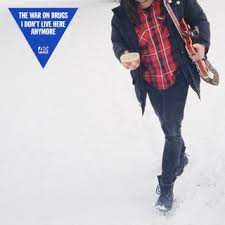
THE WAR ON DRUGS – I DON’T LIVE HERE ANYMORE


Most review of albums by Adam Granduciel’s War On Drugs project focus on lyrics that invariably describe some kind of struggle, whether it’s the vicissitudes of romance, the trials of living in the modern world or a life burdened with more than its fair share of despair. But it wasn’t the lyrics that drew me to WOD, it was the music, the aural landscape in which Granduciel frames his tales of woe. 

  Indeed, there are so many things to like about the music on I Don’t Live Here Anymore, the most recent WOD album, that it’s hard to know where to start, but how about the moment on its second track ‘Harmonia’s Dream’, about three minutes in, when the already busy backdrop is joined by a piercing keyboard that on first hearing reminded me of a fairground, the soundtrack to a carousel, or maybe even that wistful electronic sound on Del Shannon’s original recording of his signature song ‘Runaway’. Back then that seductively original organ part was created by Max Crook, who takes credit for having invented the Musitron on which he played it, but if WOD master craftsman Granduciel has somehow found a Musitron of his own he’s keeping mum, and from the credits I don’t know whether Dave Hartley or Robbie Bennett, both of whom are acknowledged as keyboard players on track two, are contributing this passage.

        Either way, this shrill but irresistible sound lifts an already impressive track up into the stratosphere, and I can even forgive Granduciel for the U2-like fall away a minute later when the whole galloping big music affair disappears, only to rise up again, this time joined by an electric guitar that traces a descending figure and resolves on a bent note country and western lick worthy of James Burton. The organ/guitar duet is the icing on the cake as the whole wondrous episode is repeated in a minute-long coda that fades out ever so gradually.

        It occurs to me that what Granduciel is doing here is taking something old – the organ sound and the country lick – and turning them into something very new and relevant to the modern era, and in doing so he unites old time rock lovers like me, with 60 years of listening behind us, with newer souls who maybe first heard WOD in the 21st Century. To bridge such a generation gap is a fine achievement.

        All this new album is great, really, just like the rest of the War On Drugs small but perfectly formed catalogue, but this little bit of music had me smiling for the last few weeks every time the track played in my car and living room, and my guess is it’ll continue to do so well into the New Year. 


14.12.21

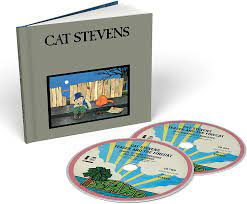
CAT STEVENS – TEASER AND THE FIRECAT, 2CD Deluxe edition


Beyond Buckden on the B6160 road to Hawes in the Yorkshire Dales there sits the tiny hamlet of Cray, two or three farmhouses and a pub called The White Lion Inn, outside of which, on the evening of Boxing Day, 1971, I parked my new car, an orange Mini, and went inside to have a beer or two with my sister and a few of her friends. 

        Anne’s pals asked me lots of questions about working for Melody Maker and one of them wanted to know whether I’d met Cat Stevens. Yes, I replied, and what’s more I have his new LP, Teaser And The Firecat, on cassette in my car. “Can we have a listen?” they asked. 

        I was pretty proud of the sound system in the car so I took a couple of girls outside, sat them in the back seat next to the speakers, started the motor, punched play and on came Steve, as I knew him in those days. 

        The girls loved it, adored it in fact, so much so that they spent the rest of the evening in my car while we ferried drinks out to them, even though it was a bit nippy. They were particularly taken with ‘Rubylove’, track two on side one, on which Steve’s Greek family background shines through; a verse sung in the language of his father and two of dad’s friends playing bouzoukia. They asked me to play this lively song again and again, cranked up pretty loud, and I came to realise that the reason they liked it so much was not because they were in love with Steve, which they probably were, but because of how sharp and clear it sounded. The finely-tuned Grecian strings rang out at the top end, little flamenco fills, trills and flourishes expertly played, while a soaring chorus held down the middle, double-tracked with Linda Lewis joining in so that it seemed like a whole choir had joined us in the Mini, and a percussive bass line deep in the mix, held back until verse two, that prevented the production from becoming too toppy, too shrill. 

        I wasn’t so wrapped up in The Who in those days that I couldn’t recognise a great production when I heard one. ‘Rubylove’, I reckoned, was as seamless an example of the art of hi-fi I’d ever heard, two minutes and 36 seconds of aural perfection, and as I sat there in the car beneath the stars that cold December night I thought ‘Rubylove’ simply could not be improved upon. And this, dont forget, was on a cassette. 

        Well, I was wrong. Remarkably, ‘Rubylove’ sounds even better on this newly remastered edition of Teaser..., released last month, as does everything else really. Paul Samwell-Smith’s work on the four records he made with Cat Stevens between 1970 and 1972 – Mona Bone Jakon, Tea For The Tillerman, this one and Catch Bull At Four – were notable for his simplicity of production, austere almost, that, regrettably, gave way to a fuller sound as the 1970s progressed. Either way, it’s the remastering of such minimalism that makes this record ring out so cleanly now, which makes the restraint all the more delightful and at the same time makes my 2021 hi-fi sound like the state-of-the-art system I know it isn’t. 

        Setting aside for a moment this astonishing upgrade in the aural department, as I wrote in my biography of Cat Stevens, published in 1984, six of the nine songs on Teaser... belong with the cream of his catalogue while the remaining three, notably ‘Peace Train’, suggest the excesses that would mar each of the albums that ultimately followed. Despite its strong arrangement, ‘Peace Train’ was awash in noble sentiments naively expressed – a fault that would multiply with irritating regularity in the years to come. ‘Changes IV’ and ‘Tuesday’s Dead’ suffered similar limitations, albeit to a lesser degree.

        Elsewhere, however, Teaser... contains many of Cat Stevens’ most memorable songs. ‘How Can I Tell You’, which closed the first side on the original LP, is unquestionably his finest love song; immensely fragile, yet moving to a degree that few writers have ever been able to capture. Like so many of the songs he recorded at this time, its beauty lies in its simplicity; simplicity as sincere as anything Stevens wrote before or since. ‘If I Laugh’, under arranged with equal taste, merely underlines the point that this kind of material is where Steve excelled and where he would have been wise to concentrate his efforts until he opted for a different life. 

        ‘Moonshadow’, a perennial favourite, written while on holiday, in Spain, is among Steve’s happiest, catchiest songs; a nursery tale with a beguiling melody, toe-tapping chorus and charmingly nonsense lyrics. ‘Morning Has Broken’, the second choice for a single (which reached number nine in the charts during January 1972), was an altogether more sombre affair, a hymn tune re-arranged by Stevens with words by Eleanor Farjeon, unashamedly middle of the road yet reassuring for the strength of its dramatic melody which mercifully overshadows any religious overtones. The new record finally credits Rick Wakeman for his outstanding piano part, a credit left off at the time for contractual reasons. 

        Disc 2 on the remastered Teaser… offers demos, including two songs with which I was unfamiliar (‘The Day They Make Me Tsar’ and ‘Fisherman Song’), alternative versions, a couple of live BBC recordings, and ‘I Want To Live In A Wigwam’, the B-side of ‘Morning Has Broken’, to the best of my knowledge hitherto unavailable on CD. I was fascinated to hear ‘Rubylove’ in its infancy, without the Greek verse or personnel, and ‘How Can I Tell You’ with incomplete lyrics. Only Bitterblue went through a fairly radical transformation, speeding up dramatically. Oddly, Stevens’ voice sounds slightly hoarse on some of the demos, as if they were recorded soon after he rose in the morning, before his vocalising got into its stride. 

        Finally, I should point out a minor editorial flaw in the accompanying booklet, in that the same quotes from Paul Samwell-Smith and guitarist Alun Davies, Stevens’ regular accompanist, about ‘If I Laugh’ are replicated four pages later for ‘How Can I Tell You?’ A proof reader is needed for the Cat-O-Log Collection, as the Stevens reissue programme is amusingly called.