Showing posts with label Beatles. Show all posts

3.2.26

JOHN & PAUL: A Love Story In Songs by Ian Leslie

I can recall with unusual clarity the first time I ever heard The Beatles. It was the second Sunday in January, 1963, and I was 15 and already a committed pop fan. I was in the passenger seat of my father’s car, a white Triumph Vitesse, being driven from Skipton back to boarding school at York. On the car’s back seat was his red Roberts radio, tuned into the BBC Light Programme, its reception enabled by a cable that snaked its way to an aerial clamped outside the rear window. The programme was Pick Of The Pops, hosted by DJ Alan Freeman, freshly appointed to the role, and as we cruised through Harrogate, sometime between 1 and 2pm, he played ‘Please Please Me’, the group’s second single, just released.

Hello, I thought, that sounds different, funny, really good, terrific in fact. Who on earth is it? I strained my ears to listen but it was over too soon. I wanted to hear it again straight away but I couldn’t, of course, and I didn’t catch the name of the act. But the important thing is that I recognised something, the singing, the guitars, the harmonica, the oh yeas, in the two minutes of ‘Please Please Me’ that stood out from all the other records that Freeman played that day, stood out from pretty much anything I’d ever heard before in fact. I was an instant fan of whoever it was and I didn’t even know their name. 

Sixty-three years later, it is reassuring to be told yet again that my adolescent ears weren’t deceiving me. “‘Please Please Me’ is impatient, lusty, playful and reproachful,” writes Ian Leslie in this extraordinary book, and later: “[It] is a series of climaxes: the mouth organ’s clarion call; the opening harmony; the call and response; the sweet release of the chorus; the final oh yeahs. It combines Bing Crosby, the Everlys, Little Richard, girl groups and Motown, yet instead of sounding patched together it is utterly itself, unified by force of collective personality.” Quite. 

John & Paul: A Love Story In Songs was published late last year to universal acclaim. I was hoping that Santa might drop a copy down our chimney but that didn’t happen so I waited until it was available in paperback, as it was last week. This edition has three pages of laudatory reviews at the front, eight similar snippets on the cover and I’ve been utterly absorbed by it for the last five days. 

        The reason for all the fuss is that it’s a different sort of Beatles book, not a biography or chronicle or diary, not a memoir by someone who knew or worked for them, not an exposé of disreputable behaviour, not an arty picture book, not a critical study, not even a structural analysis of their music, not really. It’s simply a deep dive into the minds of John and Paul, focusing almost exclusively on their relationship – the Love Story of the subtitle; a beautifully written account of how the two principal Beatles worked together in the studio, where their songs came from and how they wrote and recorded them, how John and Paul in particular bounced ideas off each other and how the ying and yang of their contrasting personalities somehow fused together to create a body of work that to this day remains the shining exemplar of popular music. 

        “The twentieth century tilted on its axis,” writes Leslie of the day in July 1957 when Paul introduced himself to John, nailing his colours to the mast at the close of Chapter 1. It wasn’t long before they realised that, musically, they could read each other’s minds. To the astonishment of everyone around them, not least producer George Martin, their rivalry drove them to get better and better until it simply exploded into a situation where communication stopped, like the breakdown of a marriage, a tragedy that even now leaves everyone scratching their heads (and authors writing books like this). 

        Seeking comparisons, many reviewers have likened John & Paul to Revolution In The Head, Ian MacDonald’s 1994 book, widely acknowledged as the pinnacle of Beatles criticism, but there are important differences: MacDonald is comprehensive, covering every Beatles track, Leslie is selective, choosing songs – 43 in total, not all written by them, a handful written after the split – that support or amplify his themes; MacDonald is disparaging, sometimes brutally, of songs he considers under par, of which there are plenty, Leslie does nothing but shower praise; perhaps most importantly, Leslie’s emphasis on the group’s principal songwriters gives it an entirely different feel to previous books on the group. George and Ringo barely get a look in.

        At the heart of John & Paul is the author’s theory that many of their songs are, in fact, coded messages between the two. Building on his knowledge of human behaviour, about which he has written extensively, Leslie interprets songs in ways that no previous Beatles critic has done; they might be songs of encouragement, or convey feelings of jealousy or vulnerability, or love or hurt, or simply friendship. In short, their songs are about, or aimed at, themselves and because of this the Beatles’ music contains hidden emotions that reveal themselves only after time, and this is the reason why, after all these years, it is still universally loved. 

        This might sound contentious but in many instances Leslie’s interpretations hold water. Try it: do they believe they can work it out; was the relationship getting better during the Pepper sessions; is Paul urging John to go and get Yoko in ‘Hey Jude’: does Paul want John to get back to him; does John plead with Paul not to let me down; is Paul telling John he’ll never do him any harm and can’t make it alone in ‘Oh Darling’; and surely the memories referenced in ‘Two Of Us’ are their own. And when John sings ‘Nobody else can see, just you and me’ in ‘Look At Me’, written in 1968, was he addressing Paul? After the split, of course, these messages became far more transparent: ‘How Do You Sleep?’ from his LP Imagine is John’s scathing, unfounded attack on his former song-writing partner, while ‘Dear Friend’, the poignant closing track on Wildlife, is surely Paul’s conciliatory message to John.

        Interwoven between this hypothesising is a concise and accurate resume of the group’s career, drawn – as Leslie freely admits – from existing sources, all credited in his acknowledgments at the close. The roles played by Yoko and Linda are discussed, along with revealing conversations and meetings between the two couples that reinforce the love John and Paul still felt for each other after the group split up. Suggestions throughout that John needed Paul more than the other way around go some way to redressing the balance as regards which senior Beatle was more crucial to the construction of their catalogue of songs. Leslie quotes many instances where John would bring a song to the group and how Paul would transform it, but far fewer cases where the opposite was true. John often arrived at Abbey Road with fragments, Paul with completed songs. In this respect Leslie mistrusts the somewhat inevitable canonisation of John following his murder, attributing much of it to Philip Norman’s revelatory book, Shout! The True Story Of The Beatles, first published in 1981. 

        Each chapter in John & Paul is titled after a song, a handful of which towards the beginning of the book are covers. Chapter 4, Will You Love Me Tomorrow, intrigued me insofar as there is no recorded evidence of The Beatles performing this much-admired song, only narrative evidence in Mark Lewisohn’s Tune In. “If there’s one of these lost cover versions I would love to hear, it’s ‘Will You Love Me Tomorrow’, a Shirelles song Lennon liked to sing at the Cavern,” writes Leslie (and, by the way, so would I). “Lennon understood, in his bones, the emotion that animates ‘Will You Love Me Tomorrow’: wanting love and not trusting it to stay. What he learned from Smokey [Robinson] and from black teenage girls was how to communicate feeling rather than just feel it.”

        At the other end of the book, in a heart-rending closing chapter that considers Here Today’, Paul’s hypothetical conversation with John from his 1982 Tug Of War album, Leslie bows out with the realisation that by sharing the love they had for one another with the world, the music it inspired has made this world an immeasurably better place”. Who would argue with that? 

        John & Paul deserves to be read by every Beatle fan. My paperback edition has 433 pages including 24 pages of reference notes (including my own interview with Paul in 1971), a superb index and, as a sort of coda, a Q&A with the author conducted by Kate Mossman. Though well known, the eight pages of mostly b&w pictures are carefully selected to complement the text. 


23.8.24

THE FIRST EVER BEATLES FAN CONVENTION

This week sees the annual Beatles fan convention in Liverpool which closes after the August Bank Holiday weekend. It’s been running, on and off, since 1977 but the first one ever was held 50 years ago in July in America, in Boston, the second two months later at the Commodore Hotel in New York. I was there, reporting on the event for Melody Maker, and what I remember most about it was bumping into May Pang, John Lennon’s partner at the time, whom I knew because she was present when I’d interviewed John in LA the previous year. John has sent May along to buy stuff for him but she didn’t know what John would want and when she saw me she asked my advice. I steered her in the direction of a few bootlegs because John had told me liked them, and since money was no object May bought several. 

I also suggested May buy some prints of photographs taken of The Beatles in Hamburg when they were playing there before they became famous, among them one of John in a doorway in a leather jacket with his hair quiffed up like a rocker. This had been taken in 1960 by their friend Jurgen Volmer who was at the event. We chatted with Jurgen and May bought a print of this same picture. The next time I saw it was on the cover of John’s 1975 LP Rock ‘N’ Roll

This was probably the first time fans had witnessed a Beatles tribute act, or any tribute act for that matter, which gives the feature I wrote for Melody Maker a rather archaic tone in the light of today’s tribute band world. Here’s what I wrote for the September 14, 1974, edition of MM

Ten years on and you can’t keep a good band down.

Last weekend New York plunged back into the days of Beatlemania. A two-day convention for Beatle fans brought on all the nostalgia for the four mop tops in an overdose of enthusiastic sentimentality that occasionally bordered on the ridiculous.

The loyalty of American Beatle fans is quite frightening. But more frightening still is that in ten years of progressive rock music no other artist or group has had anything like the impact on popular taste that The Beatles had when they exploded into our lives in 1963. (For US readers change that to 1964 – the convention was planned as a ten year anniversary celebration.)

Ironically Beatlefest ’74 – the second such event in the US this year, following the first at Boston a couple of months ago – occurred in a year when all the box-office records that The Beatles set up were well and truly shattered by the likes of Crosby, Stills, Nash & Young or Eric Clapton. Even more anonymous American acts like Grand Funk, Chicago and Three Dog Night have probably eclipsed Beatles sales figures too. 

Beatlefest ’74, the brainchild of one Mark Lapidos, a 26-year-old assistant in a record shop and devoted Beatles fan, was the ultimate nostalgic celebration, offering convincing proof that no matter what people say or think, The Beatles, despite the fact that they’ve split up, remain the biggest rock act in the world. 

“I first had the idea of the festival last November, but it wasn’t until I ran into John in Central Park earlier this year that I decided to do something about I,” Mark told me. “He really liked the idea and put me in touch with people who’d be able to help. From that point on, it was on the road.”

Clearly, Lapidos had put much work into organising the event. It was a labour of love and profits went to Phoenix House, the drug rehabilitation centre in New York, a charity approved by The Beatles themselves. 

A raffle raised most of the money, prizes being guitars donated by John and Paul, a tabla from George and drum sticks from Ringo. In addition, John had autographed books which were auctioned, and 10% of all the new items sold in the market room went directly to charity. They raised $3,000.

The two days of Beatles fun included a host of attractions. There were showings of A Hard Day’s Night, Help!, Yellow Submarine, Magical Mystery Tour and Let It Be, along with more obscure promotional films loaned by Apple and private collectors. 

There were Beatles cartoons (pretty dreadful, actually), and talks given by people who were associated with the group, including Sid Bernstein, the promoter who brought them to Shea Stadium, disc-jockey Murray The K and Pete Bennett, the notorious Apple promotion man in New York.

Bernstein’s talk preceded the showing of the excellent Shea Stadium movie. Tinged with emotion, he told the assembled gathering how he negotiated with Brian Epstein (a huge cheer went up every time Epstein’s name was mentioned and when his face appeared on the screen) to promote The Beatles at Carnegie Hall on their first US appearance, February 13, 1964.

And when the film was shown these Beatle freaks reacted like a live audience, screaming, clapping and yelling as each motop went through their paces. It happened during the Dick Lester films too: whenever Paul shook his dark head or John grinned his absurd ear-to-ear smile, the cheers could be heard a mile along the street. In other rooms there were lectures and panel discussions on The Beatles, an art exhibition, continuous unedited Beatle interviews and swopping and dealing in Beatles merchandise.

The market room, in fact, was the eye-opener of the festival. Collectors were swopping and dealing in Beatles bric-a-brac long since off the production line. There were Beatles badges, Beatle mugs, Beatles dolls, Beatle trays, Beatle jog-saws, Beatle board games, Beatle wigs, and Beatle everything else. Of course, there were records and posters, some old, some new.

The most prized item, it seemed, was a good condition copy of The Beatles’ Yesterday And Today album. This, of course, was never released in Britain though the songs that made up the album were available on other LPs. What made it special, though, was the original sleeve design depicting The Beatles with chopped up baby dolls, which this was hastily deleted. It was re-issued with a different sleeve soon after. 

A mint condition album with the original sleeve was selling at one stall for $225 (about £90). Another stall sold a copy for £175. Singles in picture sleeves were selling at up to ten dollars (£4) and some of the older Beatles badges were selling for a similar amount.

It was a question of shopping around the various stalls to get the best deal. My only purchase was a badge an inch and a half in diameter with a black and white photo on the front with a brass surround. On one stall the badge was selling for $15 and on another for $10. Five minutes bartering and I got it for $7.

I still have the Beatle badge I bought that day. 

The most unusual attraction was a group called Liverpool, a Toronto outfit whose repertoire consists entirely of Beatle songs, mostly latter-day stuff which , of course, was never performed live by the real thing. Dressed to the nine in Sgt Pepper military costumes, the group stunned everyone with almost perfect imitations of Beatles music. 

It was their first New York appearance and they couldn’t have had a more sympathetic audience. Each song was greeted like an old friend and their hour-long set on each of the two nights developed into an emotional sing-along. To hear a thousand people singing ‘Sgt Pepper’s Lonely Hearts Club Band’ brought a tear to many eyes, but their rendering of the medley of pieces from the second side of Abbey Road was the most impressive feature of their set.

They didn’t resemble The Beatles in the slightest, and one observer remarked that they looked more like the Grateful Dead out to fool everyone. A pity their bass player wasn’t left-handed – and he really ought to have had a Hofner Violin bass instead of a Fender. The drummer, however, had a perfect nasal voice, just like Ringo’s.

None of The Beatles turned up which was wise decision. Lennon, in town that weekend, had expressed a wish to go but, realising that he’d probably be torn limb from limb, decided against it and sent an emissary, his new girlfriend. Tony King, boss of Apple, was wandering round enjoying himself.

There was a Beatles quiz that was so difficult no one got all the questions right, though two enterprising fans managed 39 correct answers out of 40. There was a look-alike contest and a sound alike contest, the latter won by a youth who went up an sang ‘Yesterday’ accompanying himself on acoustic guitar and sounded every bit like Paul.

Price of admission was $10 which entitled you to 24 hours solid Beatling. Everyone got their money’s worth. 

“A splendid time is guaranteed for all,” said the programme. Quite right too.


2.7.24

WHEN WE WAS FAB – Inside The Beatles Australasian Tour 1964, by Andy Neill & Greg Armstrong

Sixty years ago today, on July 2, 1964, The Beatles arrived home at London Airport – it became Heathrow in 1966 – at 11.10am having flown over 10,000 miles, all the way from Brisbane in Australia via Sydney, Djakarta, Singapore, Cairo and Frankfurt. They left behind them two shell-shocked nations that would never be quite the same whose teenagers had been part of a life-changing experience. “They welcomed us like liberators,” was the headline that Derek Taylor, Brian Epstein's PA and de facto PR on the tour, wrote from Adelaide for George Harrison's ghosted column for the Daily Express in London. “I’ve seen films of de Gaulle re-entering Paris after the recapture of France and the allies marching up Italy. Without wishing to draw comparisons, the expressions on the faces today were similar to the expressions on the faces of people freed from captivity.”

He wasn’t kidding. The Beatles tour of Australia and New Zealand during the second half of June 1964 saw the… “most hysterical scenes of mass adulation neither country had witnessed before, nor have they experienced since,” write Andy Neill and Greg Armstrong in the introduction to their forthcoming, utterly fab, 308-page large format book on the tour. “If the experience the four Beatles were sharing took on a surreal quality as their career skyrocketed, it was to become even more unimaginable when they arrived in Australia.

“None of the fan scenes displayed in Britain or the United States ever came close to the staggering display of affection that greeted the Beatles in Australia, particularly in Adelaide and Melbourne. To the Beatles utter disbelief, it appeared the entire population of these far-flung cities were turning out to catch a glimpse of the young men with ‘strange’ haircuts who played a new kind of pop music. In staid Adelaide fans camped out for 65 hours for concert tickets. When the Beatles arrived there two months later, a staggering 300,000 people lined the streets [to see them].”

The Adelaide Beatles motorcade arrives in King William Street and, below, fans on the street. 

(Photos by Vic Grimmett)

Until now the only available reportage of this extraordinary explosion of Beatlemania has been The Beatles Down Under by Glenn A. Baker, Australia’s foremost writer on pop music, a book I’ve owned for years and which is now quite collectable. It’s very much a fly-on-the-wall account and was fairly eye-opening insofar as when it was published in 1982 it offered hitherto unmentionable details of JPG&R’s off-stage activities that can best described as less than saintly. Much of this is downplayed in When We Was Fab, not least because its authors believe those interviewed by Baker were exaggerating the Beatles’ sybaritic urges for effect. The truth is less scandalous but no less sensational, not least the extent to which the Beatles coped with the madness that surrounded them, and continued virtually uninterrupted for the duration of the visit. 

It’s all here, the chaos, the concerts, the airport scenes, the hotel receptions, the press conferences, the pope-like balcony appearances, the cast and crew, the experience of Jimmie Nicol, drafted in to replace bedridden Ringo at the start, the girls who managed to evade security, the whimsical response to all this mayhem from the Beatles themselves and even the few nay-sayers who threw eggs at them. 

Neill, a New Zealander long based in the UK, and Armstrong, who lives in Melbourne, have spent almost 25 years putting their book together. They have gone to enormous lengths to cover every imaginable detail of this hectic tour, interviewing all those still living that were in any way connected with it, and researching every possible line of inquiry from contemporaneous reports in the Australasian press. It corrects hitherto unreliable accounts and is illustrated with hundreds of pictures, many previously unseen, and scans of relevant documents, press accounts and mementos from the period. It is the definitive account of a major highlight in the early career of the world’s greatest pop group and a key milestone in Australian popular culture.

“As a schoolboy in England, I’d been at the Coronation, standing among crowds of people by the roadside, but this was way beyond anything I’d ever seen,” says David Glyde, saxophone player with Sounds Incorporated who opened for the Beatles on the tour. “When we caught up with the Beatles they were just as incredulous as we were. ‘What’s going on in this place? Where have all these people come from?’”

When We Was Fab is published by Woodslane Press in Australia, and is available in the UK from most book outlets. 


8.4.24

ALL YOU NEED IS LOVE: THE END OF THE BEATLES – An Oral History By Those Who Were There by Peter Brown and Steven Gaines

NDAs – non disclosure agreements – were invented during the 1980s to protect trade secrets, principally in the mushrooming tech industry, but it wasn’t until quite a bit later that celebrities from all walks of life saw them as a means of preventing dirty laundry from being washed in public. Nowadays, if you get a job working for a family like, say, the Beckhams or the Osbournes, it’s a pound to penny you’ll be asked to sign one for neither David nor Victoria nor Ozzy nor Sharon want anyone to know what really goes on behind closed doors. 

        They certainly weren’t an issue when Apple insider Peter Brown got together with author Steven Gaines to write The Love You Make, their best-selling 1983 biography of The Beatles. It followed close on the heels of Shout!, Philip Norman’s breakthrough book on the group, thus losing some of its shock value, at least in the UK, and while Norman’s book was marginally more literate, Brown and Gaines’ book was more eye-opening. Both books opened the floodgates to other revealing biographies of rock stars and probably motivated some to consult their lawyers about NDAs. 

This new book by Gaines and Brown is a selection of faithfully transcribed interviews with three of the Beatles and over thirty others who were close to them, from the beginning to the end, and while the lion’s share of the questions and answers deal with the group’s demise, herein lie many tales not told before, almost all of them revealing, though some are questionable and others conflicting. Recollections of events vary and memories fade but many interviewees confirm the generally accepted notion that The Beatles lost their way after the death of manager Brian Epstein. Reading between the lines, however, the book goes further, suggesting that this event was crucial to everything that followed, as responsible for their ceasing collective endeavour as the arrival of Yoko or Linda or Allen Klein, or Paul’s need to dominate, or John’s lethargy, or George’s frustration, or any other of the innumerable factors that observers have claimed laid them to rest. Who knows how history might have been reversed had Epstein survived the accidental overdose that killed in him in August 1967?

Gaines and Brown were certainly industrious in their research for The Love You Make, and they somehow managed to snag Paul, George and Ringo, all of whom knew the interviews were to form part of a book. It seems from the transcripts that they conducted many of the interviews together, with Gaines asking most of the questions and Brown nudging things along with a comment here and there that could only have come from an insider. 

        There are heroes and villains among the interviewees, and more fun is to be had with the latter. Alexis ‘Magic Alex’ Mardas, a conman who snared John, comes across as not just dislikeable but dishonest to boot, Klein was “a bully and all-round shifty character… he even looked like a crook, sloppy and fat,” according to Brown – and a lengthy interview with him does little to dispel this portrait – while Vic Lewis, who promoted Beatles tours abroad, was more concerned about getting his share of the box-office than the hostility The Beatles faced on their calamitous visit to Manila. “Did you get the money?” Lewis repeatedly asked a clearly traumatised Epstein as their plane took off. “Vic Lewis leaned over me and tried to slap Brian in the face,” writes Brown. “I grabbed him away and forced him down the aisle.” 

There are some unlikely heroes, Epstein’s long serving and ill-served assistant Alistair Taylor, Apple records boss Ron Kass and poor, innocent Cynthia Powell, among them. As for the other wives, Maureen Starkey, Mrs Ringo, seems bemused by everything that happened while Pattie, sweet as she is, comes over as rather naïve. Linda is absent, as is Jane Asher, Paul’s sweetheart during the frantic years, nowadays the only Beatle insider never to have uttered a word about what it was like or how she felt to be at the centre of the tornado. 

        Those willing to comment suggest Epstein’s troubled sexuality was at the heart of his neurosis, not to mention his lingering guilt at allowing millions of dollars in merchandising income to slip through his fingers. There are several illuminating accounts of the trouble in Manila, George’s being the best, but his interview dwells a bit too much on his inner light. Paul is lucid, if a trifle calculating, while Ringo comes over as the matter-of-fact, cuddly Beatle that we always knew him to be. “[We were] still the best band there ever was,” he concludes. 

Nevertheless, we can be thankful that NDAs weren’t commonplace at the time Gaines and Brown embarked on The Love You Make. If they had it wouldn’t have been written, and neither would this illuminating follow-up. The 340-page book is an easy read, illustrated with eight pages of pictures from Browns archives but is not without the odd error. 


6.4.24

ABBEY ROAD EARTH CAMERA

It’s a Saturday and the weather is friendly in St John’s Wood today which means that plenty of people are walking in the footsteps of The Beatles at the Abbey Road zebra crossing, the most popular pedestrian road crossing in the world. It was raining a couple of days ago so there weren’t that many but when the sun is out – here it comes, little darling – the tourists gather together in groups before walking across, often four at a time, lingering in the in the middle, their hands outstretched, while a friend or relation takes their picture, just as photographer Iain Macmillan did on August 8, 1969, as John, Ringo, Paul and George – in that order – crossed over from west to east at 11.35am in the morning.

        Since 2010 we’ve been able to watch them, and every so often, when I’m a tad bored, I click on to the website to watch them. “The Beatles crossed the road several times,” reports Mark Lewisohn is his Beatles Chronicle, “while [Macmillan] took several shots, a friendly policeman obligingly holding up traffic. Paul chose the best of the six later that day.”

A glance at the website tells me that since 2010, when the EarthCam was installed just north of the crossing, almost adjacent to the entrance gate to the studios, 53 million viewers have observed what I was watching a few moments ago. There’s no tally of the number of Beatle tourists who’ve crossed over, of course, but this YouTube link – https://www.youtube.com/watch?v=XwXKJHgRM50 – reveals that among them fairly recently was Paul himself. Dressed in black trousers and a white shirt, his jacket carried casually over his right shoulder, he arrived from the Grove End Road side, failed to observe his kerb drill and paused midway across the oblige someone with a camera. When he reached the other side, his presence had been noted and by the time he reached the Abbey Road studio gate a decent sized crowd was in pursuit, rather like the Pied Piper of Hamelin, all of them cheering him – and a few screaming – as he made his way into his place of business.

The fortuitously located traffic island at the end of Grove End Road offers the perfect spot for those with mobile phones to snap their friends following in the Beatles footsteps. I find it quite addictive to watch it and heres the link:  https://www.earthcam.com/world/england/london/abbeyroad/?cam=abbeyroad_uk 

Maybe you will too. 


4.11.23

THE BEATLES: NOW AND THEN

There is no escaping the tenderness of ‘Now And Then’, the ‘new’ Beatles single; a melancholy hankering for the era when The Beatles were young and happy and close and in love with the music they were making, above all making it together. John, its principal vocalist and the writer of the song, acknowledges the group’s closure with sadness in his heart. “Now and then I miss you,” he sings. “Now and then I want you to be there for me.” It’s almost as if he intended that one day the others might hear it and read within its lyrics a simple message to the three of them: for all we’ve been through, for all we might have said, for all the fussing and fighting, it’s been great to have you alongside me. And I’m still here if you want to call. That he wasn’t there to be called adds a further level of poignancy to this parting shot from the group who changed everything. 
Rightly, ‘Now And Then’ has been lauded as a vast improvement on ‘Free As A Bird and ‘Real Love’, the other two songs resurrected from the demo tape that Yoko gave to Paul when he was seeking something new to add to the Anthology albums The Beatles released in the 1990s. By all accounts ‘Now And Then’ was deemed unsatisfactory at the time, with George the principal naysayer, but advances in technology since then, largely the result of methods pioneered by film producer Peter Jackson on the Get Back film, have enabled Paul and Ringo to rework the song, overdubbing guitars and additional vocals on to John’s piano and lead vocal. Paul had added a slide guitar solo and fills reminiscent of George’s distinctive keening style, the guitar that gently wept. 
George’s reluctance to pursue the song seems difficult to understand now. The simple, wistful melody of ‘Now And Then’ is on a par with ‘Imagine’; the ringing acoustic guitar that joins John’s keyboard in the opening lines reminds me of George’s acoustic strumming in ‘My Sweet Lord’; Ringo’s metronomic rimshots cement the melody into place, adding muscle; and when Paul joins John on the chorus the wonderful choral landscape that lifted so many of the songs they wrote, or were credited with writing, together is recreated as if by magic. Just after the half way mark there’s a harmonic chorus, surely Paul double-tracked, maybe with Ringo, that sounds as if it was lifted from outtakes from Abbey Road. It launches the guitar solo, enhanced by strings, the production now full and fat, setting the scene for John’s closing vocal. By the end it’s as if we’ve been listening to a song that could have graced any of the Beatles post-1966 LPs. 
Of course, it’s quite possible that John intended this to be a love song to Yoko. He was writing hymns to her a lot during the period he made this demo, but like all the best songs its meaning is ambiguous. It can mean what you want and in the minds of the Beatle fans in Liverpool who queued up overnight to buy it first thing yesterday morning it can mean only one thing: John still loved his fellow Beatles after he abandoned the group as much as he did during the 1960s. 
There’s an assumption that ‘Now And Then’ finally closes the door on The Beatles story. I don’t think it does. Paul will still sing Beatle songs for as long as he tours. Ringo will sing ‘Yellow Submarine’ if called upon to do so. Both will continue to be asked questions about this period of their lives (whether they like it or not). We will all continue to mourn John and George. When all four have passed their music will live on, continually inspiring young musicians. Books will continue to be written. Their story will be told again and again. The Beatles will always be now, as well as then.
A top-quality video has been produced to accompany ‘Now And Then’ which features footage of The Beatles at various stages in their career, cleverly positioning them as if they are playing the song, its lovely closing sequence is a sort of fast rewind, all the way back to when they were children. You can view it here: https://www.youtube.com/watch?v=Opxhh9Oh3rg


4.12.22

BIGGER THAN THE BEATLES

Last week I was interviewed for a forthcoming music documentary in which the subject of being ‘bigger than The Beatles’ cropped up. I pointed out to the interviewer that at one time or another all sorts of acts – usually boy bands – have been described as ‘bigger than The Beatles’ but only for two or three years, at which point they cease to be ‘bigger than The Beatles’ until the arrival of another one that is claimed by someone or other to be ‘bigger than The Beatles’. 

        However, no one ever says that this or that band is bigger than the last act that was said to be ‘bigger than The Beatles’. No act is ever described as being bigger than, say, The Bay City Rollers, or Take That, or One Direction, or BTS, or whichever boy band, or girl band – for a while the Spice Girls were ‘bigger than The Beatles’, as I recall – is currently doing pretty well. Being ‘bigger than The Beatles’ is a meaningless comparison drawn by lazy commentators seeking a standard with which to measure popularity, and the only standard ever worth applying is The Beatles.

Meanwhile, statistically, dozens of acts can claim to be ‘bigger than The Beatles’. In the years since The Beatles were active as a group, everyone from Michael Jackson to Shania Twain via Pink Floyd, The Bees Gees and the Eagles, have released albums that sold many more than any single album by The Beatles. Indeed, on most lists of all-time best-selling albums to be found on the internet, The Beatles don’t even make the Top Ten. Michael Jackson’s Thriller tops the list with over 50 million sold, while The Beatles’ best-seller is their hit collection 1, languishing somewhere in the late teens in the list with sales of around 23 million.

        Similarly, attendance figures at Beatles’ concerts have been overwhelmingly surpassed by pretty much every act that’s risen to arena or stadium status in the past 50 years, not least their sixties rivals The Rolling Stones. On internet lists of highest grossing tours, The Beatles don’t even get a look in. 

        Nevertheless, as a measure of popularity, it’s The Beatles – and only The Beatles – who are used as a yardstick, which merely serves to solidify their impregnable status. It seems to me that the more acts who claim to be ‘bigger The Beatles’, the bigger The Beatles become. As I said in my interview last week: “Loads of acts have been bigger The Beatles at one time or another but at the same time none have ever really been bigger than The Beatles – or ever will be.”

        Go figure. 


25.11.22

THE BEATLES 1963: A Year In The Life By Dafydd Rees

It is a testament to the everlasting affection in which The Beatles are held that books like this exist, not to mention the effort that goes into their research and writing. The concept is simple: a precise and detailed account of their activities on every single day during the year of their UK breakthrough, the first year of Beatlemania, accompanied in the most part by first-hand reports from many of those who were around at the time, whether in the audience for a show, or in a support band, or who just happened to encounter them somewhere or other.

It is an extraordinary book and it will take me weeks to read it all, though I have already fast-forwarded to dates of greater than usual significance. It invites dipping but if I were to devote eight hours a day to reading it straight, from page one to page 544, I might finish it by Christmas. I am reliably informed by its editor that the word count is 309,000. Author Dafydd Rees actually delivered 477,000 and was asked to it cut back to save on print costs. 

        Even more so than the exhaustive books written by Mark Lewisohn, who evidently lent his support, Beatles 1963 is the ultimate Beatles’ nerd book but at the same time utterly gripping, at least for those of my generation who were smitten by them. If, like me, you occasionally drift back nostalgically to the summer of 1963, when ‘She Loves You’ topped the charts, when it seemed as if The Beatles were the answer to our prayers, a gift from the Gods, then this is the book for you. At the beginning of the year we didn’t know one from the other. By the end their names were carved on our hearts for ever. 

The book is also curiously moreish. I pick it up intending to spend half an hour with it, or read the entries for two or three days, and end up spending an hour or more reading the entries for a whole week. Mark Lewisohn’s books have more insight, context and comment and are written from a more scholarly perspective, but the detail that Dafydd Rees has brought to his book is mind-boggling. 

Let’s look at a random entry. I open the book at page 208, June 9. At the top is the second half of a lengthy description of the June 8 show in Newcastle, carried over from the previous page, by Heather Page, a housewife from Tyne And Wear. In a nutshell, Heather says it wasn’t a sell-out and fans weren’t screaming. But when she tried to get tickets for the Beatles’ next appearance at the same venue there were queues around the block and she couldn’t get in. 

Next up we learn that the drive from Newcastle to Blackburn took three hours, and that there were two shows at the 3,500-seater King’s Hall, their last on a 21-date UK tour with Roy Orbison. “During the second house, a group of girls got past the police cordon and rushed the stage,” writes Rees. “Eileen Tripper, a pupil at Rhyddings Secondary School, was intercepted before she could reach her favourite Beatle, John. One male teen climbed on to the ledge of the balcony. Another teen shouted ‘Up the Rolling Stones’ and was duly thumped with an umbrella by a girl nearby.”

The Blackburn Times reported: “A seething mass of fans made it to the stage at the end of the first house, but their passions had nothing on the second. Then, even a barrier of policemen failed to quench their enthusiasm, and a few succeeded in mounting the stage – almost delirious when they had actually touched a Beatle! But many more were dragged unceremoniously away, to be pitched back into the rabble.”

There’s follows an account of the show by Carole Donnelley, a solicitor’s legal assistant, who lives in Darwen. According to her, one fan jumped on stage and nicked Roy Orbison’s glasses. 

It helps the book that during 1963 The Beatles worked as if their lives depending on it. On nights off during tours they played one-nighters here there and everywhere, and when they weren’t performing they were recording, or taping shows for BBC radio or TV, or doing interviews or having their photographs taken. The only let up occurred during the second half of September when they all took a holiday, George famously visiting the USA, the first Beatle to do so, to spend time with his sister Louise, his travelling companion his elder brother Peter. Included among precise details of this trip is an account of the night George, completely unknown in the USA, played with a local band in Eldorado, Missouri. “It was like someone threw a switch in that room,” says an onlooker. “The difference was dramatic.” Louise remembers people banging their fists on tables and stamping their feet, and someone else later saying to a member of the group: “That new kid that’s trying out for your band. You’d be crazy not to take him on.”

These two extracts represent less than a quarter of a percent of the entire book. It is clear from the entries that Dafydd Rees has spent years poring through old editions local newspapers to gather his information and seeking out fans through correspondence. It’s the fans’ recollections that carry the most weight. Their memories are vivid and somehow more authentic, more personal, for their matter-of-factness. The miracle is that all these boys and girls, as they were then, remember their encounters so clearly. They are memories they will take to their graves, and they prove beyond doubt that there was far more to The Beatles than simply the music they made. Exactly what is was that caused so many of the post war generation in this country – and later the world – to accept John, Paul, George and Ringo with such passion has always been somehow inexplicable, though many have tried. Beatles 1963 might not provide the answer but it takes you there and leaves you with a sense of wonder that this really did happen. 

The book is illustrated throughout, with many photos unseen, or rarely seen, before, and all quoted contributors have supplied contemporary pictures of themselves. There is also an eight-page colour section, eight pages that seek to answer myths, and detailed source notes. RRP is £25, £18.75 on Amazon. 


6.11.22

REVOLVER RE-EVOLVED


Marginally more accomplished that Rubber Soul and without the flamboyance of Sgt Pepper, Revolver is widely acknowledged as The Beatles’ masterpiece, an opinion with which I concur, especially after listening to this sparkling remix and the revealing ‘work in progress’ tracks on the bonus second disc included in the 2-CD package I opted for, as opposed to the £100+ 5-CD set with all sorts of extras.

        It was 1966. The Beatles took the first three months of the year off, their first real holiday since Beatlemania broke out in 1963. Taking advantage of EMI’s generous but fiscally motivated offer of unlimited studio time at Abbey Road, they recorded the songs that appeared on Revolver between April and June, then embarked on their ill-fated final world tour in July and August. They must surely have known their touring days were coming to an end, for almost all the tracks on their seventh album were unsuitable for performing on stage with the equipment that was available to them in those days. Can you imagine Ringo yelling “Backwards guitar, George!”? None of Revolver’s songs were ever performed by The Beatles before an audience, though ‘Paperback Writer’, the single recorded concurrently, appeared in their concert sets that year.

        So much for the back story, let’s begin at the beginning. The fabulous Paul McCartney bass line on ‘Taxman’ that Weller shamelessly co-opted for ‘Start’ is even more fabulous, a deep sensuous groove that matches anything Duck Dunn played with the MGs, while George’s voice and choppy guitar benefit from a thorough clean-up. Always a terrific opener, everyone’s disapproval of Mr Wilson and Mr Heath is considerably more apparent and Paul’s short, sharp guitar solo simply explodes. More importantly, however, the off-putting stereo separation on the Revolver CD I bought 25 or more years ago, wherein the vocals are skewed towards the left speaker, has been junked in favour of a far more equitable mix across the audio spectrum. In a nutshell, it brings everything up to date. 

        Stereo remix engineer/producer Giles Martin, son of George, clarifies the technicalities of this in the accompanying booklet, explaining how modern technology enabled him to separate each recorded element – instruments and vocals – and reposition them, this despite the songs having been recorded on four-track tape. He refers to it as ‘de-mixing’, applying to Revolver the same process used during the production of the recent Beatles Get Back movie to restore inaudible dialogue on film.

        And on we go. The strings on ‘Eleanor Rigby’, Paul’s weeping widow, ring out like never before. John sounds sleepier, foggier, than ever on ‘I’m Only Sleeping’, while Ringo’s cymbals glisten and the nifty little five-note bass link between verses is deeper, craftier too. George’s sitar is spikier in ‘Love You Too’, and in the accompanying booklet tabla player Anil Bhagwat assures us it really is George playing the sitar. 

        The lovely ‘Here, There And Everywhere’ sounds like it was a recorded last week, a sumptuous ode to his love for Jane that glides like a gondola, its harmonies on a par with anything on Abbey Road’s long medley. No wonder Brian Wilson was inspired. ‘Yellow Submarine’ is almost profound and certainly happier. The guitar part in ‘She Said She Said’ is crisper, John’s vocal seemingly up in the mix, more urgent, a bit frightening actually.

        Side two and Paul’s happier, the sun shining brighter as he wishes it good day. George’s lovely cascading guitar part in ‘And You Bird Can Sing’ has more bite. You can taste Paul’s tears in ‘For No One’, its horn part blowing clear and true. ‘Doctor Robert’ bounces merrily along, John’s vocal more distinct. ‘I Want To Tell You’ sounds like it was recorded for All Things Must Pass. ‘Got To Get You Into My Life’ swings like never before. Finally, ‘Tomorrow Never Knows’ sounds more unsettling, John more persuasive, the shrieks more piercing, Ringo’s tom-tom remorselessly tolling the end of the beginning. 

        Remarkably, these 14 Revolver tracks last precisely 34 minutes and seven seconds, its longest track three minutes, its shortest just two. There’s no filler. Thats how it was done in those days. A superb album sounds even more superb. 

        It’s probably been said before but after listening to this new mix for three days, at home and in my car, I couldnt help but admire how on his Revolver songs Paul demonstrates a remarkable ability to switch moods, from the melancholia of ‘Eleanor Rigby’ to the romanticism of ‘Here, There...’, from the gloom of ‘For No One’ to the optimism of ‘Good Day Sunshine’ and feel-good vibe of ‘Got To Get You…’, with its Stax-like disco strut. Meanwhile, John is less quixotic but far more philosophical, pondering the meaning of life from an acid-drenched stupor, the pessimistic observer resigned to his lot (until Yoko came along to snap him out of it).

        The second CD in the package I bought opens with vibrant remixes of ‘Paperback Writer’ and its B-side, ‘Rain’, one of many contenders for the ‘Best Beatles B-side’ award, which is a whole other issue but, for the record, in a tight contest my vote would go to ‘Don’t Let Me Down’. Then there’s 13 outtakes, all of which sound somehow unfinished but are not without interest. John often tops and tails things with a quip, sometimes waspish, sometimes gleeful. The brass part on ‘Got To Get You Into My Life’ began as fuzz-tone guitar played by George, ‘And Your Bird Can Sing’ had McGuinn-like chiming guitars throughout and in ‘Taxman’ John and Paul sang the line ‘Anybody got a bit of money’ in falsetto. We hear John muck things up in ‘I’m Only Sleeping’, Paul’s melodious piano on the backing track to ‘For No One’ and ‘Yellow Submarine’ without the sound effects. 

        But of all these extras the best is the take of ‘Here, There And Everywhere’, spare and intimate, sounding a bit like a demo. “If pushed,” says Paul in the booklet notes, “‘Here, There And Everywhere is my own favourite of all my songs.” 


4.10.22

UNSEEN 1961 BEATLES PICTURES AT CAVERN


Alert Beatles fans will have noticed that during the past 24 hours two hitherto unseen photographs of the group playing at Liverpool’s Cavern Club in 1961 have come to light. Black and white copies have appeared on the internet and one featured in this morning’s Guardian but Just Backdated has acquired colourised versions from Paul Wane whose Chorley-based R&R memorabilia company has licensed the photographs from the copyright holder.

        According to Paul, a specialist in Beatles artefacts, the pictures were taken by a teenage fan who wishes to remain nameless. “Unlike most fans he had a camera,” Paul tells me, noting that in 1961 Cavern goers were unlikely to own one. “He prefers to keep his identity secret but he knew The Beatles back in those days and even used to drive them to gigs in the suburbs of Liverpool. It’s amazing that it’s taken so long for them to be discovered.”


        Paul adds that a contact sheet in the possession of the fan/driver shows another, already circulated, shot of The Beatles at the Casbah Club and two pictures of Brian Epstein’s NEMS record store in Whitechapel where The Beatles would hang around listening to records, usually American R&B songs that they might cover. 

        The two pictures show John, Paul, George and Pete Best on stage wearing black leather trousers and white tops, which is unusual, though it does appear to be an attempt at a uniform mode of dress. Best at the back can’t really be seen, but the three front men who, along with Best, had recently returned from a three-month stint at the Top Ten Club in Hamburg, all give the impression that slap-up meals were hard to come by in Germany.

        Mark Lewisohn, the worlds foremost Beatles archivist, confirms this. “Just back from Hamburg, slogging 500 stage hours in 90 days, they are whippet-thin undernourished lads of 20 (John), 19 (Paul and Pete) and 18 (George),” says Mark. ”So slender has this marathon made them, it’s as if their heads and bodies are strangers. It’s a look emphasised by their unusual clothes – leather trousers and cotton tops. No other photos show them dressed this way.”

        Paul, who looks especially scrawny, is playing the first of his Hofner violin basses and John plays his Rickenbacker 325, both instruments bought in Hamburg on this last trip. On the left George can be seen with his Czechoslovakian-made Futurama III guitar, roughly modelled on the far superior Fender Stratocaster. In a matter of weeks, he will set it aside for a Gretsch Duo Jet. Either George or Paul play through the Gibson GA-40 amp, seen behind them, and John is using a 15-watt Fender Deluxe Tweed amp. They’ve yet to acquire, or probably couldn’t afford, the black and gold Vox AC30 amps that audiences would become familiar with in two years’ time.

        It was during this stint in Hamburg that The Beatles backed singer Tony Sheridan on five songs recorded with producer Bert Kaempfert for Polydor Records, as well as two songs without Sheridan, ‘Ain’t She Sweet’ with John on lead vocals, and ‘Cry For A Shadow’, a Shadows-like instrumental credited to Lennon-Harrison. 


        The pictures were taken three months before John and Paul visited Paris to meet up with their Hamburg friend Jürgen Vollmer who persuaded them to abandon their quiffs and comb their hair forward, styling it into what became known as the ‘Beatle haircut’. They are certainly the last known pictures of them prior to this defining change in image. A few days after their return from Paris a curious Brian Epstein walked into the Cavern to catch a lunchtime show. “He offered to become their manager and set them on course to change our world,” adds Mark.

There are still a few tickets left for Mark Lewisohn’s latest talk on The Beatles, Beatles/Evolver: 62 at the Bloomsbury Theatre, 15 Gordon Street, London WC1, on October 7 at 7.30pm and October 8 at 2.30pm and 7.30 pm. Tickets can be obtained from www.ucl.u/culture/bloomsbury-theatre-studio or https://www.mcintyre-ents.com/


8.4.22

THE BEATLES & EVERLY BROTHERS


Watching Fake News: A True History, an appropriately droll documentary presented by Private Eye editor Ian Hyslop on BBC4, the other night reminded me of this picture which I saw on the internet recently and was puzzled as to when and where it was taken. As far as I could establish from the many reference books on my shelves, The Beatles and The Everly Brothers never performed on the same show together, either on stage as part of the same bill, or on a TV show, either here or in America, or anywhere else for that matter.    

        Then a friend more knowledgeable than myself told me it was faked. The Beatles in this shot, he told me, were posing backstage in late 1963 at the Finsbury Park Astoria where they appeared in ‘The Beatles Christmas Show’ for 16 nights, closing on January 11, 1964. 

        He didn’t know where the picture of the Everlys came from but I discovered from my own research that it was taken in London by Harry Hammond, probably in 1960 though the two sources I found were inconsistent with the year. Hammond, who died in 2009, specialised in photographing the British pop scene from the 1950s onwards, becoming NME’s primary photographer for several years. 

        The Everlys toured the UK for the first time in April 1960, and other shots from the same session show them on a hotel balcony with the skyline of London behind them. According to Mark Lewisohn’s Tune In book, George Harrison caught them on April 25 at The Liverpool Empire when they were backed by The Crickets, sadly lacking their leader Buddy Holly, a victim of the 1959 plane crash that also claimed Ritchie Valens and The Big Bopper. 

        Despite the overwhelming evidence that The Beatles, especially Paul, were heavily influenced by The Everly Brothers, there are only two recorded examples of the Fabs covering the Everlys. On the first BBC sessions album George sings ‘So How Come (No One Loves Me)’, one of Boudleaux and Felice Bryant’s lesser songs, recorded by Don and Phil for their A Date With The Everly Brothers LP in 1960, and in the recent six-hour plus Get Back movie, The Beatles jam for just over a minute on ‘Bye Bye Love’, with John taking the lead. Again thanks to Mark Lewisohn’s book, I learned that ‘Bye Bye Love’ was released in the UK on July 5, 1957, the day before John first met Paul at the church fete in Woolton. Much later, of course, Paul wrote ‘On The Wings Of A Nightingale’ especially for the Everlys, released in 1984. 

        A bit more digging divulges that the picture was probably faked for the cover of a slim paperback called The Everly Brothers & The Beatles, by Mandy Rennie which I suspect is a pseudonym. The evidence for this assumption is there for all to see on Amazon which advertises scores of slim paperback books by Ms Rennie, about celebrities from all walks of life, film, music, politics and sport. Oddly, all of them were published by Blurb Books on the same day in 2019!


25.1.22

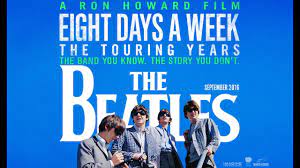
THE BEATLES: EIGHT DAYS A WEEK – THE TOURING YEARS


First released in 2016, this movie grabbed my attention last week when it was shown on Sky. Although much of the footage is familiar from other Beatles documentaries, authorised or otherwise, it was the first time I’d watched the whole 97 minutes, and what a gas it was.

        It’s incomprehensible nowadays to watch the chaos The Beatles caused across those countries in which they performed at the height of their extraordinary popularity. Through no fault of their own, other being themselves, they were responsible for massive, industrial-scale upheavals at airports, in city centres and whenever and wherever they appeared on stage (or off, if fans got to hear about where they happened to be). It was dangerous too, a miracle there wasn’t a fatality amidst the turmoil that followed The Beatles everywhere they went.   

        In the 21st century it’s no doubt possible to fake this kind of thing or, at the very least, to edit in footage from elsewhere in order to create an illusion, to manufacture the scenes so as to exaggerate the situation. But this wasn’t faked. Those scenes really happened. It was on the news and on the front pages, almost daily during 1963 and 1964. Hundreds, if not thousands, of girls from the age of 12 upwards really did become wildly hysterical if they caught a glimpse of them. The level of mayhem inspired by John, Paul, George and Ringo far and away outstrips anything that has occurred since for any other act, group, boy band or solo singer, that has followed in their wake over the past 60-70 years. Everything else, from The Monkees to One Direction, is simply tame by comparison.

        The film benefits from the presence of Larry Kane, the only broadcast journalist to travel with The Beatles on their US tours in 1964 and 1965. Kane was told by his superiors not to bother, that The Beatles would be forgotten about in six months’ time. In the film, however, he compares his experience on tour with the group to every other major world event in the second half of the 20th Century, from the assassination of JFK to the fall of the Berlin Wall, and feels uniquely privileged to have witnessed it. 

        It was nice to see the unflappable Derek Taylor telling a vast crowd of hysterical girls in some American city to calm down. “The Beatles have come a long way to play for you tonight,” he implores in his smooth British accent. “But they can’t if you don’t go back to your seats.” Others who worked with them, notably Brian Epstein and George Martin, are also featured, and there was a brief glimpse of Neil Aspinall, but I felt that their contributions, filmed long before the film was conceived, had been shoehorned in and therefore seemed slightly out of kilter with the live footage. Also, no one really thought to film The Beatles in the recording studio, not until much later in their career, which meant that when it skipped, perhaps unnecessarily, from the live footage to recording, Eight Days A Week had to rely largely on still photographs from Abbey Road, all of which had been seen many times before.

        But these are minor quibbles. The joy was seeing The Beatles performing on stage, in the UK, Europe, America, Japan and Australia, and to see the happiness they brought to the world during the three years when they were an active touring band. It all happened a long time ago now but I still find it enormously heart-warming to see John, his legs apart, his small guitar held high, singing his heart out; and Paul, shaking the long neck of that violin bass, and his hair, as he joins in on the other side of the stage; and George, dwarfed by his big Gretsch, concentrating on his lead lines then stepping forward to the microphone to join Paul; and Ringo at the back, his hair flopping about, bashing away, grinning like there’s no tomorrow.

        Because the film was authorised by them, there would have been an opportunity to improve the live sound, which was uniformly good, and I have no way of knowing whether it was enhanced or not. Either way, they sounded pretty damn good to me, especially when you consider the conditions in which they performed, the relatively inferior amplification equipment they were using compared to today and the tiny road crew that supported them. 

        And the audiences, crikey! It’s no wonder George wanted out, as did they all really. It couldn’t continue but while it did it was wonderful, as I saw for myself at Bradford 58 years ago last month. 

        The Beatles. The first. The best. Always. 


5.12.21

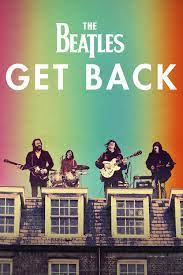
THE BEATLES: GET BACK

Let’s begin by shooting down a few stereotypes. Paul isn’t as bossy as he was cracked up to be, John isn’t as cynical and George isn’t the quiet one. Only Ringo is true to form, matter-of-fact and consistently reliable. No one is rude to or about Yoko. More importantly, JPG&R love one another; whatever differences exist do not in any way fragment the unshakeable attachment they have for one another. They, and only they, know what it is like to be a Beatle, and this isn’t something they can easily forget, or take lightly, even if they wanted to. There’s an uncanny bond between the four that goes deeper than the music they create, which at times seems like magicians producing rabbits from a hat. 

        This is the overriding lesson from Get Back, the three-part Beatles documentary just released, assembled from the 60 hours of film originally edited down to make Let It Be, the group’s final, deeply unsatisfying, film from 1970. Now re-imagined as a seven-and-a-half-hour epic by director/producer Peter Jackson, it’s often spellbinding, occasionally amusing and rarely dull unless, of course, you’re not remotely interested in The Beatles.

        Most of the footage, now enhanced in staggeringly wonderful colour and focus, sees JPG&R rehearsing songs that would appear on their Let It Be LP, firstly at Twickenham Sound Studios and later at their own Apple Studios beneath their HQ in Savile Row, where the action brightens up. In between routining these and other songs, some of which appear on Abbey Road, others on future solo records, they discuss the new album, the state of the group and whether or not to perform a concert at the Tower Ballroom in Blackpool, at an ancient amphitheatre in Libya, or on Primrose Hill in London. The decision to locate it on the roof of Apple is as sudden as it unexpected, and the final hour or so of the footage features this concert filmed in its entirety from many angles, the reaction of those who heard it on the street below and the arrival of the police who shut it down. 

        Aside from the principals, the films features Michael Lindsay-Hogg, the original director, who talks a lot, rather too much in my opinion; record producers George Martin and Glyn Johns; Beatles roadies Mal Evans and Neil Aspinall; Yoko, Maureen Starkey, and Linda Eastman, accompanied by her daughter Heather; and various cameramen and Beatle aides. Billy Preston arrives late in the day to help out on keyboards and music publisher Dick James, who looks like he’s from another planet, breezes in to announce that Vera Lynn has recorded ‘Yesterday’ and ‘The Fool On The Hill’, which pleases Paul. Peter Sellars, filming elsewhere on the Twickenham lot, makes a brief appearance but is confused by The Beatles in-jokes.

        Paul gets the most camera time. Bushily bearded, he is smart, well-spoken and appears to be the man in charge, enthusing the others yet sympathetic to their own agendas. His best scene is about an hour into Part 1 when, watched by George and Ringo, he strums his violin bass as if it’s a regular guitar, forming chords with his fingers and setting a fast pace. He sings along to his chords, nonsense words at first, quite high pitched, as the other two watch intently. All three are seated and we’ve already established that John is late. Within a couple of minutes, we can recognise the framework of ‘Get Back’, albeit vaguely. Paul is evidently writing it on the spot and it takes shape remarkably quickly. He shakes his head as he plays, and some words come to him: “Get back, get back, get back to where you once belonged.” George plays a bar chord on his Gibson Les Paul, A at the fifth fret, in time with Paul’s playing. He yawns. Paul stops “Musically it’s great,” says George as he picks out a note or two. Paul starts again. The tune is more focused now. Ringo begins to clap his hands in rhythm with Paul’s playing. 

        The only clue that Paul is not writing this song spontaneously comes when he sings about a man who thought he was a woman, and when he finishes this first verse John arrives, picks up his blonde Epiphone guitar from a chair, sits down and joins in, playing the barred A and adding a seventh. George switches to lead, a touch of funky wah-wah. Later, John will sing: “Sweet Loretta fart, she thought was a cleaner but she was a frying pan.” Paul doesn’t mind a bit.

        John is witty and wise throughout, with Yoko an almost constant, though largely mute, presence by his side. John’s hair is long, parted in the centre and he often peers over his granny glasses like some learned professor addressing a student. He enjoys playing old rock’n’roll and random songs from The Beatles’ back catalogue, mostly self-depreciatingly, turning them inside out. The others occasionally join him in a spirit of unity, laughing along. He’s a better guitarist than most people might imagine, not just on rhythm at which he always excelled, but interjecting lead lines and clever fills. Hes less confident on a Fender six-string bass. At one point he extols the virtues of Allen Klein but is never angry, never scornful, never critical. His song ‘Don’t Let Me Down’, once a favourite of mine, is repeated rather too often. His humour always shines through. He’s a good soul, the spiritual heart of the group. 

        George, his thick Scouse accent undiluted through long exposure to the Home Counties, seems content with his lot, unfazed when ‘All Things Must Pass’ is rejected by the others, and when he briefly quits the group, famously telling the others he’ll “see you around the clubs”, it doesn’t seem like he’s too serious, especially as it’s Friday lunchtime, the day before the weekend when no rehearsals are scheduled anyway. Either way, he’s soon back on board, playing his Gibson Les Paul and Fender guitars, the brown Telecaster and brightly painted Strat. Amusingly, after George walks out Paul tells Maureen: “A7, D7 and G7. Get them off over the weekend and you’re in.” 

        Ringo, too, seems content with his lot, and doesn’t seem at all distressed when Paul tells him what to play, or how to play it. He’s simply great at picking up the beat on whatever song is being rehearsed, a workmanlike presence who simply does his job superbly without making a fuss. Though he’s featured less than the other three, he’s a calming influence, a beacon of common sense. 

        There are plenty of lovely moments, too many to list but here’s a sample: Paul at the piano singing ‘Strawberry Fields Forever’ while John adds bluesy guitar fills, and even singing ‘Gimme Some Truth; John singing Hank Williams’ ‘You Win Again’; George introducing the group to ‘Something’ but explaining that he has yet to complete the opening line, “Something in the way she moves, attracts me like a… pomegranate”; Ringo singing ‘Bye Bye Blackbird’; Paul, deftly mimicking a radio announcer, hilariously reading out a cheesy article from The Daily Sketch that speculates on The Beatles’ increasing ‘weirdness’; and six-year-old Heather’s screaming into a mike being compared to Yoko, much to everyone’s amusement. 

        There’s footage from India, and from various other episodes in The Beatles’ career, including a ten-minute opening sequence that rushes like an express train from John first meeting Paul at that fete in Liverpool to 1969 and where we are today. Finally, we arrive at the rooftop concert, presented here in glorious colour, with clever split-screen montages, a far better representation of what happened at lunchtime on January 30 that year than we've ever seen before. It’s a fitting climax to a wonderful seven-and-a-half-hours that raises the bar for all rock documentaries, just as The Beatles did with their music all those years ago.