Showing posts with label The Who (John). Show all posts

24.3.25

ENTWISTLE’S OX – Academy of Music, New York, March 8, 1975


John Entwistle became the first member of The Who to tour outside of the band when he took his own group, Ox, on the road in the UK towards the end of 1974 and in the US the following March. I saw shows on both tours, in Newcastle in the UK, and at the Academy of Music in New York, which was fifty years ago this month. After the Ox show in New York there was a reception where among the guests was Mick Jagger, so I sidled up to him to inquire who might be replacing Mick Taylor in the Stones but he told me to bugger off. I think he was drunk. 

Here’s my review of John’s band from Melody Maker dated March 22, 1975. I found the poster above on the internet.


It must have been galling for John Entwistle to look out and see the empty seats at the Academy of Music on Saturday evening and think back to just less than a year ago when The Who sold out the 20,000 seater Madison Square Garden for four nights in five days. 

        The audience gave him a hero’s welcome but reserved their biggest cheers for the songs he’s contributed to The Who’s catalogue over the years. Opening up with ‘My Wife’ and closing the show with ‘Heaven And Hell’ as an encore was a shrewd move. 

        The Ox have improved immeasurably since their first live gig in Newcastle last December. The band is tighter and better rehearsed, and mercifully the volume level has been drastically reduced though it’s still pretty loud. 

        Still, John remains the star. His unique bass playing stands head and shoulders above the musicianship of the other members of the band and the fast, rippling bass lines are the only feature that prevents The Ox from being just another competent group. Unfortunately, a bass player can’t carry a band, and no matter how stunning the bass lines become, the overall effect is disappointing. 

    Robert Johnson, on guitar, can’t match John; he often resorts to crashing chords during his solos in a vaguely Townshend fashion, which only reveals his apparent inability to match lick for lick with Entwistle. It also encourages unfair comparisons with The Who which I won’t go into.

        John, of course, is an old greaser at heart, and on the simple 12-bar based numbers The Ox are a fine rock’n’roll band, without frills but with plenty of sledgehammer drive. The drummer managed to hold his own against Entwistle’s bass but towards the end the horn player appeared to give up the ghost and use his instrument to demolish part of the drum kit, an odd but peculiarly Who-like ending. 


9.12.24

ENTWISTLE’S OX, City Hall, Newcastle, December 8, 1974

Fifty years ago this weekend past, on a break from my posting as Melody Maker’s man in New York, I was in the north-east of England to witness the debut of Entwistle’s Ox. It was the only time during the career of the original group that any of its members undertook a full tour away from The Who. John’s bass actually made his band sound a lot like The Who and it brought home to me, and probably other Who fans who were there, how much John actually contributed to the noise The Who made.

Here’s what I wrote for the December 14, 1974, issue of MM, slightly re-edited. 

“This has cost a bomb so a few more quid won’t make any difference,” murmured John Entwistle as he signed a bar bill for slightly over £8 at the Five Bridges Hotel, Gateshead, on Sunday evening. “I mean… what’s money for? You can’t take it with you so I might as well spend it while I can.”

John Entwistle’s money is currently being spent on his latest passion, The Ox. Apart from being his nickname, The Ox is a rock and roll band of four, augmented by a saxophone player and two girl singer, who made their public debut in front of a sparse audience at Newcastle City Hall a few hours before John signed that bar bill and knocked back several large brandies. 

About 300 tickets were sold for the show, one of three warm up gigs planned this year. Next January they’re embarking on a 14-date British tour, mostly universities, and in February – all being well – The Ox are off to America where demand for Entwistle and his music is greater than in his home country.

The fact that so few people bought tickets for his opening concert didn’t appear to worry John in the slightest. In fact, he seemed surprised that 300 had bothered to cough up £1.25. The Ox is, in fact, a very expensive hobby. How much? I asked. “Oh, I dunno. About twenty-five grand,” said John.

As a band they’re pretty hot, though several rough edges need straightening out, and something has got to be done with the volume. For some reason, John chose to completely shatter his audience with the loudest music I’ve heard since Slade played Earls Court.

They were certainly a lot louder than The Who, a fact confirmed by sound man Bob Pridden, The Who’s regular sound mixer who’s just finished a stint with Eric Clapton. Bob is one of the best in the business, and when he grimaces over the volume then something is very wrong. Actually, John chose to use most of the Who’s amplification equipment and most of their crew for his show, so much so that the smallish City Hall stage contained enough gear to equip several bands.

“Next gig, I’m gonna leave some of them speakers behind,” Bob told me back at the hotel. “Bleedin’ daft. I’ve bin arguing with im all week over the bleedin’ gear. There’s enough stuff for a band to play Hyde Park and be eard in Ounslow.”

The Ox played for just over one hour and the material was a mixture of tracks from Entwistle’s solo albums, including one by The Ox due for release shortly, and the songs he has written for The Who. He opened with ‘My Wife’ and guitarist Robert Johnson began the show by cracking out the chords for ‘I Can’t Explain’. Other Who songs featured were ‘Boris The Spider’, ‘Whiskey Man’ and ‘Cousin Kevin’. They’d rehearsed ‘Heaven And Hell’ but didn’t play it as John completely forgot. 

It doesn’t take much to realise that John is an old rocker at heart. The set was liberally spiced with some beefy rock and roll, and he encored – yes, the 300 demanded an encore – with Eddie Cochran’s ‘Somethin’ Else’ and Little Richard’s ‘Keep A Knockin’’. One of the new songs was called ‘Cell No. 7’, apparently written when The Who were arrested in Montreal last December following a hotel fracas. 

The bass was turned up throughout and if the band does nothing else, it enables John to show off his bass technique splendidly. He really is one of the best white bass guitarists in the business. His runs are often stunning and his finger plucking technique is quite breathtaking, unbelievably fast. His lines ripple out like machine gun bullets and, at the volume he chose to use, they had an odd effect on the audience. Shell shock, I guess.

Robert Johnson is good guitarist too, but he was frequently lost in the mix. I kept waiting for him to spin his arm around but he didn’t. The band don’t really need a drummer – Entwistle’s bass is a one-man rhythm section – but Graham Deacon fought manfully on, often unheard.

The Who numbers went down the best but requests for ‘Postcard’ – from Odds And Sods – went ignored. They did a knockout version of ‘Not Fade away’ and a curious instrumental called ‘Jungle Bunny’ which featured backing tapes and appeared to come unstuck towards the end. It was a dull tune, anyway.

‘Cousin Kevin’ – with girl singers – was a highlight but ‘Whiskey Man’ didn’t come off as well as it could have done. John is best doing straight rock and roll: his grating voice suits the 12-bar structure; he’d make a suitable replacement in The Wild Angels or their ilk anytime.

I think they were a little under-rehearsed. In the bar of the hotel before the gig, the saxophone player was busy copying down chords on scraps of paper. “Just to make sure,” he said after thanking me for a mention in the Raver column several years ago when his horn was pinched. 

I enjoyed myself and I think everyone else did, not least the fetching Miss Doreen Chanter (one of the two girl singers) who attracted much attention back at the hotel. Her sister Irene went to bed early as she had a session at Trident Studios in London the following day. 

One final point: it was refreshing that John laid himself open in such an unpretentious fashion. None of that bleating about keeping the press away from the opening concert from The Ox, and all power to John for it.


5.3.20

THE OX: THE LAST OF THE GREAT ROCK STARS. THE AUTHORISED BIOGRAPHY OF JOHN ENTWISTLE by Paul Rees


In 1990 John Entwistle spent two months in the region of Connemara on the west coast of Ireland where fierce winds coming off the Atlantic soon blew away any traces of last night’s old red wine. Here, in a stone house that was once the home of an archbishop, he began to write his life story, in longhand on A4 lined paper. He never finished the task and it remained unpublished during his lifetime but the tenor of what he wrote, in equal measure amusing, cynical and bitter, hangs over this biography like a dark thundercloud.
         For all his wealth, acclaim and success John Entwistle was not a contented man. His dissatisfaction stemmed from issues he never felt able to enunciate, and it saw him retreat into himself, chasing his demons in ways that did him no good at all: booze, drugs, women, bad diets, reckless shopping sprees and an obstinacy that translated into denial. Many interviewees for this book – and they include both his ex-wives and son, as well as many musician friends – all seemed incapable of confronting him about these matters simply because, in his dealings with and without The Who, his natural instinct was always to avoid confrontations.
         All of this contributes to a deep, persistent melancholia in the life of John Entwistle as conveyed by former Q editor Paul Rees. Less conspicuous than his colleagues in The Who but no less fascinating, Entwistle remained a distant, reserved figure to many, a character trait reinforced by the high profile antics of Pete Townshend, Roger Daltrey and Keith Moon. In this way, his story echoes what might be termed ‘The Bassists’ Curse’ – to be undervalued, unfulfilled and frustrated – and along with much else this led indirectly to his death at the relatively young age of 57.
         While the The Who itself and the other three members have inspired books aplenty, Entwistle has until now lagged behind. The dilemma facing biographers of individual group members is in separating their subject from the group, and, with Entwistle’s peculiar nature only aggravating the situation, it is no surprise that the book suggests there were two Johns – John of The Who, and John of The Home. The former is the well-known Ox with the spider emblem around his neck, dapper, on the left of the stage, motionless save for fingers a blur on the long necks of his various basses, a rock star who dives eagerly into all the temptations that his calling offers him. The latter, however, is seemingly hewn from the same oak as The Kinks’ ‘Well Respected Man’. Off stage John Entwistle invariably behaves like an old-fashioned gentleman, well turned out, well spoken, and well mannered, a well-to-do professional man who lives his life by routines and loves a plate of fish and chips. The rot sets in when the two Johns start to merge. 
         The 344-page book is divided into three parts, the first about John’s early years, the second about The Who and his role within it, and the third his sad, ultimately tragic decline as Townshend and/or Daltrey put The Who on hold, leaving their brilliant bass guitarist to drift aimlessly. It came about after Rees wrote a profile of Entwistle for Classic Rock magazine for which he interviewed Alison, John’s childhood sweetheart and first wife, and Christopher, their son. The acquaintance made, Alison and Christopher co-operated with Rees when he proposed a full scale biography, and it is clear from its pages that their testimony, along with that of Maxene Harlow, John’s American second wife, was crucial to his research. Alison and Christopher also handed over John’s own text, enabling him to quote from it at will, and this helps the book enormously.
         The result is very readable, leaning more towards the fate of the overindulged, hedonistic rock star and his troubled life than the music he created. Those looking for an insight into Entwistle’s extraordinary bass technique will be disappointed; although Rees heaps plenty of praise on John’s unique skills, he hasn’t spoken to other bass players about how John did what he did. A handful of musicians express their admiration for John’s work too, but there is no attempt to analyse it, Rees having evidently concluded that to do so would decelerate the book’s pace.
         John Entwistle’s early life was far from comfortable. An only child, he was 18 months old when his parents separated. He took an instant, everlasting dislike to his mother’s next partner and money was tight, which might explain why when he became rich he insisted on a preposterously high standard of living that would forever strain his finances. A naturally gifted musician, he inherited his talents from his parents and took lessons on the piano, then brass instruments and finally taught himself to play bass guitar because he liked the sound of Duane Eddy’s records. He took pleasure in making his first bass and thereafter immersed himself in the instrument, its makes, models and modes of amplification. His introduction to Townshend and, later, Daltrey, more or less tallies with all the other Who books I have, and The Who’s story is told – yet again (!) – in a breezy, competent fashion that differs from the rest only in that it benefits from John’s wry observations recorded in the text he wrote himself.
         It is no secret that they didn’t get on personally, and Rees spares no blushes in detailing the various fall outs. Daltrey doesn’t come out of it well, a bit of a grumpy old bugger; Townshend is usually in a world of his own, a surprisingly absent presence in the book; and Moon is as mad as a box of frogs, though it is the drummer with whom Entwistle bonds most easily, the pair sharing a love of practical jokes and disorderly behaviour. The impression is given that Entwistle often provoked Moon in this and that he felt it was his duty to protect him, as if Keith was the little brother John never had. Moon’s death clearly affected Entwistle more than he let on. “I saw vulnerability in John when Keith died,” says manager Bill Curbishley. “There was something taken away from him that couldn’t ever be put back.”
         A recurring theme up to this point is The Who’s precarious finances which didn’t stabilise until Tommy was a success. When real money arrived at last, all bar Daltrey were reckless spenders and Entwistle maintained his profligate ways until the very end, stockpiling possessions galore that filled his houses to the brim, even Quarwood, near Stow On The Wold in Gloucestershire, the gigantic pile he bought in 1976 and owned until his death. Rees contends that John’s collection of bass guitars was the biggest in the world.
         The crux for Entwistle came when Townshend brought the curtain down on The Who for the first time at the end of 1982. ‘To Entwistle, Townshend’s decision was a personal affront,’ writes Rees. ‘Initially, he was despairing, but soon enough this turned to a seething, burning resentment.’ “He would have toured and toured,” adds Curbishley. “That was his life.”
         Already dark, Entwistle’s life from this point onwards becomes a calamity of almost epic proportions. Outwardly buoyant but inwardly furious, he increases his consumption of all the poisons, chief among them brandy and cocaine, he’d happily ingested in The Who, confident that his physical strength can withstand it all. For a long time, far longer than Moon, this was the case but as we move from the eighties into the nineties it becomes clear that the only difference between Entwistle and Moon was that it took him an extra 24 years to kill himself.
            Serially promiscuous, John divorces Alison – who is heartbroken – and takes up with Maxene, a nice LA girl who before long realises that keeping up with John will kill her and joins AA, only for this to put a wedge between them. She is followed by Lisa, a bad LA girl, who matches John glass for glass and toke for toke and who is ultimately blamed, at least by Christopher, for killing his father. “It was Lisa that truly fucked him up,” he says. “And I hate her for what she did to him.”
         John’s tours with his own bands are covered extensively – as, throughout, are his solo recordings – but there is a nagging sense that he’s flogging a dead horse. The only respite from this descent into hell – as the red tops would have it – are those occasions when Townshend and Daltrey elect to reform The Who for various reasons, not least among them to shore up their finances. But no sooner is Entwistle back in the black than he’s on the phone to Harrods, his preferred retailer.
         Entwistle played his last show with The Who at London’s Royal Albert Hall on February 8, 2002, but it was comforting to be reminded that the last show he played with them in America – a country he loved – was in October 2001 at Madison Square Garden, the Concert For New York to recognise the firemen who died in 9/11, and that it was a triumph, one of the group’s best ever in the post-Moon era.
         As is well known, John Entwistle died on June 27, 2002, in Las Vegas from a heart attack induced not by the previous night’s consumption but by a lifetime of indulgence. There was a bit of unpleasantness in the aftermath, much of it caused by Lisa, but in a poignant Epilogue we join Alison and Christopher at a garden party in 2018, the pair of them sharing memories with old Who retainers of the man they remember as husband and father. “He was a very silly boy, but I loved him for years and years, and I didn’t stop loving him,” says the girl who knew him long before he was John of The Who. She preferred John of The Home and was, after all, just 13 when that 14-year-old boy began courting her.  
         Finally, the book is well indexed, lacks a discography and I’m not too keen on the cover which looks a bit washed out to me. The cover of the US edition, below, is far better.


21.6.19

JOHN ENTWISTLE: “AN OAK TREE IN THE MIDDLE OF A TORNADO”


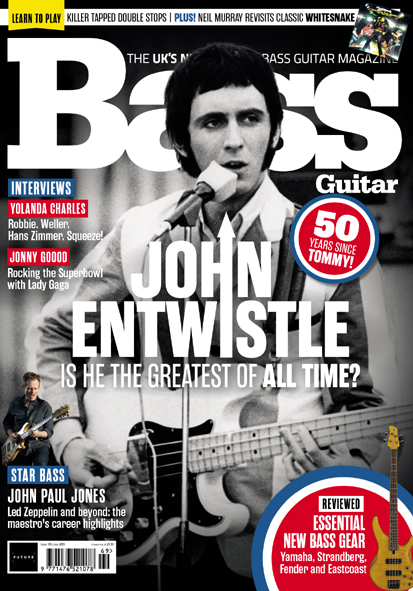
I wrote this appreciation of John for Bass Guitar magazine last month and although I posted an extract on my blog on May 1 I was asked by the its editor not to post the whole thing until late June in case it impacted on sales of the magazine.


“About time too.”
            John Entwistle could be forgiven for thinking such thoughts when, in 2000, Musician magazine named him its “Bassist of the Millennium”. A shame, then, that The Ox wasn’t around 11 years later when readers of Rolling Stone overwhelmingly voted him the greatest bass player of all time. Today, of course, it’s widely acknowledged that John, who died in 2002, was the best rock bass player ever to plug in and shatter eardrums, but it was his misfortune that during the time when The Who were performing regularly, from 1964 to 1982, his skills were largely overlooked.
            The golden era for The Who coincided with the release of their rock opera Tommy, 50 years ago in May 2019. Although they’d already distinguished themselves on the UK and US concert circuit, this was the group’s breakthrough in terms of album sales. In many ways it was a showcase for John who not only played bass throughout but also contributed vocals, including lead on two ‘nasty’ songs that Pete Townshend requested he write for his rock opera, as well as French horn, trumpet and flugelhorn.  
            John soon makes his presence felt. In the ‘Overture’ to Tommy his French horn – the first solo instrument to be heard – takes on a melodic role in place of absent vocals, while in the indistinguishable instrumentals ‘Sparks’ and ‘Underture’ his repeated descending bass figure defines the structure, the rigid staff around which Townshend and Keith Moon can improvise. On stage ‘Sparks’ would become a pièce de résistance of ensemble Who playing, with the band’s three instrumentalists reaching higher and higher towards block chord climaxes that characterised their style: the ringing open notes, the octave drops and wave after wave of escalating, bass-driven crescendos. In ‘Pinball Wizard’, the best known song from Tommy, Townshend’s furiously strummed intro is punctuated by the thunderous boom of powerful guitar stabs that John famously reproduced live by hammering down on his bottom string, and the finale to Tommy, ‘See Me Feel Me’ with its turbocharged ‘Listening To You’ coda, is driven by rousing major chords while John’s relentless, twangy bass acts as the foundation on which his three colleagues could rip yet another stage to pieces. 
            All of this, coupled with increasingly earnest accolades from his peers, ought to have raised John’s profile as a bassist par excellence but in the period after Tommy’s release, other players – most notably Jack Bruce, Chris Squire and Greg Lake – received many more votes in the ‘Top Bassist’ category of readers’ polls conducted by Melody Maker, then the benchmark by which instrumental prowess was measured. Indeed, in the 1973 MM poll John doesn’t even make the top ten bass players.
            Why was this? Well, despite my efforts as MM’s unofficial Who cheerleader, the paper gave far more coverage to Yes and Emerson, Lake & Palmer than it did to my favourite band, and Jack Bruce’s stint with Cream gave him an edge that never went away. Furthermore, despite his solo recordings John had the lowest of profiles within The Who. Overshadowed by the wayward but fearsome intellect of Townshend, the lunatic exploits of Moon and the craggy good looks of Roger Daltrey, John early on realised the futility of competing, of doing anything other than simply stand there and play, a low-key approach unlikely to earn him votes from magazine readers.
            But I think there was more to it than that. John was a bass guitarist, not a bassist, perhaps even a guitarist who played bass, and this distinction – which he made himself – is important. “I found bass very boring,” he once said. “I wanted to turn it into a solo instrument and the only way to do that was turn up the treble.” In another interview he even went as far as to say that The Who didn’t have a bass player.
            So it was that audiences never really appreciated what John was playing because the sounds that came from his speaker stacks appeared as if they were coming from Townshend’s guitar, or even a pre-recorded low register synthesiser. Coupled with the guitarist’s attention-grabbing style – the leaping around and windmilling – not to mention the antics of Daltrey and Moon, no one paid much attention to the chap on the left in the brightly coloured jackets who simply stood there and played. What they missed was a display of extraordinary but largely inconspicuous fluency, a player whose technique involved not just plucking his strings with his thumb and every finger of his right hand, but tapping them and switching periodically to a plectrum, bending and hammering on and off notes, vibrating trills and unexpected bell-like harmonics, glissandos that occasionally slid up and down his entire fretboard, parts that echoed or reinforced lead riffs and vocal lines, and even chords strummed across two or more strings that created an all-enveloping wash of low-frequency resonance. What’s more, he made it look easy.
            “John got attention simply because he stood so still, his fingers flying like a stenographer’s, the notes a machine-gun chatter,” wrote Townshend in Who I Am, his 2012 autobiography. “And through it all, as if to anchor the experience, John stood like an oak tree in the middle of a tornado.”
            When after a break of seven years Townshend agreed to tour again with The Who in 1989, he stipulated that because loud noise had damaged his hearing he would do so only if John significantly reduced his on-stage volume, a condition that required The Who’s stage personnel to be substantially reinforced. With Simon Phillips now on drums, they were augmented by a further twelve musicians, all to compensate for John turning down. “The only way we could add [John’s] harmonic richness,” said Townshend, “was to add brass, second guitar, acoustic guitar, two keyboards, backing vocals and people banging gongs, because that’s what John used to replicate.”
            “He had a technique that was light years ahead of everybody else at the time,” said keyboard player Rick Wakeman, who studied at the Royal College of Music. “Nobody played like John.”
            “Best bassist in rock’n’roll,” added Lemmy. “No contest.”

* * *

In the third week of December, 1972, I visited John at his semi-detached house in the west London suburb of Ealing, ostensibly to interview him for Melody Maker about his second solo album Whistle Rhymes. By this time I had edged myself into the role of MM’s unofficial ‘Who correspondent’ and charmed my way backstage at several concerts, so I knew him reasonably well. He was a friendly, down-to-earth man, dry of wit yet quite softly-spoken and reserved when he wasn’t performing, and he took compliments like a pinch of salt, wryly amused by his reputation as a disciple of the macabre; “big bad black Johnny Twinkle,” as Moon once yelled on stage, to which Townshend added, “with the flying fingers”.
            John and his wife Alison welcomed me into their home. It was the kind of house you might expect a moderately successful and well-travelled businessman to occupy with his family, comfortable but not ostentatious, perfect for the character in The Kinks’ song ‘Well Respected Man’. Some wags within the Who camp were suggesting John should run for Mayor of Ealing.
            The house was full of curios: “part museum, part instrument store, part studio and part home,” I wrote in MM. He had just bought a table lamp with those swishy frond-like tentacles that lit up at the ends and I’d never seen one before. Nowadays they’re a bit kitsch but I was fascinated by it. Even more impressive was the first video recorder I’d ever seen, a contraption the size of the average micro-wave with lots of knobs and cassettes like cigar boxes. John demonstrated it for me, and then took me upstairs to admire his collection of guitars and basses. Outside of a music shop, I’d never seen so many guitars in one place. He told me he had 32, which was nothing compared to the number he would eventually amass.
            In 1975, flush with funds accrued from the Who’s US success, John and Alison moved to a preposterously large mansion on the southern outskirts of Stow-on-the-Wold in Gloucestershire, about 85 miles west of London. Approached by a winding drive through trees and shrubbery, Quarwood was a gothic Victorian hunting lodge completed in 1859, with 42 acres of land, seven cottages and 55 rooms, its cantilevered staircase leading to a gallery where gold and platinum records were displayed floor to ceiling. Many of the bedrooms housed John’s instrument collection which, in the fullness of time, would grow into one of the largest guitar collections belonging to any rock musician. Another was given over to his electric train set. Medieval suits of armour stood in the hallway where, dangling from a noose, was a stuffed effigy of Quasimodo eyeing the skeleton that reclined in an armchair.
            Unlike the semi in Ealing, it was the epitome of rock star indulgence and although it seemed to me as it if it was permanently in need of a coat of a paint and a bit of building work, the master of the house was as proud of his chattels as any 18th Century Lord of the Manor. “My father loved the house and Stow,” says John’s son Christopher, who put the house and most of its contents on the market after his father’s death. “Everyone knew him there but they gave him plenty of privacy and he was never bothered by anyone.”
            About 90 of John’s bass guitars, among them several instruments that he had played onstage with The Who, were sold in 2003 at Sotheby’s Auction Room in South Kensington, along with a similar number of guitars and many brass instruments. The sale, which also included Who memorabilia, stage clothes, antique chandlery and casts of game fish, raised about a million quid.
            Watching the auctioneer’s hammer come down alongside me were grieving fans eager to bid for a little piece of John Entwistle. In the last decade of his life they had seen him performing not only with The Who but also with bands of his own, and the lack of renown he’d suffered in the early part of his career was now a thing on the past. These loyal fans deeply appreciated not just John’s immense skills as a musician but the touching allegiance he had always shown towards them. Within the Who fan community it had become well known that after both his own and Who shows, John would often remain behind to socialise, happy to answer questions about his equipment, his playing style and The Who, and sign autographs for one and all. I cannot think of any other rock star of his stature who was more gracious to fans, the lifeblood of the music industry after all, than John, nor fans who appreciated this princely attitude so much.
            The last time I spoke to John was backstage at Wembley Arena after a Who show on November 15, 2000. The hospitality area was crowded with men and women far younger than me or the group and there was no sign of Townshend or Daltrey but, as ever, John was in the midst of the throng. Grey-haired and looking older than his 56 years, he was slightly tipsy I think, and when he saw me he offered a warm smile of recognition.
            “I don’t know a soul here apart from you,” I said to him.
            “Neither do I,” he replied, laughing.

* * *

Thanks to the miracle of modern technology it is now possible for fans to hear John’s bass lines isolated from the vocals, guitar and drums, at least on two Who’s Next songs, ‘Won’t Get Fooled Again’ and ‘Baba O’Riley’, and watch him as he does it. These extraordinary clips, made available for the first time on a bonus disc with the 2004 reissue of the Who documentary film The Kids Are Alright, can now be found on the internet and have, at the time of writing, attracted 1,890,184 views for ‘WGFA’ and 479,209 for ‘Baba O’. John’s now famous solos in The Who’s ‘Dreaming From The Waist’ and ‘5.15’ can also be viewed, as can bassists who demonstrate John’s techniques.
            Finally, a full length biography of John is due to be published by Constable in October. Written by Paul Rees, a former editor of Q and Kerrang!, The Ox: The Last of the Great Rock Stars: The Authorised Biography of John Entwistle is sanctioned by John’s estate and features contributions from Alison and Christopher, his cousin and stepbrother, and John’s second wife, Maxene, along with many from the Who camp, including manager Bill Curbishley and Who soundman Bob Pridden who operated John’s studio at Quarwood. Rees also had full access to John’s archives, including several chapters of an unpublished autobiography that John had completed.
            About time too.

1.5.19

JOHN ENTWISTLE: “AN OAK TREE IN THE MIDDLE OF A TORNADO”


To coincide with the 50th anniversary of Tommy, Bass Guitar magazine has commissioned me to write an appreciation of John for their May issue. In the fullness of time I’ll post it here but in the meantime here's some extracts. I nicked the sub-title from a phrase that Pete used in his Who I Am book.

… John [Entwistle] was a bass guitarist, not a bassist, perhaps even a guitarist who played bass, and this distinction – which he made himself – is important. “I found bass very boring,” he once said. “I wanted to turn it into a solo instrument and the only way to do that was turn up the treble.” In another interview he even went as far as to say that The Who didn’t have a bass player.
            So it was that audiences never really appreciated what John was playing because the sounds that came from his speaker stacks appeared as if they were coming from [Pete] Townshend’s guitar, or even a pre-recorded low register synthesiser. Coupled with the guitarist’s attention-grabbing style – the leaping around and windmilling – not to mention the antics of [Roger] Daltrey and [Keith] Moon, no one paid much attention to the chap on the left in the brightly coloured jackets who simply stood there and played. What they missed was a display of extraordinary but largely inconspicuous fluency, a player whose technique involved not just plucking his strings with his thumb and every finger of his right hand, but tapping them and switching periodically to a plectrum, bending and hammering on and off notes, vibrating trills and unexpected bell-like harmonics, glissandos that occasionally slid up and down his entire fretboard, parts that echoed or reinforced lead riffs and vocal lines, and even chords strummed across two or more strings that created an all-enveloping wash of low-frequency resonance. What’s more, he made it look easy.
            “John got attention simply because he stood so still, his fingers flying like a stenographer’s, the notes a machine-gun chatter,” wrote Townshend in Who I Am, his 2012 autobiography. “And through it all, as if to anchor the experience, John stood like an oak tree in the middle of a tornado.”
            When after a break of seven years Townshend agreed to tour again with The Who in 1989, he stipulated that because loud noise had damaged his hearing he would do so only if John significantly reduced his on-stage volume, a condition that required The Who’s stage personnel to be substantially reinforced. With Simon Phillips now on drums, they were augmented by a further twelve musicians, all to compensate for John turning down. “The only way we could add [John’s] harmonic richness,” said Townshend, “was to add brass, second guitar, acoustic guitar, two keyboards, backing vocals and people banging gongs, because that’s what John used to replicate.”
            “He had a technique that was light years ahead of everybody else at the time,” said keyboard player Rick Wakeman, who studied at the Royal College of Music. “Nobody played like John.”
            “Best bassist in rock’n’roll,” added Lemmy. “No contest.”

… In the third week of December, 1972, I visited John at his semi-detached house in the west London suburb of Ealing, ostensibly to interview him for Melody Maker about his second solo album Whistle Rhymes. By this time I had edged myself into the role of Melody Maker’s unofficial ‘Who correspondent’ and charmed my way backstage at several concerts, so I knew him reasonably well. He was a friendly, down-to-earth man, quite softly-spoken and reserved when he wasn’t performing, and he took compliments like a pinch of salt, wryly amused by his reputation as a disciple of the macabre; “big bad black Johnny Twinkle,” as Moon once yelled on stage, to which Townshend added, “with the flying fingers”.
            John and his wife Alison welcomed me into their home. It was the kind of house you might expect a moderately successful and well-travelled businessman to occupy with his family, comfortable but not ostentatious, perfect for the character in The Kinks’ song ‘Well Respected Man’. Some wags within the Who camp were suggesting John should run for Mayor of Ealing.
           
… About 90 of John’s bass guitars, among them several instruments that he had played onstage with The Who, were sold in 2003 at Sotheby’s Auction Room in South Kensington, along with a similar number of guitars and many brass instruments. The sale, which also included Who memorabilia, stage clothes, antique chandlery and casts of game fish, raised about a million quid.
            Watching the auctioneer’s hammer come down alongside me were grieving fans eager to bid for a little piece of John Entwistle. In the last decade of his life they had seen him performing not only with The Who but also with bands of his own, and the lack of renown he’d suffered in the early part of his career was now a thing on the past. These loyal fans deeply appreciated not just John’s immense skills as a musician but the touching allegiance he had always shown towards them. Within the Who fan community it had become well known that after both his own and Who shows, John would remain behind to socialise, happy to answer questions about his equipment, his playing style and The Who, and sign autographs for one and all. I cannot think of any other rock star of his stature who was more gracious to fans, the lifeblood of the music industry after all, than John, nor fans who appreciated this princely attitude so much.
            The last time I spoke to John was backstage at Wembley Arena after a Who show on November 15, 2000. The hospitality area was crowded with men and women far younger than me or the group and there was no sign of Townshend or Daltrey but, as ever, John was in the midst of the throng. Grey-haired and looking older than his 56 years, he was slightly tipsy I think, and when he saw me he offered a warm smile of recognition.
            “I don’t know a soul here apart from you,” I said to him.
            “Neither do I,” he replied, laughing.


You can order this issue of Bass Guitar in print at https://bit.ly/2VyqhdJ and digital at https://bit.ly/2WOyvvl.