Showing posts with label Film & TV Reviews. Show all posts

22.4.25

PRISCILLA

Priscilla, directed by Sofia Coppola and shown on network TV this weekend, was a strangely creepy movie that ramped up the general consensus that for all the great records he made during the 1950s, Elvis Presley had some weird ideas about courtship that, perhaps unintentionally, chime with how I imagine our current king might have behaved towards his first wife. Alone in Graceland, teenage Priscilla Beaulieu wanders its lushly carpeted rooms in a manner I imagine Diana Spencer doing in the corridors of Buckingham Palace, whence she was closeted for her own safety in the period between her engagement to Charles and the wedding ceremony in Paul’s Cathedral. Both of these virgin girls were seemingly lost, though perhaps trapped is a better way to describe the predicament in which they found themselves.

Priscilla is based on the book Elvis And Me, written with ghost-writer Sandra Harmon by Priscilla Presley, who is its executive producer, and first published in 1985. I read it while I was researching my Caught In A Trap book, my fictional tale of how Elvis was kidnapped in 1975, its title inadvertently reflective of Priscilla’s dilemma once her parents agreed that she come to live at Graceland, ostensibly chaperoned by Elvis’ witless father Vernon and his second wife. The film, originally released in 2023, follows the book fairly accurately, dwelling on the couple’s private life and how Priscilla shakes off her initial naivety to eventually confront Elvis about his macho attitude and the unrealistic demands he placed upon her. She’s portrayed as a heroine which, as matters eventually played out, is quite fitting. 

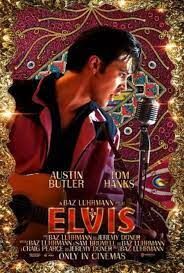
Unlike Elvis, the 1922 movie starring Austin Butler in the title role and Tom Hanks as his manipulative manager Colonel Tom Parker – who, tellingly, is absent from Priscilla – this film makes no attempt to hide Priscilla’s age – 14 – when she first met the singer, fatefully, at a party at the house in which he lived in Bad Neuheim in West Germany during his stint with the US Army. Thereafter she’s sucked into his orbit, increasingly moulded by him into the kind of Barbie-doll like woman he requires her to be; clothes, hair, make-up, subservience, keep smiling, the lot. Slightly alarmed, she goes along with this at first, her compliance gradually giving way to incomprehension and, eventually, dissent. 

As far as the bedroom department is concerned, Elvis desires his woman to remain a virgin until they are married, this despite her efforts to persuade him otherwise. Hes not above taking a few saucy Polaroids of her, though. Meanwhile, of course, it is suggested that in Los Angeles Elvis has his merry way with women who co-star in his films, amongst them Nancy Sinatra and Ann-Margret, while Priscilla remains at Graceland, her only companion a fluffy white poodle while she ponders over lurid stories about Elvis and them in movie magazines. When they eventually marry, Priscilla quickly falls pregnant, giving birth to Lisa Marie, and conjugal relations cease, again to Priscilla’s vexation. Along the way we see Elvis briefly engage with the counterculture, which is not to his liking; play with, and encourage Priscilla to use, guns; insult The Beatles; lose his temper and throw tantrums; share an acid trip with Priscilla; and generally behave like a spoilt brat towards everyone, apart from Col Parker to whom he bends the knee, albeit on the telephone. 

Not surprisingly Priscilla gets fed up and leaves, by which time she’s taken up karate, though her subsequent affair with martial arts teacher Mike Stone is not mentioned. Nevertheless, by the close she’s defied Elvis by allowing her hair to return from dyed jet black to its natural auburn, and flow down over her shoulders, and wear tight pants instead of dresses. Driving out of the Graceland gates or the final time, sound-tracked by Dolly Parton singing ‘I Will Always Love You’, she deserves a cheer, female empowerment the message. 

Cailee Spaeny is good as Priscilla, rarely off screen, Jacob Elordi too as Elvis, his accent just right. But overall, I felt the film was strangely unsatisfying, just like the marriage had been. 


8.2.25

BECOMING LED ZEPPELIN

The promotional material for this film covering the first 14 months of Led Zeppelin’s stellar career suggests that their success was achieved “against all the odds” and that it is the “first officially sanctioned” film about the group. Neither statement is true. The second falsehood is easily rebutted by drawing attention to their 1976 movie The Song Remains The Same, their 2003 five-hour plus career retrospective 2-DVD package, and Celebration Day, the concert movie of their final appearance, when the reformed trio of Jimmy Page, Robert Plant and John Paul Jones performed with Jason Bonham, son of John, on drums, at London’s 02 in 2007. All three films were authorised by the group. The first falsehood is more nuanced but I would argue that the odds on achieving success were pretty short for a quartet that included two of the most experienced musicians on the 1960s London session circuit, one of whom had a keen eye for prevailing trends in rock music, and was managed by a Herculean, no-nonsense strongman who’d operated at the sharp end of the rock’n’roll trade for about seven years. 

        Quite why Page, Plant and Jones feel the need to tell these fibs is a bit of a mystery but mystery was always an essential commodity in Led Zeppelin’s bag of tricks. Let in too much light and you’re just another band, keep people guessing and you’re special, seems to have been mastermind Page’s mantra from day one; and, in his wisdom, which has never been in short supply, Page has prudently given the nod to a film that explains how they got where they did, but not what they did when they got there.  

        Becoming Led Zeppelin lets in a bit of that light in making clear that once the starting pistol sounded, Led Zeppelin set off at a furious pace, leaving little to chance. Realising at their first rehearsal in August 1968 that his group had something pretty special when they played together, and that this was their strongest card, Page established a rigorous work ethic from the outset and the others were happy to follow his lead. They made the road their home and recorded their first two LPs in the space of eight months, much of the second while on tour in America. Page and manager Peter Grant were quick to recognise that the kind of music they performed was more likely to find a receptive audience in America, which just happened to be where the biggest returns could be made, not that anyone mentions this.

        But before all this happens Becoming Led Zeppelin takes us back to the childhoods of the four boys. Baby boomers all, all bar Plant were raised in families that encouraged their musical ambitions and Jones’ family, the Baldwins, were professional musicians themselves. It was a black and white world but all the families were sufficiently affluent to own cameras and the kiddie pictures offer a sentimental touch not generally associated with Led Zeppelin; even the hardest of rockers were toddlers once. It would have been nice to include Grant, a virtual fifth member, in this anecdotal dip into the past but he’s ignored, as he is during almost all of what follows. 

        Next, we move on to influences, with each member allotted a few minutes to say how they were inspired by Lonnie Donegan (Page), Sonny Boy Williamson and Little Richard (Plant), bass players in general (Jones) and James Brown and Gene Krupa (Bonham). That old footage of 13-year-old Page skiffling away on a guitar twice his size on TV in 1957 is still presciently charming, and I enjoyed the footage of their heroes, so a nod here to whoever researched the old clips. 

        The preparatory years are also fun: Page and Jones as dapper young professionals on the studio circuit – they both played on Shirley Bassey’s 007 theme ‘Goldfinger’, arranged by Jones, amongst many other notable records – before the former is invited to join The Yardbirds and express himself at last; Plant in and out of various experimental outfits in the Midlands, one of which includes Bonham who is torn between drumming and the family building business. 

       When the four find one another they really were special. Much of the footage of early Led Zeppelin in the film has been seen before but there’s some new stuff and even familiar material has been enhanced. Here we have Page, his long black hair obscuring his features, conjuring up shards of jagged chords on the rather shabby looking, custom-painted Telecaster gifted to him by his pal Jeff Beck; a maestro on lightning fast solos, slides and the scraping of the violin. We see Jones running on the spot as he feverishly plucks the strings of the Fender Jazz Bass he used for years, its long neck swaying dangerously close to Plant on stages much smaller than those we grew accustomed to seeing Zep play on later in their career. The young Plant, at 20, is much thinner than he is today, a shaman in the making, trading vocal shrieks with Page’s bent notes, his curly hair bouncing, forever on the move. And at the back there’s Bonham, tumbling into his drums, grinning as he maintains a steady rhythm with Jones yet always looking to accentuate whatever Page is playing or Plant singing with a roll or a crash or an explosion everywhere. “I fell in love with his right foot,” says Jones at one point. 

        Led Zeppelin were truly fantastic, full of energy, in the early days but the suggestion that they toured America before the UK because they were ignored at home is open to question. The press in the UK didn’t ignore them – the earliest ever feature appeared in Melody Maker, written by Chris Welch after Page visited the office without prior warning, and I even wrote about them in the Bradford Telegraph & Argus before I joined MM. They chose to tour the US first simply because Page and Grant saw greater opportunities there and it was therefore advantageous to do so. Rolling Stone in the US may have been dismissive but that was really an exception. By and large, they were loved wherever they went, as the rapturous fans in their audiences – many of them female – seen in the film testify. 

        The present day interviews are candid and occasionally revealing with screen time shared impartially. His silver hair held back in a ponytail, Page looks dignified and, as ever, is the most enthused, contented and diplomatic, his pride in Led Zeppelin undimmed. Jones, traditionally the most reticent member of the group, looks the youngest, his hair trim, his features eager. He has plenty to say, which is refreshing, and he comes across as very likeable, modest too, almost as if 12 years in Led Zeppelin was just another session date in his work diary. “Led Zeppelin? A silly name,” he says. “But we were stuck with it.” Plant, craggy, his golden hair turned to bronze and tumbling everywhere, is the most droll, the slight grin and twinkle in his eye suggesting there may have been times when he’s looked upon Led Zeppelin as a youthful folly. “My family wanted me to be a chartered accountant,” he says, tongue firmly in cheek. Of his first plane flight to the US he expresses astonishment at being served a meal on a plate with real cutlery that in different circumstances he might consider stealing. Bonham is represented by a hitherto unheard interview he did around 1970 that acts as a voice over, and he too seems to be in a state of perpetual wonder at all that happened to Led Zeppelin in such a short space of time. His wife Pat warned him on more than one occasion not to get mixed up with “that Planty”. 

        The emphasis, though, is on the music, and Becoming Led Zeppelin features heaps of terrific footage from America and the UK, some hitherto unseen, at last by me, though at just over two hours, it is pretty long and could have been trimmed, especially during the final half hour. If its intention is to find new fans in the 21st Century, it’ll probably succeed, especially as it stops long before Led Zeppelin reached their apogee two or three years later and dutifully ignores the stairway to indulgence and subsequent mischief that led indirectly to their demise. 


20.1.25

A COMPLETE UNKNOWN

Who is Bob Dylan? Having spent a lifetime dodging the question, he’s apparently given the nod to this terrific early-years biopic which might be expected to answer it, but of course it doesnt, nor would we want it to. The spell remains. 

        Dylan’s elusive nature is the predominant theme of A Complete Unknown, in which Timothée Chalamet offers up a striking, believable and thoughtful depiction of the young Dylan; visiting Woody Guthrie at his hospital bedside, rising up from the clubs of Greenwich Village and somehow juggling two girlfriends, Joan Baez and Sylvie Russo, the latter a fictional character clearly based on Suze Rotolo, with whom the real Dylan was photographed on the sleeve of his 1963 Freewheelin’ LP. Quite why the producers felt it necessary not to give Rotolo her real name – unlike every other real life character in the film – is a mystery*, but then again much of Bob Dylan’s appeal is his mysterious, impulsive nature, and in this respect A Complete Unknown delivers in spades. 

I wasn’t quite prepared for how well Chalamet would handle the music, to somehow replicate the sneering, nasal delivery that elevated Bob Dylan into a class of his own but it was the musical moments, the songs, hit after hit, and very loud too, that kept me gripped to my seat yesterday afternoon at the Guildford Odeon. It didn’t matter where it happened: in the Village clubs before sparse audiences, in concert halls of ever increasing size, in the Columbia Records recording studio or in his apartment as he worked on his songs and their lyrics. For me, the most moving sequence in the entire movie was when he was figuring out ‘Blowin’ In The Wind’ while Baez was making coffee in their tiny kitchen. Having got the chords right, he begins to play and sing, hesitant at first, then with confidence. Beaz hears him, recognises that something of great cultural value is being created right before her eyes and joins him on the bed, leaning over his shoulder to read the words from his notebook. My heart pounded as she began to harmonise on the song that first made its writer’s name. 

If Dylan’s wary, intangible nature is the film’s overriding motif, then other themes intermingle over two hours and 20 minutes that seemed to flash by. Fame is a burden he’s unwilling to shoulder, taking him by surprise, unsettling him. He hides behind his shades and the scene in which fans mob him as he’s driven away in a limousine reminded me of the painting of Dylan wrapped in fur and cradling a cat in the back of a car in Guy Peellaert’s wonderful Rock Dreams book. “Messianic, he need only point his finger and the temples trembled before him,” was Nik Cohn’s caption.

And then there is identity. Dylan and Sylvie/Suze watch Now Voyager, the 1942 movie in which Bette Davis assumes a new self to escape the clutches of her domineering mother. “She just made herself into something different,” says Dylan, pondering on the possibility of doing precisely the same thing himself. Much later Baez challenges his story that he “worked on carnivals”. He just smiles: never apologise, never explain. 

        Similarly, Dylan refuses to be categorised. He moves at speed, often on a motor cycle. This leads to the film’s stirring climax, the now legendary appearance at the 1965 Newport Folk Festival when he defies the organisers, among them father figure Pete Seeger, and performs with an electric band on the closing night. While traditionalists backstage recoil in horror, the crowd jeer as he storms into ‘Maggie’s Farm’, but after a verse or two the music overwhelms them and they begin to cheer, just as in an earlier sequence, at the 1964 Newport, when he performs ‘The Times They Are A-Changin’’ and they join in spontaneously on a chorus they’re hearing for the first time, recognising its significance as a harbinger for a decade unfolding at pace. 

        Other characters in the movie are present, well portrayed and correctly identified: scheming manager Albert Grossman, drunken Johnny Cash, aide-de-camp and sounding-board Bob Neuwirth, long suffering Seeger who, incidentally, pitches in to help tidy away chairs after Newport – a nice touch, infirm Woody Guthrie, unable to speak as Huntington’s disease devours him, ace picker Mike Bloomfield on a Telecaster and even Al Kooper adding his wild mercury Hammond lines to ‘Like A Rolling Stone’ as Columbia A&R chief John Hammond watches on from the studio control room. The street scenes evoke early Sixties Greenwich Village perfectly, the right cars, the right shop fronts, the right clubs, the right buskers. Who knew that Dylan bought the whistle he blows at the start of ‘Highway 61’ from a street vendor on his way to the session? 

        Who is Bob Dylan? We still don’t know. We never will. Even when Sylvie/Suze leaves the apartment she shares with him for a temporary stay in Europe she tells him she doesn’t know who he is. This film is great but as its title implies, the question remains. 

-----

*The mystery has been cleared up for me since I wrote that. Evidently Dylan read the script and felt that Suze Rotolo's privacy ought to be protected, so he requested her name be changed. Nevertheless, anyone who knows anything about Dylan will be able to identify her as the 'Sylvie' character. 


17.5.24

BACK TO BLACK

After her passing, the most regrettable aspect of Amy Winehouse’s life and career is the paucity of recorded material she left behind. All we have to savour are two studio albums, Frank and Back To Black, and a Hidden Treasures CD that collects most of the odds and sods. All three are alongside me as I type this and, counting up, there are but 38 tracks in total. I wish there was more. 

        That the world lost an enormous talent when Amy overdid the vodka in July, 2011, is made abundantly clear in Back To Black, Sam Taylor-Johnson’s sympathetic biopic, titled after her Grammy winning second LP which has been cited as the most important pop record of the century thus far. In terms of grit, taking control and revealing personal issues in song, it’s magnificent and I wonder whether we’d have had an Adele or Taylor Swift without it. 

        I watched the movie last night in the luxurious Light Cinema at Addlestone. Somehow, the Light’s huge, comfortable seats, spaced well apart, and first-class lounge ambience add an extra star to any movie and this one, unfairly disparaged as pedestrian by many critics in my opinion, deserves four or five, not least for the bravura performance of Marisa Abela as the doomed singer, secure in her own talent yet crossed in love by the roguish Blake Fielder-Civil, played by Jack O’Connell, who leads her into temptation. It’s a tragedy, of course, albeit it one enlivened by fabulous music scenes that lead to a scenario that we know in advance will end in tears.

        The film opens warmly, with Amy as a budding star in a family singsong, its purpose to impose the belief that music runs in her veins, inherited from her practical, taxi-driving dad Mitch, played by Eddie Marsan, and her vivacious, supportive nan Cynthia, to whom she is especially close and who once sang professionally, played by Lesley Manville. The song Amy sings, in which she is joined by her dad, is ‘Fly Me To The Moon’, most famously recorded by Frank Sinatra but also by Tony Bennett, and it serves to stress how music from the swing era, not rock or even soul, informs Amy’s musical background and imagination. 

        Thereafter the film closely follows the trajectory of Amy’s career. We see her composing with a guitar on her bed, her boyfriend sending a rough demo of her songs to a prospective manager who interests Island Records and the recording and release of Frank, her moderately successful debut album. It comes as no surprise that Amy is on the lippy side, displeased when advisers suggest she stop playing guitar on stage and concentrate on her singing and bristling, too, at being managed by the same company that handles The Spice Girls, for whom she harbours a haughty disdain. Such is her frustration at a meeting to address these issues that she walks out and heads for the pub where, in what is by far the film’s most riveting scene, she meets Blake whose courtship dance rivals that of those exotic birds we see angling to mate in David Attenborough’s wildlife programmes. 

        On the positive side, Blake introduces Amy to The Shangri-Las, thus influencing her beehive hairstyle, lovingly created by nan Cynthia, but he’s also responsible for leading her astray which in turn explains the three year delay between Frank and Back To Black. This is largely due to Amy’s mind being elsewhere during their pub crawling and drug abuse, and here we see them cavorting in some familiar locations, Ronnie Scott’s in Soho and Camden’s Dublin Castle and Good Mixer among them. It’s a troubled relationship, with Blake more inclined to walk than Amy, and when he tells her he wants to return to his former girlfriend she’s heartbroken, pouring her sorrow into the songs that became Back In Black. The death from cancer of her beloved nan only adds to her melancholy.  

        When the record’s a hit Blake returns. The idea that he’s after her money, as suggested by an odious friend, is dismissed and although things are still a bit rocky, they marry in Florida, much to Mitch’s disapproval. Soon after Blake is imprisoned for assault but while he’s inside he cleans up his act and opts to end it with Amy who’s broken hearted for a second time. With pressure mounting on her to concentrate on her career and the paparazzi on her heels, dad Mitch persuades her to go into rehab but no sooner is she off the booze than she buys that lovely house in Camden Square where she succumbs to the vodka bottle, this time with fatal results. We are left to assume it was all a terrible accident. 

        As Amy, Marisa Abela is in every scene, never off the screen, whether she is singing on stage or in the studio, and her impersonation of Amy’s vocals are uncanny. She captures Amy’s slightly hesitant stage mannerisms to perfection and also looks, wears make-up and dresses like her. Most of the songs we associate with Amy are included in the soundtrack though unless I missed it I never heard ‘Love Is A Losing Game’ which is surprising considering how the relationship with Blake takes centre stage. Perhaps more importantly, she offers us a side of Amy Winehouse for which I was unprepared: a London girl who sang so well it overwhelmed her yet more than anything wanted simply to find a boy who loved her and would give her a family of her own, just like the one we saw in that opening scene.   

        Recommended. 


11.1.23

SPECTOR – Sky Documentary

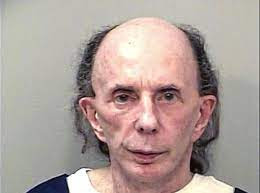
There was no more pathetic sight than the prison shots of Phil Spector, wrinkled and bald, his dignity in ruins, his vanity undone, his arrogance tamed; the great record producer – some say the greatest ever – reduced to little more than a husk. Most of the interviewees in Spector, the Sky documentary film aired this week, believe he got his just deserts and it’s hard to argue with them, though his daughter Nicole does her best and a handful of figures from his past, musicians and studio hands who’d worked with him long ago, draw more attention to his accomplishments than to the way it all ended.

        The story unfolds over four hour-long episodes: how Lana Clarkson was simply in the wrong place at the wrong time, working on the door at the Los Angeles House of Blues when Spector, whom she failed to recognise, turned up very late and very drunk. Two ‘dates’ had already abandoned him that night but he was still on the prowl for female company, so he coerced Clarkson into accompanying him back to his palatial home where he shot her in the mouth, the penalty for declining to accompany him to the bedroom, as was alleged in court at two separate trials, the second of which saw Spector found guilty of second-degree murder and sentenced to 19 years in prison, where he died in 2021.

        On the previous day, The Sunday Telegraph Magazine had published an interview Spector gave to the writer Mick Brown a few weeks before. It was the first interview the famously reclusive Spector had given in 25 years, and when news of Clarkson’s murder reached the Telegraph’s offices in London Brown’s colleagues were concerned that something he had written might have triggered events. Brown, who went on to write the book Tearing Down The Walls Of Sound: The Rise & Fall of Phil Spector, is the most prominent, and lucid, of all the interviewees in the documentary because he straddles both camps, acclaiming Spector’s ‘Wall of Sound’ production style, as do many in the film’s first hour, yet siding with the prosecution as Clarkson’s fate and its consequences dominate the film’s later episodes. He’s also eloquent on Spector’s madness, or eccentricity, or genius, or whatever you want to call it. 

        The producers go to great lengths to avoid the errors of judgement that clouded those Spector obituaries that devoted the lion’s share of space to his music while mentioning Clarkson merely as a footnote. Over the four hours we learn as much about the life and career of Lana Clarkson as we do about the life and career of Phil Spector, his far greater celebrity of less weight than the need to present an evenly-balanced portrayal, with comments by Spector acolytes repeatedly countered by those who knew and admired Clarkson, among them her mother. The oft-used, pejorative, description of her as a ‘B-movie actress’ is soundly disparaged by her friends, as are suggestions by Spector’s defence team that she was ‘washed up’ and might have had reason to deliberately kill herself. 

        I would have been 11 years old when Phil Spector first arrived in my consciousness. ‘To Know Him Is To Love Him’ was playing on the jukebox in the coffee bar just across Mill Bridge in Skipton, where I often listened to records in those days. The melody was very simple, trite even, but there was something about the way it was recorded, a haunting quality that accentuated the love-struck singer’s palpable sincerity, that appealed to me, and I liked the way the middle-eight ramped up the emotion, that soaring high note, and how it resolved into the final verse via a tidy descending run. Within a month I had badgered my parents into buying it for me, a 7-inch single on the invariably dependable black and silver London American label, same as Jerry Lee, Eddie Cochran and the Everly Brothers. I have loved the records that Spector made ever since, including those by Beatles John and George. 

        In a December 24 post about the virtues of Spector’s A Christmas Gift For You, I recalled that around 44 years after first hearing ‘To Know Him Is To Love Him’, on February 3, 2003, I was having lunch with Richard Williams, an old Melody Maker colleague, at the precise moment – 5am in California, 1pm in London – when Clarkson was shot. The purpose of our lunch was to discuss Omnibus Press, of which I was editor, republishing Phil Spector: Out Of His Head, Richard’s critical study of Spector’s work, first published in 1972 and long out of print. While unbeknownst to us Spector was being taken into custody, Richard and I were concluding an agreement that saw Out Of His Head, with a new introduction and revised conclusion, appear in the shops later that year. Cynics no doubt thought its reappearance was motivated purely by the events of that day in LA but this was not the case – it really was an astonishing coincidence – though I can’t deny the circumstances didn’t strengthen my resolve to get the new edition out promptly. Today, almost twenty years later, its still in print. 

        Nevertheless, the timing of our lunch was still a bit weird, but weirdness clung to Spector like a limpet, as this documentary makes clear, and maybe this happenstance was simply another manifestation of Spector-related weirdness. This is a repeated theme in the film and it connects with Spector’s credo that timing, good and bad, is what really matters in life; not just Hal Blaine’s immaculate sense of timing as his snare launches the chorus of a fabulous Ronette’s record, or how A Christmas Gift For You was stymied through being released on the same day that JFK was shot, or even how Mick Brown’s interview appeared the day before Clarkson lost her life, but how the timing and sequence of unforeseen events really does govern our lives. This gripping documentary hinges on that exact same premise  a tragedy of timing for everyone involved.


30.6.22

ELVIS – The Movie

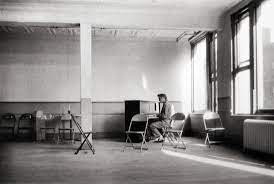
About 45 minutes into this gaudy, fast-paced, acclamatory biopic of Elvis, the camera focuses in on its hero sat on a folding chair at an upright piano. He’s in the corner of a large room, illuminated from behind by light shining in from two windows, playing and humming a gospel melody, a reflective moment amid the madness that is going on around him. In fact, the scene is a direct, and deliberate, reproduction of a still photograph taken by Alfred Wertheimer during rehearsals for the Steve Allen TV show in New York on July 1, 1956, and represents an almost fanatical fixation on the part of this film’s producers to depict small details accurately. 

 The Alfred Wertheimer photograph

        There are many other examples: Graceland surrounded by farmlands when Elvis bought it; his cars, including a pink Cadillac and white Rolls Royce; the tuxedo and hound dog incident; stationary printed with Boxcar Enterprises; the way the 1968 ‘Singer’ TV Special is represented; manager ‘Colonel’ Tom Parker’s dancing chickens; the Barbra Streisand movie that Parker vetoed; his crack Las Vegas band and ‘Memphis Mafia’ entourage all correctly identified; and on and on.

        Perhaps the producers felt this dogged adherence to the precise truth was necessary to mitigate against a handful of glaring inaccuracies inserted to dramatize, and at times rather overegg, the plot, the most absurd of which is the suggestion that Elvis would have gone to jail on a trumped-up charge of behaving lewdly in public had he not answered the call of Uncle Sam and joined the US army in 1958. Allied to this, and unmentioned in any of the many Elvis books I’ve read, and therefore probably fictitious, is that Parker was threatened with deportation over his alien status by right-leaning politicians unless he somehow prevented Elvis from moving on stage in ways that sent teenage girls delirious but profoundly displeased their God-fearing parents. 

        Elsewhere I doubt Parker signed up Elvis for his very first Vegas season to pay off gambling debts – though this may have occurred later – or that Elvis fired him from the stage of the Hilton International, and if Priscilla arranged for Elvis to go into rehab, she didn’t bother to mention it in Elvis And Me, her best-selling memoir. 

        These wildly contrasting aspects of the screenplay aside, I enjoyed every minute of a two hour and 20-minute film that never lagged. While at heart a potted biography, the recurring, all-important side-plot hinges on Elvis’ relationship with the scheming, Machiavellian Parker who managed him throughout his career, taking 50% of his client’s earnings, and probably more. Parker cleverly manoeuvres himself into Elvis’ life, persuading the naïve singer and his equally naïve parents that he is indispensable, his best friend, when in reality he is Elvis’ worst enemy, at least as far as artistic growth and financial remuneration are concerned. Tom Hanks makes a great villain in his portrayal of the dislikeable Parker, overweight, lumbering, ugly and speaking with a nasty quasi-Boer accent born of his Dutch ancestry, of which Elvis was forever ignorant.

        Austin Butler makes a convincing Elvis, the only Elvis impersonator I have seen who mimics both the vital, pre-Army Elvis and the jump-suited Las Vegas showman in both his pomp and decline. Most of the set pieces of Elvis on stage are fantastic, seriously exciting, very loud too, most notably the lengthy screen time devoted to the ‘Singer’ special, and because the film is authorised by the estate we hear and see the real Elvis from time to time, as well as Butler splendidly imitating his stage gyrations and singing voice. 

Austin Butler as Elvis, Helen Thomson as Gladys Presley, Tom Hanks as Colonel Parker and Richard Roxburgh as Vernon Presley

        Supporting actors Olivia DeJonge, as Priscilla, Dacre Montgomery as Steve Binder, the producer of the ‘Singer’ special, and Luke Bracey as Jerry Schilling, the only member of Elvis’ entourage who encourages Elvis to defy Parker, are all impressive, their various roles in the story true to life. The same applies to Richard Roxburgh as Vernon, Elvis spineless father. 

        There are a few omissions or, at least, areas of Elvis’ life that are skimmed over unduly quickly. There’s not much about his movie career; indeed, the schlock film era, the period between his leaving the army in 1960 and rediscovering his mojo in 1968, goes by in a flash. A veil is drawn over Priscilla’s age – 14 – when she met Elvis in Germany, as well as her and Elvis’ subsequent romantic relationships. Elvis’ promiscuity and drug use are touched on, along with his temper tantrums that caused TV sets to become targets for his impressive arsenal of firearms. 

        The vexed question of why Elvis never toured outside of the United States is raised to a significant degree, the answer of course Parker’s inability to travel because he didn’t have a US passport, and couldn’t apply for one without incriminating himself. His claim that it was for security reasons is soundly derided. Parker’s unwillingness to allow Elvis to venture outside of a tried and tested formula, his undermining of Elvis’ more radical ambitions, is a constant theme, as is Parker’s greed, his unshakable belief that Elvis remained little more than a goose that laid golden eggs. 

        The film closes with the real Elvis singing ‘Unchained Melody’ at a concert two months before his death. Although I’ve seen this heart-stopping performance many times on YouTube, I’d never seen this footage – or heard Elvis’ still remarkable voice – in the clarity it is presented here. Overweight, sweating, visibly trembling as he plays a grand piano, he gives it his all, an absolutely extraordinary display by one of the greatest singers of all time. It was the perfect ending to a very watchable film.


15.9.21

LOOK AWAY - Sky Documentary

Look Away, the much-touted Sky documentary about the exploitation of girls/women in the music industry, offered chilling testimony to condemn Kim Fowley, Steven Tyler and Axl Rose but failed in its greater mission to expose a more widespread culture of sexual abuse in the rock world. By concentrating on three specific instances of abuse by these men, it rather lost the overall plot, and many others who may have been equally guilty of similar behaviour no doubt sighed with relief when the credits rolled after one hour and 39 minutes. 

        I have a dim recollection of attending a party in South Kensington in the early seventies at which Fowley, already notorious for his sybaritic tendencies, engaged in intercourse with a willing girl on a couch in front of guests. I was with a Melody Maker colleague whose girlfriend, appalled, dragged us both away from a scene that Prince Andrew would no doubt have considered ‘unseemly’. So, when Jackie Fuchs of The Runaways spoke during the documentary of the occasion when Fowley drugged and raped her in a crowded room, I believed her 100%. 

        Equally castigating, and slightly more sinister in a rather creepy way, was the evidence of Julia Holcombe who at the age of 16 became Tyler’s lover, ward – unbelievably, he got her mum to sign over custody so he could take her over state lines without being detained – fiancée and mother of a child he demanded she abort. Her evidence suggested that those who benefited from Aerosmith’s record and ticket sales were complicit in keeping all this under wraps. 

        Sheila Kennedy, ill-treated by Rose, was once a Penthouse pin-up, which implies she was hardly an innocent virgin, but her testimony merely added to a welter of evidence that Rose considers himself above the law as far as treatment of women is concerned. Needless to say, both he and Tyler declined to comment when asked to do so by the producers of the film. Fowley died in 2015. 

        These three women occupied most of the screen time. Among a handful of others interviewed was a ‘manager’ of Guns’N’Roses, a tour manager of Aerosmith, and Kari Krome, who instigated (but did not become a member of) The Runaways, all of whom backed up what the women had to say. Missing was Rodney Bingenheimer, whose English Disco was a magnet for girls in their early teens hoping to bump into rock stars in the seventies. The notorious picture of Led Zeppelin ‘relaxing’ in their midst flashed up briefly on the screen, as did many other suggestive stills taken inside or outside the club, most of which can be easily found on the internet by keying in Bingenheimer’s name. Lori Mattix, the teen model who stepped out with Bowie, Jimmy Page and others, was rather coy about it all and declined to mention names, while Bingenheimer issued a statement to the effect that he wasn’t aware of any impropriety inside his club. Of course not. 

        What Look Away gave us, then, was three specific examples of appalling behaviour towards young women, all of which occurred many years ago, not that this excuses it in any way. If it was the first episode in a series, I could sympathise with it more but, in reality, this was the tip of the iceberg. Most interviewees suggested it was still happening today but of evidence there was none. If the music industry is to be held to account in its own #MeToo movement, then we need a much bolder approach and, of course, a way around the 21st Century protection offered by expensive libel lawyers whose warnings no doubt prompted the producers of Look Away to blank out many faces in the photographs we saw. 


12.9.19

THE REPAIR SHOP


I have quietly and without fuss or regret become slightly addicted to a TV programme called The Repair Shop. It has, so I have learned, been running since 2017 but I only discovered it a couple of months ago, probably because it seems to have shifted around the schedules and channels (BBC 1 and 2) and even varied its length from 30 minutes to an hour. At the moment it is being shown on BBC 2 between 7 and 8 pm most nights of the week but it is very unobtrusive and many of its its admirers, like me, no doubt stumble on it accidentally.
         The premise of The Repair Shop is very simple. In a converted barn somewhere in the lush countryside of southern England a group of expert craftsmen and women toil away at restoring much loved artefacts for grateful owners. The items they repair are always old, damaged or malfunctioning yet hold great sentimental value, like a much-loved childhood toy, or a watch that belonged to a grandparent, or a family portrait, or an abandoned piece of furniture, all of them brought to the barn by their owners who explain why the item means so much to them. Programme host Jay Blades (seen above, left, with carpenter Will Kirk) surveys the wreck, four of which are repaired per 60-minute programme, then calls upon the appropriate expert to take it to their bench and begin work.
         We watch as they do their thing, fixing, reshaping, sanding, soldering, cleaning, polishing, painting, reupholstering, creating some parts anew, explaining their methods as they do so. Sometimes it is necessary for one craftsperson to call for help from another and this is always generously given, so that many of the cherished items are restored by team effort. They have included pinball machines, soft toys, street signs, jewellery, paintings, pottery, stained glass, musical instruments, tables and chairs, wind-up record players, books, clocks and ornaments of all shapes and varieties, and even a snooker scoreboard that once belonged to former world champ Fred Davies. When the work is complete the owners reappear, only to be rendered speechless with emotion at seeing their treasured family heirloom in sparkling condition. Many are moved to tears.
         Such sentiment aside, there is another, deeper, reason why I love The Repair Shop. In an era when brutish capitalism seeks to rule the world, when climate change deniers do so only to protect their profits, and when Brexit is promoted by billionaire tax evaders, The Repair Shop stands proud as a beacon of unselfish co-operation without the tiniest suggestion that monetary value in any way motivates those who bring their possessions – most of which are of sentimental value only – to the shop; nor do the skilled repairers ever mention that in the real world the wonders they have performed would have cost a small fortune. Value is irrelevant. In this way it is the exact antithesis of The Antiques Road Show wherein the value of an item is finally revealed like a rabbit out of a hat, as if the significance of its worth effortlessly trumps whatever history and providence the antiques experts have patiently outlined.
         Furthermore, The Repair Shop is utterly bereft of those awful, stage-managed, artificial soundbites that are repeated ad-infinitum during TV shows in which confrontation or competition drives the action. No one says ‘awesome’. No one ‘dreads’ anything. No one is angry. No one complains. Everyone quietly gets on with what they have to do without making a fuss. It is low key, low profile, low maintenance. It doesn’t shout. The smiles of the experts are genuine. The reward is the satisfaction of a job well done and the joy on the faces of those whose treasures are restored. An antidote to throwaway culture, it is a perfect representation of a better world.
         Besides which, the Repair Shop has done me a favour. On one show David Kennett, a guitar restorer, reconditioned a battered Fender Jazz Bass that had belonged to Tony Wilson, the bassist in Hot Chocolate, now the property of his son. So impressed was I with David’s work that a week ago I left my prized 1963 Gibson LG2 acoustic guitar at his workshop for some much needed TLC. Watch this space…

11.7.19

YESTERDAY – Film Review


A world without The Beatles is not somewhere I would want to live, but this is the unlikely scenario on which this strange, occasionally enjoyable but ultimately flawed fantasy film is based. It’s far too cute for my liking, with laboured jokes, inexplicable plot twists and a soppy, all too predictable, ending. Also, for those unfamiliar with The Beatles – and there’s probably a few such folk now we’ve reached 2019 – there’s a lack of backstory that fails to celebrate the group and their songs to the extent that they merit.
         It’s the present day (I think) and for reasons unexplained there’s a worldwide power failure during which Jack (Himesh Patel), a struggling singer songwriter, is knocked from his bike and rendered unconscious. He wakes up to discover that no one remembers, or is even aware of, The Beatles, or Coca-Cola or cigarettes or Oasis for that matter. This realisation comes across subtly, at first anyway, with quizzical faces appearing when Jack quotes a lyric or, more importantly, accompanies himself singing ‘Yesterday’ to a group of friends who believe he’s written it himself.
         Among the friends is Ellie (Lily James), his manager-cum-roadie-cum-cheerleader, who provides the romantic spark as their platonic relationship grows into something more meaningful. Meanwhile Jack tries desperately to recall as many Beatles songs as he can, mostly predictable choices like ‘Help’, ‘She Loves You’ and ‘Let It Be’, and performs them as if they were his own. The audiences get bigger, a five-track demo gets airplay, his career gets lift-off and along comes admiring Ed Sheeran, playing himself, to offer Jack a support slot on his world tour.
         So far so good, but the first indication that we’re approaching naff territory is the arrival of Debra (Kate McKinnon), playing Sheeran’s American manager, who takes Jack under her wing to make him a star. Someday a screenwriter or director will have the balls to portray a music business manager as a caring, nurturing character whose priority really is the welfare of their client and not a money-grabbing monster, but in Debra we have the trite clichéd version, the US equivalent of the way Dick James was portrayed in Rocketman, the movie based on the life and music of Elton John.
         Thereafter the film sinks into a rather banal love story and the Beatles angle becomes secondary to Jack and Ellie’s will they/won’t they relationship. With the awful Debra pulling the strings and a double album of ‘self-penned’ Beatle songs in the bag, Jack is primed to become the biggest star the world has ever known. Then he’s confronted by his conscience, aided and abetted by a couple of unrelated punters who arrive on the scene and, like him, happen to remember The Beatles, so he forsakes all, shacks up with Ellie and everyone lives happily ever after. There’s an unexpected and, frankly, unnecessary twist at the end in questionable taste that I won’t reveal here but, like much of everything else, it merely accelerates the inevitable cheesy conclusion. The closing, appallingly twee, scene sees Jack reduced to singing ‘Ob-La-Di Ob-La-Da’ to a bunch of kids at the school where Ellie is a teacher, but the conundrum on which the film is based – the genesis of the songs – remains annoyingly unresolved.
         I have no quarrel with Patel or James who play their parts well, though Patel does seem a tad detached, with the film carrying him instead of the other way around. James is her usual, attractive bubbly self, amusingly switching with ease from the three-blokes-in-as-many-weeks promiscuity of Donna in Mamma Mia! Here We Go Again to the chaste, we’ve-known-one-another-for-years-but-haven’t-shagged-yet Ellie. Nor do I have much quarrel with Danny Boyle, whose direction is as lively as you would expect. No, the culprit here is screenwriter Richard Curtis who has simply used the music of The Beatles and the ludicrous conceit of their not having existed as a vehicle for yet another rom-com that is little more than a retread of his other, similar, scripts (Four Weddings, Notting Hill, et al) wherein a couple of long acquaintance or differing circumstances don’t realise they’re attracted to each other romantically until something eventually happens that makes them realise they do.  
         I’ve read that Paul and Ringo ‘support’ the film and that its release has sent John and Paul to number four in the Rock Songwriters Chart, whatever that it is. Well that’s great but they, The Beatles that is, deserve better than Yesterday.