17.6.15

CLASSIC QUADROPHENIA - Album Review


Back in 1972 I was given a copy of the Lou Reizner production of Tommy to review, and being as how I was big on Tommy at the time, and even bigger on The Who, I gave it a rave notice in Melody Maker, a bit over the top in fact, which I would come to regret later. The truth is I don’t think I ever played it again and it sits upstairs amongst my Who collection in pristine condition, a bit like plenty of other albums and CDs that include ‘interesting’ rarities or ‘alternative’ versions of songs that tend to be listened to just the once out of curiosity’s sake, then left unplayed because you can’t get away from the fact that the original is the best, and that’s the one you turn to when you want to hear a song or an album again. So I’ve listened to The Who playing Tommy, both the original studio album and various live versions, countless times but that symphonic Tommy by the London Symphony Orchestra and guest singers sits upstairs abandoned like an old t-shirt you won’t ever wear again but don’t have the heart to throw away. I never even bothered to get a CD version.
So now we have Quadrophenia recorded by the Royal Philharmonic Orchestra and London Oriana Choir, conducted by Robert Zeigler and orchestrated by Pete’s partner Rachel Fuller, which goes one step further than Reizner’s Tommy in that instead of rock singers taking the vocal parts, we have opera star Alfie Boe singing most of the songs along with guest stars Phil Daniels and Billy Idol, and Pete edging in on guitar and the odd vocal line too.
And it sounds pretty good too, very dramatic, very classical, especially when the choir comes in to boost the choral landscape and the orchestra gives it full welly, probably not a term used by reviewers of classical music, which is probably why my favourite tracks are the opener ‘I Am The Sea’, ‘Quadrophenia’ itself and the penultimate ‘The Rock’ which, regrettably, lacks those pesky seagulls in flight. What these three have in common, of course, is that they are instrumentals, with no vocals at all, for try as I might I can’t seem to appreciate opera singing whether it’s Carmen or Placido Domingo or Quadrophenia, and tenor Alfie Boe, for all his operatic credentials, just doesn’t sound right singing lines originally sung by Roger Daltrey, while Daniels and Idol seem to me to be trying too hard to inject a bit of East End ‘ardman into the lines they are given. Even Pete, singing that wonderful refrain in ‘The Punk And The Godfather’ (“I have to be careful not to preach…”) adopts a rasping tone that for me is far less effective than the more melodic way he sang it on the original.
In the review of Quadrophenia in my book The Complete Guide To The Music Of The Who (1995, revised ed. 2004 with Ed Hanel), I wrote of the song ‘Helpless Dancer’: “A dramatic but lean operatic-style aria featuring a double tracked Roger over staccato piano chords, acoustic guitar and little else. Underarranged, short, and decidedly experimental in tone, this is the least Who-like piece on the album…”, thus identifying that this song would benefit from an operatic style arrangement, which it does. Others that do likewise include ‘Drowned’, ‘Cut My Hair’ and, of course, ‘Love’ Reign o’er Me’. The slower ‘Sea And Sand’ sounds fine until the sudden central section (“My jacket’s gonna be cut slim…”) and, after its lovely intro, ‘5.15’ appears strained, with the line about “girls of 15 sexually knowing” sounding uncomfortable in Boe’s interpretation in a way that it never did when Roger sang it. ‘Bell Boy’ worked far better with Keith carrying the baggage out, and ‘Doctor Jimmy’ doesn’t come into its own until the “What is it? I’ll take it” chorus. As noted, the slow, über-dramatic ‘Love ‘Reign o’er Me’ makes for a powerful climax, its chorus perfect for Boe’s range.
In a nutshell then, the slower songs lend themselves to this treatment better than the faster ones, which probably boils down to the fact that for my money opera singers aren’t suited to rock any more than rock singers are suited to opera.
Nevertheless, I applaud Pete’s decision to give his music broader appeal by attracting a new and different audience, and I’m all for rock music being recognised as the cultural phenomena that it undoubtedly is, even if this means it has to be framed in a different and not necessarily appropriate setting. The decision of whoever it is that compiles the UK’s classical charts not to recognise this version of Quadrophenia as being eligible smacks of elitism, and was roundly condemned by Pete who in his usual robust fashion has been quoted as saying: “So musical snobbery in the ‘classical’ elite is still alive and kicking then?Fuck ’em.” It's sales would evidently have pushed it to the top by the way. 


13.6.15

LED ZEPPELIN: Physical Sour Grapes


WARNING: The post that follows smacks of sour grapes. That is the intention.
        
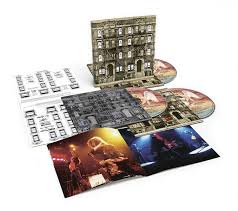
It has been brought to my notice that the booklet within the packaging of the recently released de lux upgraded edition of Led Zeppelin’s double album Physical Graffiti contains not one but two facsimiles of articles I wrote about the group for Melody Maker around the time of its release in 1975. The first is the story about hanging out with them in Chicago, a revised and far more detailed version of which appears elsewhere on Just Backdated, and the second an interview with Robert Plant, undertaken a month later in New York, which is not posted here. The first of the two articles to appear in MM was trailered with a front page story, also used in the booklet, and both are reproduced below. No other music writer has two articles in the booklet.


Strictly speaking, because I was a salaried member of the staff, the copyright on the work I produced for Melody Maker during the seventies belongs to IPC Media, which is now owned by Time Inc. (In the seventies MM was published by IPC Business Press Ltd.) This means that neither Led Zeppelin nor their record label were under any legal obligation to ask my permission to use my work, let alone pay me, but it would have been nice to have been told that it was being used, courteous let’s say, especially as they used two articles. No one even told me, not formally anyway. I found out from someone who showed me the artwork.  
         When I did find out I contacted the company responsible for Led Zeppelin’s PR, inquiring whether or not this entitled me to a complimentary copy of the reissued Physical Graffiti album. They never even replied to my e-mail.
         All this is a bit déjà vu really. Back in the nineties IPC published a series of special edition magazines devoted to an individual artist, NME Specials they were called, which included pieces by me (from MM!) on Lennon, The Who, Bowie, Zep, all the biggest names. I found out when I saw them on a rack in WH Smiths.
         It’s probably not really the fault of the three surviving members of Led Zeppelin though, as I have mentioned elsewhere, they were never as media friendly as, say, The Who or Slade, two other acts about whom I wrote a great deal during my MM years. Both those acts have retained my services on and off as an archivist and sleeve-note writer and both, especially The Who, have paid me generously for my work. Even David Bowie, whose aloofness during the Ziggy era was a PR stunt designed to create the impression he was a big star before he really was one, was savvy enough to realise that a cordial attitude towards the media paid off in spades in the long term.
         Not so Led Zeppelin who held the press in contempt unless they were 100% supportive, though Robert personally was always convivial towards me as has been John Paul when I’ve bumped into him a few times more recently. In their pomp Led Zeppelin were takers not givers, their reputation for voracity and stinginess a byword within the industry. Perhaps Jimmy Page – nowadays the torch bearer for the group – was unamused by the slightly sardonic tone of the piece I wrote about the public interview he gave last October (‘JP – All Rise Please’), or the more robust, fly-on-the-wall tone of my re-written Chicago piece – though to tell you the truth I’d be amazed if he’d even read them. Perhaps he takes a dim view of those who fail to genuflect before him, as younger rock writers who never saw Led Zeppelin in their day, let alone spent time on the road with them, are inclined to do these days. He certainly doesn’t like being reminded of the intemperate self-indulgence, the often gleeful decadence, that surrounded the group, as is evident when interviewers mention it these days, and so likes to keep at arms’ length those journalists like myself who were privy to such goings on but who – as was our custom – ignored it in the stories we wrote back then.
         Also, perhaps that’s why, when I was in negotiation with parties representing Page for Omnibus Press to publish a trade edition of his photo book Jimmy Page By Jimmy Page, I was confronted with a contract with more confidentiality clauses in it than I had ever seen before, the sort of thing you’d expect to have to sign if you became employed by people like David & Victoria Beckham, Madonna or maybe even the Windsors of Buck House. After reading these clauses it occurred to me that I’d be breaking the contract if I happened to mention to someone that JP played the guitar. I didn’t sign it so I can tell you that he does indeed play the guitar, very well too as it happens, though this would have been confidential information had I signed that contract.
         I guess I can live without a free copy of the new look Physical Graffiti – my second favourite Zep album by the way and one which, if I remember rightly, I received two review copies of (one from Atlantic, one from Swansong) in 1975. Nevertheless, using my work without so much as a by-your-leave does leave a nasty taste in the mouth. Plus ca change.


12.6.15

PETER RUDGE – 1973 Interview, Part 2


This is the second part of my 1973 interview with Peter Rudge, pictured below as he looks today, more or less.


The mechanics for the [1973 Rolling Stones tour] tour are coming from all over the world. The lighting system, which includes seven “super-trooper” arc lights, is being brought over from New York, as are the seven operators. These lights are placed at the rear of the stage and shine forward into a 40ft x 8ft mirror which is slung down from the ceiling mid-way up each hall. Thus they are reflected back onto the stage. There are also 88 smaller spotlights shining down on the band, and in charge of this whole operation is Brian Croft, who runs his own company which specialises in lighting rock groups. Croft has worked on the last three Stones tours.
          The sound system is being flown over from Los Angeles and the men who will operate it are being brought in from as far afield as Australia. Local labour will be used as “muscle” to carry it around but there are at least half a dozen top sound men (including the vice-presidents of the two companies that manufactured it in the first place) to work the switches.
          On top of this there is a makeup and wardrobe man from Paris who will be solely working for Jagger to ensure his stage clothes are clean and pressed for each concert. Keith Richard is bringing over a guitar mechanic from Arkansas whose job it is to restring and tune his instruments for each show and, if necessary, between each number the group plays. Then there is a “reccy” man who will never see a concert. His job it to visit each location a day ahead of the group and check out that the facilities for the following day’s show are in order.
          “The Rolling Stones are not a group to learn the business from,” says Rudge. “They use the best who have already proved themselves the best. They tour infrequently and can afford this luxury, but there is plenty of kudos for a roadie to have worked on a Rolling Stones tour. It’s like a good reference for getting a job on any other tour afterwards.
          “I try to keep control of everything all the way down the line as the group themselves worry a lot about what is going on. Mick Jagger works with me on organisation details as much as anybody and he came down to Cardiff with me last week to check out the Castle there where we are playing. He’s the guy who’s going to be up there on the stage and he’s the guy that the public will blame if they can’t see properly so he insisted on having his own say in the matter. It doesn’t always happen like this with groups.
          “My job is to keep an eye on all these aspects. The group will blame me if something goes wrong, although I will know that the fault lies with someone who hasn’t done what I’ve told them to do. I don’t know any other groups who are as demanding as the Stones or who have this intensity about them.”
          The transport situation is another major headache, although the actual driving around Europe is being done by a professional haulage firm that knows the roads better than any group roadie – having delivered cabbages across the continent for most of the year. Two 40 foot trucks will transport everything from town to town, and each promoter must supply an English speaking man at every border in order to facilitate passing through customs.
          Then there is accommodation. A full time travel agent from Denmark has been hired to book everyone into hotels throughout Europe, and he will travel with the party.
Tax and insurance are another headache for Rudge. A qualified accountant is on the tour to deal with immediate tax matters.
          Pre-tour meetings covering all these aspects have been going on for the past month. There have been two meetings in Paris when all the European promoters got together, and one similar meeting in London.
          Security is another worry. Where possible the group will book a complete floor of a hotel and station security men at the lifts so that unauthorised people cannot get on to that floor, let alone near the group’s bedrooms. There will be checks on fans coming to the concerts, something the Stones have always insisted on after the notorious Altamont incident.
          A system of aliases is used to book the group into hotel and restaurants. On the last US tour they used the names of cricketers, while in Australia they were professional cyclists.
          Each evening on tour Rudge will dictate a newsletter that is distributed to each member of the tour from Jagger downwards. This will give details of the following day’s itinerary. “Each tour we have a change-over day just for fun when – apart from appearing on stage – everyone takes on another role. Mike will be baggage man, and just for the hell of it he’ll go around the hotel corridors picking up everyone’s luggage. Bobby Keys is usually the accountant as he can’t add up and I usually become the singer and take things easy. You’ve got to do something like this when you’re on the road, otherwise you’d go mad.”

11.6.15

PETER RUDGE – Stones, Who tour boss, 1973 Interview

Yesterday I had lunch with my friend Pete Rudge whom I’ve known for 45 years, ever since we first encountered one another backstage at a Who gig in 1970. He was their tour manager in those days but in truth he was doing pretty much everything a bona fide manager does, Kit Lambert and Chris Stamp having more or less abdicated their responsibilities for day-to-day administration of the group’s affairs.
          Pete went to on become the tour manager for The Rolling Stones, then set up a business in New York and manage Lynyrd Skynyrd, and along the way I worked for him for a while. Then it all went pear-shaped after the LS plane crash, details of which can be found elsewhere in two consecutive postings on Just Backdated, the first linked below:  http://justbackdated.blogspot.co.uk/2014/01/lynyrd-skynyrd-1977-part-1_28.html
          These days Pete manages Il Divo, amongst others, which explains why he was in London to meet with Pete Townshend to discuss marketing plans for the classical version of Quadrophenia that was released earlier this week. Clearly delighted to be working with Townshend again, Pete hasn’t changed much, still full of energy, full of great stories, an old school rock biz pro who’s seen pretty much everything in his time.
          In July 1973, just before I took up my post as MM’s US editor, I interviewed Pete Rudge about what it was like to organise a Rolling Stones’ tour, a bit of a challenge in anyone’s book. Here’s the story I wrote, in two parts, today and tomorrow, and bear in mind that we were talking in 1973.

Pete Rudge, photographed in 1973 by MM's photographer Barry Wentzell.

“The Royal Family have rung up asking for a quote on their next official tour of the Commonwealth,” joked Pete Rudge after he’d spent the best part of two hours explaining how he’s managed to get The Rolling Stones on the road this autumn. Whether or not Rudge has the skill to organise a Royal tour is debatable, but a tour by The Rolling Stones – rock’s equivalent of royalty – doesn’t fall that short in terms of security, travel problems and general organisation. And while there’s a man in charge of each particular aspect of the tour, Rudge is the commander-in-chief, a kind of Field Marshall who is answerable for everything if things go wrong.
          The whole tour is being set up from the office of 5-1 Productions in New Bond Street. 5-1 is Rudge’s own company, recently formed, and named after a football score line. Wolves, you see, beat Arsenal 5-1 one day last season, and Rudge, a loyal Midlander, never misses a Wolves match if he can help it.
          Fast talking, shrewd and fiercely hard when it comes to negotiating business, Rudge’s rise in the world of rock and roll has been nothing short of sensational. A Cambridge graduate in history, he left college to work for Kit Lambert and Track Records. It wasn’t long before he was running The Who’s tours in Europe and the US, and soon other top acts were clamouring for his services.
          While retaining his contacts with The Who, he managed the Stones’ massive US tour last year and took them to Australia last winter. He’s turned down offers from T. Rex and The Faces, and maintains that this latest Stones tour will be his last. In the future he’ll just be the group’s manager and someone else can do the hard work.
          “The first thing I do when a group tells me they want a tour organised is to work out with them how long it’s going to be and how much money they will earn,” he says “There are two reasons for doing a tour. It’s either to promote an album or it’s an event. In the case of the Stones it’s both, though we may be taking them behind the Iron Curtain and in this case it’s an event and money is secondary.
          “But on a Stones tour money is important. The Rolling Stones haven’t toured Europe for some time, which makes it an event, but at the same time it has to be economical. Fortunately with the Stones we can rely on at least 99 per cent sell-outs, so we can afford to spend money on things that other groups might not be able to afford.
          “Hopefully, the Stones are about the best group in the world, or at least the best known, so we have to spend money to make them appear the best. We can afford to spend money on lighting and sound, and we can afford the services of the best road crew available. We’re having sound and lighting men flown in from all over the world to make up the crew on this tour. Also we can afford to have someone like Billy Preston on the tour as a supporting act whereas in most cases Billy Preston would be topping the bill himself.
          “And at the end of all the spending we have to work out that there’s a reasonable amount left over for the five boys in the group. A group can make far more money sitting at home writing songs than they ever will going out on the road. But we all think this will be a good tour, like the American one last year. Other groups are still trying to beat that one.”
          Ticket prices and audience comfort weigh heavily on Rudge’s mind as in these areas the Stones are more susceptible to criticism than any other band. “A group like the Stones, just because they are the Stones, will be more liable to criticism if something isn’t right. When you have any regular top twenty group charging £2.50 a seat, it gets overlooked by most people because they are not that well known. The Stones are like the Prime Minister. Anything they do will be closely scrutinised by would-be critics.
          “The worst thing with so many groups when they go on tour is that they want everything. This is just pointless and a waste of money. We are in a commercial business and we want to earn money. The Stones have the right to earn money, but not at the expense of the public or at the expense of the people who work for them.”
          There is a 20 page contract to sign on the Stones’ forthcoming tour. While the bulk of the contract includes relatively mundane and obvious clauses about billing, stage size and facilities that the promoter of each concert must provide, there are intriguing clauses too.
          A promoter, for example, must provide at least 50 of his own security men at each concert, he must provide a make-up room with at least 12 towels and bars of soap, there must be no discrimination on grounds of sex, religion, race or age when it comes to selling tickets, there must be a doctor available 24 hours a day, there must be five limousines provided (at the promoter’s expense) for the benefit of the group, the promoter must provide 10 dozen red roses for the group and supply a complete list of first class restaurants in the town together with details of which restaurants provide a private room.
          Even more interesting is an accompanying note which details the refreshment requirements in the dressing room. Each promoter is advised to supply two bottles of whisky, two bottles of bourbon, two bottle of tequila, three bottles of iced white wine, one bottle of brandy, one bottle of vodka, one coffee liqueur, a gallon of apple juice and orange juice and a supply of mixes, cokes and ice. Fresh fruit, cold cuts, good cheeses, and Alka-Seltzer are also on the list.
          A note with this list of requirements adds ruefully that, “It would be very strange to see Keith Richards on top form without the company of a good tequila.”

9.6.15

ZZ TOP – 1975 Interview


Forty years ago I was living in New York, relishing life as Melody Maker’s American editor, the best job in the world. And, as it happens, in this first week of June encountering ZZ Top, a fine little boogie trio from Texas who had yet to make much of a name for themselves outside of their home state. Like Bob Seger and his Silver Bullet Band, in those days they were one of many acts with an immense local following that had yet to translate into national success, an odd phenomena to us Brits but not so odd when you consider that Texas is more than twice the size of the UK.  
          I went to watch ZZ Top at the Felt Forum and, impressed, interviewed them, the next day. Here’s what I wrote, eight years before they dazzled everyone with Eliminator:


The two guitarists, one long and lean and the other short and cuddly, twizzle forth in a grinding motion that reminds me of a curious tribal sidestep more common on the floor of a burlesque theatre than a rock and roll stage.
          The lean one slides up and down a Gibson Les Paul, flashing fingers flickering across the frets, while the other thumps down the neck of his Fender Precision, booming bass, up, up and away into the rafters of New York’s Felt Forum.
          The noise created by these two gents and their long haired drummer friend perched a foot or two above and behind is quite overpowering. It’s ZZ Top and ZZ Top are the epitome of the powerhouse trio: they don’t let up and neither do their audience.
Their concert is like an express train in motion, clickety-click down the tracks all the way, gaining momentum and reaching a scorching climax at each set of points.
          “That li’l ol’ band from Texas” – as ZZ are affectionately known among their more intimate acquaintances – hit the Big Apple last weekend for a concert that was but half-subscribed, a situation explained away by their manager, Bill Ham, who correctly pointed out to me that it was Memorial Day weekend (a long weekend like our Spring Bank Holiday) and most New Yorkers had fled the city for green fields and green grass.
          Nevertheless the situation did confirm the peculiar state of affairs that can – and does exist – in a country as huge as the United States.
          South of the Mason-Dixon line ZZ Top are among the biggest rock attractions on the road, drawing enormous crowds to their hellzapoppin’ rock shows. Up East they’re relatively unknown – a classic case of territorial ups and downs, and one which seems to have bugged ZZ since their career began in 1970.
          Although ZZ qualify for admittance to that cult of groups who describe themselves as “southern bands”, they don’t belong in the category of the Allmans, where energy takes second place to flow.
          ZZ jerk out their brand of rock, rarely stopping to take breath and whipping up a frenzy that comes not only from the music they’re grinding out but from the twin roles played by our lean friend, Billy Gibbons, and plus-size hero, Dusty Hill, both of whom, incidentally, are topped off by fearsome looking cowboy hats as worn by men of the rodeo.
          Billy Gibbons, off-stage, wears thick glasses and his ten gallons worth of crowning glory is exchanged for a neat, peaked golf-hat. Dusty Hill, fair skinned and very blonde, and Frank Beard, skinnily hippy looking, are shy Texans who take much probing before they’ll confess anything. Dusty says he hasn’t bought more than a dozen albums in the past three years, while Frank enthuses more about vintage cars than music, a hobby shared, apparently, with Gibbons.
          Where, I asked, as we seated ourselves comfortably on armchairs in the lobby of the Plaza Hotel, did it all begin? Gibbons, the spokesman, elected to answer. “Well, we came together in 1970,” he replied in a studied, serious tone.
          “I met Frank through a fella in Dallas and he came down and, after one, show he said he’d got a drummer that I had to meet. That was Frank and we teamed up there and then. Then the guy from Dallas quit so I needed a bass player, and Frank knew Dusty and that’s how he came to join us. I didn’t know it but Frank and Dusty had worked together for about five years before.”
          Hill and Beard had worked together in a Texas outfit called American Blues, a purely local group who made a good living in clubs and bars in Dallas, occasionally turning out as support attraction when a big name band arrived in town without a second on the bill to open the show.
          At the same time, Gibbons played in a Houston based band called the Moving Sidewalks, whose main claim to fame was once supporting Jimi Hendrix on tour. Gibbons retains fond memories of hours spent with Jimi, jamming on guitar in hotel rooms.
          On their initial meeting, all three ZZ Tops were anxious to get away from their immediate musical past. Gibbons’ band has flirted with electric psychedelia (ultimately changing their names to the Electric Sidewalks at Hendrix’s suggestion) and Hill and Beard had spent the last eight months backing an acoustic singer.
          “I had some tunes I’d written,” continued Gibbons, “and we worked them up, Frank and I and this other bass player, and when he quit and Dusty arrived we did them again and they sounded a whole lot different. They were better and once we’d discovered we could do better we just headed forward, not really planning anything but just playing and going with whatever came out.”
          “In the older days,” said Hill, “the pressure was on us because nobody knew who we were and we had to play the best we could. But today the pressure is still on us because we’re better known. It’s the same pressure but in a different way.”
          Album-making with ZZ Top seems to be a relaxed affair, though their most recent LP Fandango was completed in a town called Tyler, 300 miles north of Houston, which is “dry”, thus the temptation to draw on the local bar doesn’t occur.
          They don’t approach the studio with a cut and dried tune to record, but work on ideas within the confines of the studio. They also write their lyrics at the last minute, jotting down words between takes. Lyrics, after all, are not the essence of ZZ’s message.
          “There are things about the studio that are enjoyable even though I guess we’re a working live band,” said Hill. “You have the freedom to put something down and erase it and put something else down instead. On stage you play and there it is.
          “We never choreograph anything at all, whatever we do on stage just happens through time. Sometimes Billy goes off to the side of the stage and I’ll just follow him. It’s like our clothes... we were wearing western clothes long before it became big to dress like a cowboy, and a lot of people from Texas do dress the way we do.”
          Questions about influences are shrugged aside by ZZ; too numerous to say, although they do admit to being rockers at heart, growing up on a diet of southern rock and roll that sprang from Elvis Presley, Jerry Lee Lewis and Little Richard.
          Surprisingly Gibbons qualified his “faves” by putting them into a wide variety of fields – Segovia in classical, Hendrix in rock and others too numerous to mention in blues. He did admit to an admiration for Peter Green, and also says his writing is influenced by films, usually European “arty” films.
          “Movies are like trips,” said Gibbons. “You leave them feeling like a new person, like you’ve walked out of the theatre with a movement of your psychology. I get stirred up about them and go back and write songs about European chic.”
          Beard, entering into the conversation for the first time, says he liked Mitch Mitchell and Ginger Baker during their particular eras. “I guess I liked just about anybody who was big then,” he said in a deep Texan accent. “But now I don’t get to hear anyone. In those days I’d practice and listen but now I don’t have time.”
          They don’t go out and listen to other acts playing and if they do it’s curiosity that motivates them rather than admiration. Recently they saw Sinatra and Dean Martin on a vacation in Las Vegas; Beard says he’d like to see Alice Cooper’s new show, while Hill mentions Bobby ‘Blue’ Bland to an enthusiastic response.
          The only member of the trio to have visited Europe is Gibbons – who spent three months in Italy in 1969 and two days in London before flying back home. He studied the Maharishi in Northern Italy, taking a Fender Stratocaster with him but hardly playing it.
His most vivid memory of London is being served – and eating – a steak and kidney pie at Heathrow Airport when he was a squeamish vegetarian. Today, Gibbons still does yoga exercises twice a day.
          Plans are afoot for ZZ to make their first European tour as a band in September, a tour they’re all looking forward to immensely. Among their closest friends is Rabbit, the keyboard player who joined up with Free during their latter moments, and they keep in close touch, swapping news and trends across the Atlantic. Another close friend is Robert Johnson, the guitarist John Entwistle recruited for his Ox band.
          They stay in touch with the English record scene through their friendship with a local import record dealer, and Gibbons boasts a huge collection of obscure blues singles which he prizes as much as his collections of guitars and vintage automobiles.
          Hill seems the opposite. “I’ve bought maybe five records in the past four years, and I think they were all Beatle albums,” he said.
          It is, I think, indicative of the ruthless professionalism of ZZ Top that their manager, Bill Ham, recently issued some startling figures to the press in America. While most manager are reluctant (usually for tax reasons) to issue gross receipts, Ham bared the balance sheet after ZZ’s winter tour, revealing plenty of gross receipts in the six figure region for many of their concerts in the Southern States.
          It won’t be long before he can boast similar figures in New York.

5.6.15

Just Backdated - Temporary Lapse

There is a temporary cessation of posts on Just Backdated while its proprietor finds himself away from the world of rock'n'roll in the land of Arts and Crafts, in Bovey Tracey neat Exeter, where Mrs JB is showing her glass work. Normal service will be resumed after the weekend, all being well.

2.6.15

THE WHO - Jacksonville, August 7, 1976 - The Real Story!

Elsewhere on Just Backdated I have eulogised about The Who’s concert at Jacksonville on Saturday August 7, 1976, and followed this up with a post of several great photographs taken at the show. However, for reasons that will become clear if you read what follows, I have been less than truthful about what really happened to me that day and night, but now I’ve decided to set the record straight.
          The reality of the situation is that I was invited by Atlantic Records to fly down to Jacksonville to do a story on Black Oak Arkansas, another act appearing in the all-day event at The Gator Bowl headlined by The Who. I wasn’t particularly interested in seeing BOA or writing about them but I was always keen to see my friends The Who, whom I hadn’t seen since March 11 that year at Madison Square Garden in New York, so I accepted the invitation and flew down. I arrived at Jacksonville Airport around lunchtime and rented a car to drive to my beachside hotel, the Sea Turtle on Ocean Boulevard, then headed for the stadium, arriving around 3pm.
          The day turned out to be memorable for two reasons, neither of them related to BOA.

In the afternoon I did an interview backstage with Jim Dandy, BOA’s singer, and watched their set. Afterwards I hung around in the backstage area waiting for The Who to arrive and in the bar fell into conversation with a friendly girl called Andrea who was dressed in a halter neck and cut-off jeans, well-tanned too. She was cute and had a nice smile and seemed glad of my company, so much so that before long it occurred to me that I’d found the perfect overnight companion. All seemed to be going swimmingly until her elder sister’s husband arrived with the news that their babysitter had cancelled on them at the last minute, and since they were going out to some event with a bunch of friends in the evening they now needed Andrea to babysit instead. So Andrea did the decent thing and opted to leave with him instead of seeing The Who – but she did offer to meet me at my hotel later.
          “You know the Sea Turtle by the beach?”
          “Of yes,” she said, skipping off with her brother-in-law. “I’ll try and be there before midnight.”
         
And so I stayed to watch The Who, of course, and it turned out to be the last Who concert I ever saw with Keith on drums. Nothing I wrote in my previous post about the actual concert needs revising. As noted, it was by no means a sell-out, there was a bit of angst backstage and, perhaps as result, The Who gave a staggeringly fluent performance, truly one of the best Who shows I ever witnessed. Afterwards, when I complimented Pete on the show in the dressing room, he memorably told me: “We were playing for the people who weren't there.”
The Who had their own plane and were flying on to Miami that night so I didn’t linger long. Pete’s words were ringing in my ears as I drove back to the Sea Turtle. In truth the show had been so great and the aftermath so profound that I had completely forgotten about Andrea. She wasn’t waiting for me anyway.

It was a lovely warm night and there was no way I could turn in after watching The Who’s set, so after parking the car I decided to take a moonlit walk along the deserted beach, gazing out across the sand towards the waves. Then I heard music, rock music, and followed the sound until I came across a bar by the boardwalk, a wooden shack, and went up the door. It was opened by a guy in jeans and t-shirt with long hair who seemed friendly, especially when he spotted my Backstage Access All Areas pass to the Who show which was still stuck to my shirt.
          “You work for The Who?” he asked.
          “Not really but they’re friends of mine,” I said.
          He acknowledged my accent. “You’re English?”
          “Yes.”
          “Step right in.”
          I walked in and he followed. A band was playing but there weren’t many people inside, no more than a dozen. I think the night was drawing to a close there. He tapped me on the shoulder.
          “Can I have that pass you’ve got? I want to stick it on the wall behind the bar.”
          I looked towards the bar where a seriously gorgeous girl with short blonde hair was sitting on her own on a stool nursing a beer. She was wearing a very short, very flimsy, black and yellow summer dress. 
          “Do you know her?” I asked, nodding towards the girl.
          “Sure, that’s Melanie.”
          “Is she with someone?”
          “No, not tonight.”
          “If you introduce me to Melanie you can have my pass. My name’s Chris.”
          So it was that the manager of the bar introduced me to Melanie and we got talking. The band closed their set and I bought her another beer. She seemed happy to chat with a Brit who knew The Who and before long we were flirting. After about 20 minutes she asked if I wanted to go back to her apartment to smoke some grass. Her place was five minutes away in a car. The guy behind the bar grinned at me as we left together.
          Melanie lived on the ground floor of a house in a one-bedroom apartment and no sooner had we closed the door behind us than we were at it like rabbits on the floor of her living room. When we’d got our breath back she produced a couple of bathrobes for us to wear while we smoked a joint on her balcony overlooking the ocean. We had a whisky each then retired to her bedroom for a more leisurely round two, after which she offered to drive me back to the Sea Turtle as she had to get up early in the morning. Melanie dropped me off outside the hotel at about 1.30 am.
         
I walked through the lobby and asked at reception for my room key.
          “Chris?”
          It was Andrea. She was sitting there waiting for me.
          “Hi… er sorry, I’ve been for a walk along the beach.”
          “Can I come up?”
          “It’s a bit late.”
          “I’ve been waiting…”
          “Of course.”
          Up we went. I had a quick shower. Andrea had got undressed and was in bed waiting for me, eagerly I think. She stayed the night. Keith, a connoisseur in this line of behaviour, would have been proud of me I thought when I finally closed my eyes.
          The next day, on a whim, Andrea collected a few clothes and flew up to New York with me, hanging out at my apartment for the best part of a week. It turned out her dad ran a pool hall in Jacksonville where she worked on the counter serving food and drink, and she played like a demon. I took her to a pool hall on 14th Street and she hustled about $50 in an hour, so we had a slap up dinner that night. Sassy as they come, she knew exactly how to draw in marks so she did the same thing the next day, and the next, paying her way in NY by hustling pool until she decided to head back down to Jacksonville.
          Andrea came back to stay with me in NY again a few months later, then dumped me for Jimmy Bain, bassist with Ritchie Blackmore’s Rainbow.
          But what did I care after that night in Jacksonville, the last night I saw Keith drum for The Who?