Showing posts with label Elvis. Show all posts

21.3.26

EPiC: Elvis Presley In Concert

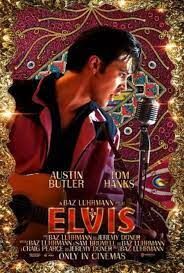
Baz Luhrmann caught the Elvis bug while directing his 2022 blockbuster biopic that starred Austin Butler as the star and Tom Hanks as Col Tom Parker, his scheming manager. In the course of his research for that film – reviewed here (https://justbackdated.blogspot.com/2022/06/elvis-movie.html) on Just Backdated – he discovered a cache of largely unseen concert and rehearsal footage of Elvis that he’s brought to the big screen for what is not just the most impressive screen presentation of Elvis on stage but also, in newly discovered interview footage and voice-overs, the most revealing.

It’s now over 70 years since Elvis exploded out of Memphis which no doubt explains why Luhrmann felt it necessary to preface the on-stage material with an express train ride through his early career for those too young to know, but anyone who’s taken an interest in Elvis will already be familiar with the footage from his early B&W TV appearances and movies, as well as conscription into the army which shaped his career thereafter. Once that’s through we see Elvis rehearsing with his core band, location unknown, during which he sings ‘You Don’t Have To Say You Love Me’, ‘Runaway’, ‘Yesterday’ and ‘Something’, quite beautifully too, at least when he concentrates. 

Although the precise date is not made clear, these preliminaries lead up to a show at the Las Vegas Hilton, presumably one of the earliest, probably in 1970. We see him in his all-white jumpsuit lingering at the side of the stage as the band begin. He looks a tad nervous, his leg twitching. Then someone draws the curtain aside for him and he steps out… BOOM. This is what we’re here for. Elvis grins, then zips into a fast-paced ‘That’s all Right’, and he sounds marvellous, as does the band, fat and punchy with enormous drive, and in the cinema it’s very loud, deep thumping bass and crackling lead guitar. 

        This is Elvis before the fried banana and bacon sandwiches took their toll and he looks and sounds terrific, the most handsome, sexiest man on the planet who can sing like no one else. No wonder those watching – we see them all in the crescent-shaped supper room, tier after tier, row on row of elegantly dressed customers, mostly female – go potty. Then he’s into ‘Hound Dog’, ‘Polk Salad Annie’, ‘You’ve Lost That Lovin’ Feeling’ and a phenomenal segue back and forth between ‘Little Sister’ and The Beatles’ ‘Get Back’.

        Elvis entertains as well as sings – in one of the interviews he describes himself as “an entertainer”, which I thought was revealing – and he can be cheesy. He enjoys fooling around with the women at the front, kissing them, touching them, and at one point completes a song with what looks like a dark blue bra on his head. Some of this tom-foolery might be designed to show that he’s human after all, and not the godlike superstar his fans adore, but it detracts from the act, even if it amuses the band and his back-up singers.        

        The concert footage is cleverly interspersed with rehearsal footage of the same songs – they switch back and forth – and though from time to time there’s an issue with the lip-synching, it doesn’t really matter. In between we get the interviews, some from a 1970 press conference at the Houston Astrodome – the first venue outside of Vegas where Elvis performed after his 1969 comeback – and some from the 1972 conference in New York prior to his Madison Square Garden shows that year. Still more, as voice-overs between songs, have evidently been sourced from hitherto unreleased interviews suppressed by Parker who was notoriously reluctant to allow Elvis ever to speak to the press. Parker, incidentally, is seen occasionally throughout, invariably in unflattering situations, occasionally flogging tat. 

        Among other things Elvis disparages his movies from the Sixties, sounding almost apologetic, talks about his background in gospel music and expresses a desire to perform in Europe. He sounds humble, as if the direction his life has taken still puzzles him, and he sometimes seems to have difficulty explaining himself.

        But it’s the music that matters and although later footage in the second half of the movie – probably from 1972 when he was beginning to tire – doesn’t quite hit the spot as much as the earlier material, we get an all too brief ‘I Shall Be Released’, from a rehearsal, ‘Burnin’ Love’, ‘Love Me’, ‘I Can’t Stop Loving You’, ‘Are You Lonesome Tonight’, ‘You Were Always On My Mind’, ‘Oh Happy Day’, the hymn ‘How Great Though Art’, ‘Big Hunk Of Love’, ‘In The Ghetto’, ‘Walk A Mile In My Shoes’ and a stupendous ‘Suspicious Minds’. The curtain comes down after ‘Can’t Help Falling In Love With You’. 

        No review of this movie would be complete without showering praise on Elvis’ superb band, mostly notably James Burton on lead guitar, Jerry Scheff on Fender bass and Ronnie Tutt on drums. All of them play as if their lives depend on it. Shamefully, they are not even mentioned in the closing credits. 


12.2.26

ELVIS: ALOHA FROM HAWAII

Earlier this week I watched Elvis: Aloha From Hawaii, a live concert augmented with additional songs, on Sky Arts. It’s been around for years, of course, but I don’t think I’d seen it before, not the whole thing. It took place in January, 1973, before Elvis lost control of his figure, and was a big deal because it was broadcast live via satellite to Asia and Oceania, then Europe. 

In view of this it might be assumed that Elvis would do something special but although he’s absurdly handsome and for the most part does a reasonable job, there’s something strangely routine about his performance. Most of the songs he sings are on the short side, mostly abridged versions of his hits, and he seems in a hurry to get the show over and done with, as if it has interrupted some activity that he would prefer to be doing. His band is superb, especially guitarist James Burton who gets a chance to solo brilliantly on two or three of the quicker R&R songs, but the overall feeling is that Elvis isn’t trying too hard. 

The audience don’t seem to expect more from him and they are undemonstrative, clapping fairly politely at the end of each song but showing little excitement. A few women close to the front or the catwalk become animated when Elvis approaches them, standing up to hand him white handkerchiefs (or perhaps freshly-laundered knickers) with which to mop his brow and he rewards some by tossing them scarves. A lucky few get a kiss on the cheek. When he leaves their immediate vicinity, the women sit down again, politely. As far as I could see, no one in this vast audience rose to their feet at any time during the show – unlike the crowds at pretty much every big rock show I saw in America.

This was clearly a show that Elvis had performed countless times before, and the slightly cheesy karate poses he adopts at the end of each song begin to look
hackneyed after a while, as do his occasional attempts at humour. A comment about his trousers splitting during ‘Suspicious Minds’ simply spoilt any drama that  generated during an otherwise excellent interpretation, adding to a feeling that Elvis treated the show frivolously, almost as public appearance in much the same way as, say, soldiers in red coats march up and down outside Buckingham Palace, with the music secondary to the opportunity simply to see him in person, perhaps to confirm that he’s still alive

Cheesier still were songs, three – all ballads from the movie Blue Hawaii I think – that accompanied the scenes of romancing couples as they traipse around Hawaii’s beauty spots, thus lengthening the film of the show by about 20 minutes, which means the actual concert didnt last much longer than an hour, about half as long as shows by premier league rock bands of the era. These songs evidently weren’t part of the concert but were tacked on later and appeared designed to promote Hawaii as a tourist destination.

Towards the end, during an instrumental break between songs in the ‘American Trilogy’ medley, Elvis seemed lost in thought, gazing absent-mindedly at the ceiling. Perhaps he was wondering what it all meant, how very little he needed to give of himself to please his fans. It was all over soon after that, a dramatic ‘Can’t Help Falling In Love’ closing the show. He walked off very quickly. “Elvis has left the building,” someone announced before hed had time to do so. 

To my utmost regret, I never saw Elvis perform live, let alone reviewed him in concert, though my two predecessors as Melody Maker’s US Editor, Roy Hollingworth and Michael Watts, both did. Roy attended a press conference that Elvis and his manager Colonel Tom Parker gave on 9 June 1972, the same day Elvis appeared at Madison Square Garden and described the show as a “fiasco… not very good at all. The audience was as responsive as a lot of doped sheep. Lazy, he had been lazy.”

Our colleague Michael was almost as unimpressed when he reviewed Elvis at Nassau Coliseum out on Long Island the following June. While allowing that Elvis’ voice is “deeper and richer than ever” and none of his songs – Michael lists 11 – are “bummers” which he sings well, he performs them all “mechanically. His act seems to be a whole medley in itself, cutting short on each one, running straight into another. The machine is so well greased it all slips painlessly through the mind. It’s showbusiness without melodrama and that’s the worst.” 

        Like Roy, Michael comments on the relentless hawking of Elvis merchandise, even as the crowds were filing out. “There are full colour posters of Elvis… superb reproductions… only two dollars, rings in his ears as he left the arena, repeated six times. 

By the time I got to America for my stint as MM’s man there, Elvis had evidently decided to bypass New York. He wasn’t seen there during 1974, ’75 or ’76, though he was back at Nassau Coliseum in July of ’75 which just happened to coincide with my visiting the UK for a few weeks. He performed in smaller cities within an hour’s flight of NY but the press office at RCA Records was unusually uncooperative when I asked (more than once) if it was possible for them to arrange transport for me to see an Elvis show. In contrast, virtually every press officer from every other label laid out the red carpet for me to fly to see anyone anywhere in America, usually the next day with an interview and a night in a hotel thrown in too. Perhaps MM was on a blacklist after Roy and Michael had taken their scalpel to the King Of Rock’Roll. Reading what they wrote this week, I would probably have drawn similar conclusions, perhaps worse as a couple of years down the line Elvis concerts were deteriorating fast. 

This might explain why, after I’d left MM but was still living in New York, I somehow got hold of two tickets to see a cancelled Elvis show at Nassau Coliseum that would have taken place in September, 1977, about a month after he died. It was one of about a dozen cancelled shows. 

A month before Elvis died I was in Memphis, tour-managing a group formed by the Muscle Shoals session guitarist Pete Carr and singer Lenny LeBlanc. While there Pete, Lenny and myself went to visit Graceland, just to stand by the gates with the wrought-iron outline of Elvis and look up the drive towards the famous mock Gothic porch and four imposing pillars on either side of the front door. I have every reason to believe that its famous occupant was in residence that day, so this was the closest I ever got to the singer whose records in the 1950s turned me on to rock’n’roll when I was 12 years old. I can’t remember who took our photograph outside the gates  thats me in the middle, Pete on the left, Lennie on the other side  probably one of their band, or even how I came to have a copy of it but I treasure a print still. About six weeks later Elvis was carried out of Graceland on a stretcher. So I never did get to see him. 


8.9.25

THE COLONEL AND THE KING by Peter Guralnick

Every great story needs a great villain, and in The Elvis Presley Story the villain has always been Colonel Tom Parker, his manager. Just look at the evidence: he conned poor old Elvis out of 50% of his earnings, maybe more; he was a bully, unsophisticated and uncultured, steering Elvis away from his R&B roots towards MOR and innumerable schlock films, neutering his sexuality in the process; he bartered Elvis’ health-sapping Las Vegas appearances to pay off his gambling debts; and, finally, to hammer the nail into the coffin, he wasn’t even who he said he was, concealing his real identity as – wait for it – an illegal immigrant.   

That, at least, is the commonly held narrative, and also the theme of the “authorised” 1922 biopic Elvis The Movie, with Tom Hanks as, to quote my own review, the “scheming, Machiavellian Parker, thoroughly dislikable, overweight, lumbering, ugly and speaking with a nasty quasi-Boer accent born of his Dutch ancestry, of which Elvis was forever ignorant.”

        Peter Guranlick, Elvis premier biographer, however, believes otherwise. The only minor criticism of his magnificent, definitive two-volume Presley biography, Last Train To Memphis (1994) and Carless Love (1999), was that he was too easy on Parker. In this third book – a coda if you like – Guralnick goes out of his way to fully redeem Parker’s reputation, painting a portrait that is the complete opposite of his (un)popular image, an avuncular, wise and witty man who was kind to animals, stood by his friends, always kept his word and was scrupulously honest. Indeed, so robust is the author’s defence of Parker, so persuasive his tone, that I’m inclined to believe him. 

        The story is told in two parts. The first, subtitled How Much Does It Cost If It’s Free? – the proposed title for a book Parker intended to write but never did – is a 300+ page biography that avoids focusing on Presley and instead offers fascinating details on aspects of Parker’s life hitherto unexplored, many of them heart-warming. The second, occupying the final 250 pages, tells his story through a selection from the “tens of thousands” of letters he wrote (and a handful he received); to Elvis and his family, business associates, friends and foes, the earliest eulogising Elvis before he managed him, the majority pushing his point of view with regard to Elvis’ career, many of them illustrating Parker’s quirky sense of the absurd. Some of these letters are alluded to in the biographical section of the book. 

Parker’s upbringing in his native Breda in Holland had been explored before but never in such detail, and the same goes for his early life in the US as a carney”, a general labourer on travelling fairgrounds and circuses where he was always willing to turn his hand to any task, no matter how unpleasant, and learnt show business from the ground up. He was particularly adept at working as an “advance man”, arriving a week or two in a town before the carnival, setting up deals with local businesses and making absolutely sure its entire population was aware of the coming attraction, thus maximising profits, a skill he maintained with Elvis. I found these pre-Elvis chapters absorbing – there was a likeable streak of eccentricity in Parker’s character, a restlessness, a need to make up his own rules as he went along and not to accept the status quo. Above all, he got things done.

Introduced to the music world through a fairly brief relationship with crooner Gene Austin, he quickly became known as a mover and shaker, moving on to manage Eddy Arnold and, later, Hank Snow. Elvis – a “promising new singer” – was drawn to his attention early in 1955 and after watching him on the Louisiana Hayride Colonel booked him onto a Snow tour that opened in Roswell, New Mexico, on February 14. He stole the show, just as he did on two tours of Florida that followed. The reaction from teenage girls was explosive, and when Mae Boren Axton, a former school teacher (and co-author of Heartbreak Hotel) who was working for Parker, spotted a former student in the audience, she inquired what was it about Elvis that she liked so much. “Awww Miz Axton,” she replied, “he’s just one great big beautiful hunk of forbidden fruit.” 

Parker moved swiftly. By the end of the year, flying by the seat of his pants, he had edged out Presley’s manager, won over Elvis’ sceptical parents, negotiated a release from Sun Records and transfer to RCA, overseen more chaotic concerts, arranged more TV appearances and set the wheels in motion for Elvis’ first movie which turned out to be Love Me Tender. He worked 16 hours a day, every day, and Elvis sure appreciated it: “You are the best and most wonderful person I could ever hope to work with,” wrote Elvis in a letter addressed to Parker on November 21, 1956. “I will stick with you thru thick and thin… I love you like a father.”

Which pretty much sums up the relationship from then on, though Guralnick is at pains to point out that, creatively, Elvis was in charge, while when it came to business Parker ruled the roost. In amongst what follows are details of complex royalty and advance deals with RCA and various film companies in which Parker, forever astute, invariably comes out on top. He never forces Elvis into doing anything he doesn’t want to do – thus contradicting the widely held belief that Parker stifled Elvis’ artistic ambitions, and reveals how the spendthrift in Elvis was most often to blame for placing earnings before art. 

        Furthermore, according to Guralnick, Parker did not interfere with the production of Elvis’s Comeback Special in 1968 (though he hated the word ‘comeback’, insisting Elvis never went away), the reason why Elvis never toured outside of the US was not Parkers lack of a US passport but the customs risk to whoever was assigned to carry his drugs, and the impetus behind the notorious sell-out of his back catalogue to RCA in 1973 came from Elvis and his father, not Parker. And the 50/50 income split applied only to joint ventures agreed upon late in Elvis’ career. 

The story gets darker towards the end as Elvis’ weight and health problems interfere with Parker’s innate sense of responsibility towards the paying public. The hopelessness of the situation, the breakdown of the marriage if you like, may have led Parker to become addicted to gambling, squandering his fortune on Vegas roulette wheels, an inexplicable reversal of type for a serial winner. He’s stoic when Elvis dies and bitter when the Estate seeks to free itself from his clutches. Towards the end he’s on speaking terms with its CEO and in the end even Priscilla comes around to appreciating all that he did for her late husband. By this time, too, he and Guralnick have become friends, insofar as Parker could ever befriend a journalist. 

It’s not easy to come to terms with the idea that Colonel Tom Parker was a saint but Elvis And The Colonel succeeds. The book is illustrated throughout with photos, many I’d not seen before, and beautifully written, as you would expect from Peter Guralnick. 


22.4.25

PRISCILLA

Priscilla, directed by Sofia Coppola and shown on network TV this weekend, was a strangely creepy movie that ramped up the general consensus that for all the great records he made during the 1950s, Elvis Presley had some weird ideas about courtship that, perhaps unintentionally, chime with how I imagine our current king might have behaved towards his first wife. Alone in Graceland, teenage Priscilla Beaulieu wanders its lushly carpeted rooms in a manner I imagine Diana Spencer doing in the corridors of Buckingham Palace, whence she was closeted for her own safety in the period between her engagement to Charles and the wedding ceremony in Paul’s Cathedral. Both of these virgin girls were seemingly lost, though perhaps trapped is a better way to describe the predicament in which they found themselves.

Priscilla is based on the book Elvis And Me, written with ghost-writer Sandra Harmon by Priscilla Presley, who is its executive producer, and first published in 1985. I read it while I was researching my Caught In A Trap book, my fictional tale of how Elvis was kidnapped in 1975, its title inadvertently reflective of Priscilla’s dilemma once her parents agreed that she come to live at Graceland, ostensibly chaperoned by Elvis’ witless father Vernon and his second wife. The film, originally released in 2023, follows the book fairly accurately, dwelling on the couple’s private life and how Priscilla shakes off her initial naivety to eventually confront Elvis about his macho attitude and the unrealistic demands he placed upon her. She’s portrayed as a heroine which, as matters eventually played out, is quite fitting. 

Unlike Elvis, the 1922 movie starring Austin Butler in the title role and Tom Hanks as his manipulative manager Colonel Tom Parker – who, tellingly, is absent from Priscilla – this film makes no attempt to hide Priscilla’s age – 14 – when she first met the singer, fatefully, at a party at the house in which he lived in Bad Neuheim in West Germany during his stint with the US Army. Thereafter she’s sucked into his orbit, increasingly moulded by him into the kind of Barbie-doll like woman he requires her to be; clothes, hair, make-up, subservience, keep smiling, the lot. Slightly alarmed, she goes along with this at first, her compliance gradually giving way to incomprehension and, eventually, dissent. 

As far as the bedroom department is concerned, Elvis desires his woman to remain a virgin until they are married, this despite her efforts to persuade him otherwise. Hes not above taking a few saucy Polaroids of her, though. Meanwhile, of course, it is suggested that in Los Angeles Elvis has his merry way with women who co-star in his films, amongst them Nancy Sinatra and Ann-Margret, while Priscilla remains at Graceland, her only companion a fluffy white poodle while she ponders over lurid stories about Elvis and them in movie magazines. When they eventually marry, Priscilla quickly falls pregnant, giving birth to Lisa Marie, and conjugal relations cease, again to Priscilla’s vexation. Along the way we see Elvis briefly engage with the counterculture, which is not to his liking; play with, and encourage Priscilla to use, guns; insult The Beatles; lose his temper and throw tantrums; share an acid trip with Priscilla; and generally behave like a spoilt brat towards everyone, apart from Col Parker to whom he bends the knee, albeit on the telephone. 

Not surprisingly Priscilla gets fed up and leaves, by which time she’s taken up karate, though her subsequent affair with martial arts teacher Mike Stone is not mentioned. Nevertheless, by the close she’s defied Elvis by allowing her hair to return from dyed jet black to its natural auburn, and flow down over her shoulders, and wear tight pants instead of dresses. Driving out of the Graceland gates or the final time, sound-tracked by Dolly Parton singing ‘I Will Always Love You’, she deserves a cheer, female empowerment the message. 

Cailee Spaeny is good as Priscilla, rarely off screen, Jacob Elordi too as Elvis, his accent just right. But overall, I felt the film was strangely unsatisfying, just like the marriage had been. 


8.1.23

ELVIS – 88 TODAY

Eighty-eight years ago today at shortly after four in the morning Gladys Presley gave birth to twin boys at the wooden shack she called her home in Tupelo, Mississippi. The first child was stillborn but the second, who arrived about 35 minutes later, survived to become America’s most popular singer ever, one of the most successful recording artists of all time and a man who, though it was never his intention, changed the world for the better.

        Elvis changed my life insofar as his was the first music that really excited me, and that led to a career writing about it. Elvis is widely referred to as the King of Rock’n’Roll but, in reality, his work stretched across every area of popular music: rock, ballads, country, R&B, soul, blues, pure pop and even light opera if you consider ‘O Sole Mio’ (aka ‘It’s Now Or Never’), by his own admission his favourite recording, which was written in 1898 and also recorded by Pavarotti. 

        Eternally fascinated by Elvis, in 2016 I completed a novel about him, Caught In A Trap, which I’d been working on for years. The book imagines a scenario in which he is kidnapped, the motive to compel him to perform for the kidnapper’s Elvis-worshipping wife. The sub-plots involve the bonding that occurs between Elvis and his kidnappers, how he opens up to them about his life, and what happens when he is obliged to conduct himself in public, unrecognised, when he is released. Caught In a Trap, published in 2017, was today ranked number 1,534,115 on Amazon’s book chart, so there’s room for improvement there, not that this excuses my shameless plug. 


        To mark Elvis’ birthday, I’ll revisit an earlier post. My favourite Elvis songs are ‘Mystery Train’ and ‘Suspicious Minds’, but instead of writing about these pretty obvious choices here’s a list of ten others, some not so well known, that I also love.

YOU’RE A HEARTBREAKER (1955)

Young Elvis at his frolicsome best, a joyful blend of country and rockabilly. With a spring in his step, he and his Sun crew create a new genre. I particularly like the way Scotty shifts to the off-beat on the middle eight.

RIP IT UP (1956)

The best way to understand why Elvis was light years ahead of Bill Haley & The Comets is to listen to their respective recordings of this song by Bumps Blackwell. Elvis tears into it like he means business, like it really is Saturday night and he feels fine, and the ball really is jumping, while poor old Bill Haley just shuffles along like his Saturday night will end with a whist drive and a cup of Ovaltine before the pillow beckons. Little Richard’s original version is pretty good too, but I’ll take Elvis every time.

ONE NIGHT (OF SIN) (1957)

This was the original title of ‘One Night’, as recorded by its writer Smiley Lewis, but it was too risqué for the fifties, so Elvis toned it down to ‘One Night (With You)’ on his recording, released in January 1957. The unadulterated version, with Elvis as sexed up as anywhere else in his catalogue, remained in the vaults until 1985 when it appeared on a CD compilation called Reconsider Baby. No wonder the girls screamed.

YOUNG AND BEAUTIFUL (1957)

One of Elvis’ loveliest ballads, as sincere as anything he ever recorded and for my money far better than the more well-known ‘Are You Lonesome Tonight’ which is taken at the same slow tempo. From the Jailhouse Rock soundtrack. I also have a heartfelt live version of this song by Aaron Neville.

FOLLOW THAT DREAM (1962)

I hadn’t paid much attention to this song until I heard Bruce Springsteen perform it at Wembley Arena in June 1981 on his River tour. As Bruce explained, Elvis followed his dream and this gave it an importance beyond its rather lightweight pop veneer. At just over 90 seconds, it’s very short and sweet but Elvis sings it with consummate professionalism, a pop master at work.

TOMORROW IS A LONG TIME (1966)

This cover of an early Bob Dylan song appeared on the otherwise worthless Spinout soundtrack album in 1966, recorded on May 27, 1966, at RCA’s studios in Nashville during sessions for the gospel album How Great Thou Art. Elvis was taped singing two verses of ‘I Shall Be Released’ too, and like the only other known recording of Elvis singing a Dylan song – ‘Don’t Think Twice It’s Alright’ – it was the product of a spirited jam session. When I worked for RCA between 1979 and 1980 I suggested to the A&R department that unedited versions of these songs might make a decent double A-sided 12” single or an EP called Elvis Sings Dylan. No one was interested.

LONG BLACK LIMOUSINE (1969)

This morality tale takes on greater meaning in the light of its autobiographical symbolism. Opening with an ominous tolling of what appears to be a monotonous funeral bell, its the story of a girl who’d left behind her poverty-stricken background to find riches but paid the ultimate price for her sins. Elvis’ intense vocal turns the song into a kind of Biblical parable, his voice weary and despairing, perhaps drawing an analogy between his own life and, morbidly prescient, the way it would end.

I JUST CAN’T HELP BELIEVING (1970)

By Barrie Mann and Cynthia Weill, Elvis in pure pop mode. The live version I have, on his 70s Masters set, finds him in wonderful voice, missing a beat on the first verse and then, for reasons unexplained, acknowledging a burst of applause that inspires him to a great performance.

ALWAYS ON MY MIND (1972)

Another emotion-packed vocal performance, surely aimed at Priscilla whenever he sang it live. This was Elvis’ last release of 1972 coupled wwith ‘Separate Ways’; a much-covered country song first recorded by Gwen McCrae that same year. The Pet Shop Boys released a version of the same song in 1987.

DANNY BOY (1976)

Elvis tackles ‘The Londonderry Air’ with both respect and reserve. This is proof positive that towards the end of his life, when his health and personal life was falling apart, he could still summon up those extraordinary vocal skills when he was sufficiently inspired by a beautiful melody; a master singer indeed. Lovely background vocals too. 


30.6.22

ELVIS – The Movie

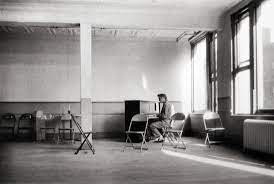
About 45 minutes into this gaudy, fast-paced, acclamatory biopic of Elvis, the camera focuses in on its hero sat on a folding chair at an upright piano. He’s in the corner of a large room, illuminated from behind by light shining in from two windows, playing and humming a gospel melody, a reflective moment amid the madness that is going on around him. In fact, the scene is a direct, and deliberate, reproduction of a still photograph taken by Alfred Wertheimer during rehearsals for the Steve Allen TV show in New York on July 1, 1956, and represents an almost fanatical fixation on the part of this film’s producers to depict small details accurately. 

 The Alfred Wertheimer photograph

        There are many other examples: Graceland surrounded by farmlands when Elvis bought it; his cars, including a pink Cadillac and white Rolls Royce; the tuxedo and hound dog incident; stationary printed with Boxcar Enterprises; the way the 1968 ‘Singer’ TV Special is represented; manager ‘Colonel’ Tom Parker’s dancing chickens; the Barbra Streisand movie that Parker vetoed; his crack Las Vegas band and ‘Memphis Mafia’ entourage all correctly identified; and on and on.

        Perhaps the producers felt this dogged adherence to the precise truth was necessary to mitigate against a handful of glaring inaccuracies inserted to dramatize, and at times rather overegg, the plot, the most absurd of which is the suggestion that Elvis would have gone to jail on a trumped-up charge of behaving lewdly in public had he not answered the call of Uncle Sam and joined the US army in 1958. Allied to this, and unmentioned in any of the many Elvis books I’ve read, and therefore probably fictitious, is that Parker was threatened with deportation over his alien status by right-leaning politicians unless he somehow prevented Elvis from moving on stage in ways that sent teenage girls delirious but profoundly displeased their God-fearing parents. 

        Elsewhere I doubt Parker signed up Elvis for his very first Vegas season to pay off gambling debts – though this may have occurred later – or that Elvis fired him from the stage of the Hilton International, and if Priscilla arranged for Elvis to go into rehab, she didn’t bother to mention it in Elvis And Me, her best-selling memoir. 

        These wildly contrasting aspects of the screenplay aside, I enjoyed every minute of a two hour and 20-minute film that never lagged. While at heart a potted biography, the recurring, all-important side-plot hinges on Elvis’ relationship with the scheming, Machiavellian Parker who managed him throughout his career, taking 50% of his client’s earnings, and probably more. Parker cleverly manoeuvres himself into Elvis’ life, persuading the naïve singer and his equally naïve parents that he is indispensable, his best friend, when in reality he is Elvis’ worst enemy, at least as far as artistic growth and financial remuneration are concerned. Tom Hanks makes a great villain in his portrayal of the dislikeable Parker, overweight, lumbering, ugly and speaking with a nasty quasi-Boer accent born of his Dutch ancestry, of which Elvis was forever ignorant.

        Austin Butler makes a convincing Elvis, the only Elvis impersonator I have seen who mimics both the vital, pre-Army Elvis and the jump-suited Las Vegas showman in both his pomp and decline. Most of the set pieces of Elvis on stage are fantastic, seriously exciting, very loud too, most notably the lengthy screen time devoted to the ‘Singer’ special, and because the film is authorised by the estate we hear and see the real Elvis from time to time, as well as Butler splendidly imitating his stage gyrations and singing voice. 

Austin Butler as Elvis, Helen Thomson as Gladys Presley, Tom Hanks as Colonel Parker and Richard Roxburgh as Vernon Presley

        Supporting actors Olivia DeJonge, as Priscilla, Dacre Montgomery as Steve Binder, the producer of the ‘Singer’ special, and Luke Bracey as Jerry Schilling, the only member of Elvis’ entourage who encourages Elvis to defy Parker, are all impressive, their various roles in the story true to life. The same applies to Richard Roxburgh as Vernon, Elvis spineless father. 

        There are a few omissions or, at least, areas of Elvis’ life that are skimmed over unduly quickly. There’s not much about his movie career; indeed, the schlock film era, the period between his leaving the army in 1960 and rediscovering his mojo in 1968, goes by in a flash. A veil is drawn over Priscilla’s age – 14 – when she met Elvis in Germany, as well as her and Elvis’ subsequent romantic relationships. Elvis’ promiscuity and drug use are touched on, along with his temper tantrums that caused TV sets to become targets for his impressive arsenal of firearms. 

        The vexed question of why Elvis never toured outside of the United States is raised to a significant degree, the answer of course Parker’s inability to travel because he didn’t have a US passport, and couldn’t apply for one without incriminating himself. His claim that it was for security reasons is soundly derided. Parker’s unwillingness to allow Elvis to venture outside of a tried and tested formula, his undermining of Elvis’ more radical ambitions, is a constant theme, as is Parker’s greed, his unshakable belief that Elvis remained little more than a goose that laid golden eggs. 

        The film closes with the real Elvis singing ‘Unchained Melody’ at a concert two months before his death. Although I’ve seen this heart-stopping performance many times on YouTube, I’d never seen this footage – or heard Elvis’ still remarkable voice – in the clarity it is presented here. Overweight, sweating, visibly trembling as he plays a grand piano, he gives it his all, an absolutely extraordinary display by one of the greatest singers of all time. It was the perfect ending to a very watchable film.


3.6.22

ELVIS - IN THE NEWS


Elvis is in the news this week, which might mean sales of Caught In A Trap, my book about his kidnapping in 1975, finally reach three figures. 

        Firstly, there is a new biopic about him out which stars Austin Butler as Elvis and Tom Hanks as Col Tom Parker, which I will go and see when it opens in Guildford later his month; and secondly, reports have surfaced that those who control his estate are clamping down on Elvis-styled weddings in Las Vegas, which is the thin end of the wedge for romantically inclined couples eager to tie the knot to the strains of ‘Love Me Tender’.

        The Authentic Brands Group, which control Elvis’ name and image, among others, has sent cease-and-desist letters to several Vegas chapels that offer Elvis-themed ceremonies, the inference being that if they don’t comply they’ll feel the weight of ABG’s high powered lawyers and very deep pockets, a chilling prospect indeed. 

        In their letter, AGB state that while they have no intention of shutting down the Elvis chapels they are, “seeking to partner with each of these small businesses to ensure that their use of Elvis’ name, image and likeness are officially licensed and authorized by the estate, so they can continue their operations.” 

        In other words, they want a slice of the action. This is a bit rich, especially as a glance at the internet reveals there seems to be more Elvis-style wedding venues in Vegas than actual religious settings, and what’s more they’ve been in business for years. So why now? 

        Leaving The Building: The Lucrative Afterlife of Music Estates by Eamonn Forde, the bible of death branding, gives details of earnings by musical estates from the years 2001 to 2020. In seven of those years Elvis tops the charts, comes second eight times and is never out of the top five, with total earnings during this period of $894 million. But they evidently don’t feel this is enough. 

        Now I’m not planning to remarry in a Vegas Elvis chapel or anywhere else for that matter, but if these places do yield to AGB and cough up whatever fees can be negotiated, it’ll no doubt be passed on to the bride and groom, making weddings that bit more expensive due to the premium ABG will collect. 

        Furthermore, AGB’s letter states that they are seeking to shut down unauthorised use of “Presley’s name, likeness, voice image, and other elements of Elvis Presley’s persona in advertisements, merchandise and otherwise,” the inference being that AGB control all this.

        So maybe I ought to have been worried by writing Caught In A Trap. As it happened, the book included snatches of lyrics from six songs associated with Elvis (‘Love Me Tender’, ‘Blue Suede Shoes’, ‘Suspicious Minds’, ‘One Night’, ‘Always On My Mind’ and ‘Peace In The Valley’) and in 2016, when I’d finished writing it, I played by the rules and wrote to the publishers of these songs seeking permission to use the lyrics. Only one, ‘Love Me Tender’, was controlled by the Elvis estate but they didn’t even bother to reply to my letter. The rest, barring ‘Peace In The Valley’ which was out of copyright, asked for small sums  £25 I think – to clear their use.

        I have read that the new film has been ‘authorised’ by AGB but this does not augur well for it in my opinion. I really hope it isn’t a whitewash but I fear the worst. 

        Finally, since shamelessness is no stranger to the world of Elvis these days, heres a plug for my book: https://www.amazon.co.uk/Caught-Trap-Kidnapping-Chris-Charlesworth


29.6.16

SCOTTY MOORE


Woke up this morning to an e-mail from a friend telling me of the death of Scotty Moore, the pioneering guitarist who backed Elvis on his earliest recordings and toured with him until – like so many others – he displeased Colonel Tom Parker by asking for a fair share of the profits. So did Chips Moman, the producer who in 1968 suggested Elvis record ‘Suspicious Minds’, and who also died recently too – but at least he and Moore outlived the avaricious Parker by the best part of 20 years.
Along with producer Sam Phillips, bassist Bill Black and the Hillbilly Cat himself, Moore was a key figure when, between takes at the Sun Studios in Memphis on July 5, 1954, Elvis started hamming it up on an Arthur Crudup blues number called ‘That’s All Right’. Moore and Black joined in and Phillips rushed to set the controls. The recording was completed the same day.
As I wrote in a booklet commissioned in 1987 to accompany a Telstar Records cassette of Elvis material leased from RCA: “Although not the best of the 17 sides Elvis recorded for Phillips and his Sun Records label, ‘That’s All Right’ surely embodies the same sense of freedom a prisoner might feel on breaking loose after years in the pen. Flowing like a river in flood, the song is a showcase for Elvis’ pure high tenor, Moore’s precise guitar figures and the trio’s slapping rhythmic feel. Elvis and his two accomplices had made a dynamic debut.”
In fact, Moore was Elvis’ manager when he first started out and after being ousted by Parker managed to hang on long enough to play beautifully on many more early Elvis recordings, among them ‘Heartbreak Hotel’, ‘Hound Dog’ and ‘Blues Suede Shoes’. He also appeared alongside Elvis, with Black and drummer DJ Fontana, on the TV shows in 1956 and ’57, looking for all the world as if they was born on a different planet from the boy at the front who scandalised America until censors decreed he could be shown only from the waist up.
Just about every rock guitarist who has ever learned to play has done his best to emulate the solos on Elvis’ recordings between 1955 and ’58. In a forthcoming Omnibus Press biography of Jimmy Page, author Martin Power quotes Page as saying: “The record that really made me want to play guitar was ‘Baby, Let’s Play House’. When I heard that record, I just wanted to be part of it... the acoustic and electric guitars, the slap bass, those instruments seemed to generate so much energy”, and Power goes on to write: “If one were being picky, ‘Baby, Let’s Play House’’s combination of descending acoustic bassline and bouncing drums was probably more rockabilly than rock’n’roll. In the end, such distinctions were irrelevant. The instrument teasing the best out of Presley’s deliciously slurred vocal and making Jimmy’s ears pop as a result was Scotty Moore’s guitar. Elvis’s secret weapon, Moore was a man who could combine country fills, double stops and hillbilly chord twangs like the ingredients for a gourmet meal, served up on his gold Gibson ES (Electric Spanish) 295 in a way Page once described as ‘heart-stopping’. Obviously, this whole rock’n’roll thing were to be investigated, and quickly.”
Keith Richards, too, was turned around by Moore: “When I heard ‘Heartbreak Hotel’, I knew what I wanted to do in life. All I wanted to do in the world was to be able to play like that. Everyone else wanted to be Elvis. I wanted to be Scotty.”
        Moore (and Black) left Elvis’ employ in 1957 over disputes with Parker. In his memoir That’s Alright, published in 1997, he claimed to have made just $8,000 in 1957 while Elvis made over a million. “We couldn’t go to talk to Elvis about anything,” he wrote. “It’s not that I feel bitterness, just disappointment.”
        Moore appeared with Elvis on the 1968 comeback TV special that saw a dramatic reversal in his fortunes, but his fee didn’t even cover his travel expenses, so he and Elvis never worked together again. Nevertheless, like many pioneering background figures from the early years of rock’n’roll, Moore was eventually feted by the guitarists he inspired, many of them British. He went on to work with Ringo, Jeff Beck and others and, despite the rancour of the Elvis situation, whenever he made appearances later in life always came across as a genial and eternally modest old soul, slightly surprised at the credit bestowed upon him, deferring always to Elvis and acting like the dignified southern gentleman he was.
        Scotty Moore died yesterday at his home in Nashville, aged 84.
    

5.11.15

ELVIS AND JOANNA – And Priscilla And A Few More


The reddish hair tint aside, at the age of 70 Priscilla Presley is starting to look like she did when she was 14, the age at which she captivated GI Elvis, ten years her senior, in Germany. This was evident last week when I watched her being interviewed on TV by Jonathan Ross, after which Elvis Costello snatched up the Gibson J200 acoustic guitar that once belonged to Elvis that Priscilla had brought along and gave us a verse or two of ‘Alison’, rounded off by a short coda from ‘Suspicious Minds’. Priscilla looked bit surprised, as if the Elvis she didn’t marry might make off with it, and was clearly unsettled by Ross’ rather spontaneous wit after the more deferential approach of American chat show hosts.
         Her similarity to her 14-year-old self was even more obvious last night during an ITV programme called Elvis And Me, hosted by Joanna Lumley who was filmed interviewing Priscilla in London, Memphis and Tupelo, and included scenes which were intercut with images of her as a teenager alongside her soldier boyfriend. Partly this was to do with make-up, caked on now just as it was 56 years ago, but it was also because these days Priscilla is desperately trying to look younger than her years whereas in 1959 she was desperately trying to look older than she was. Somewhere in between they might meet and look identical but I have always thought that when Priscilla adopted the more natural look that conflicted with Elvis’ rather outdated penchant for cheesecake beauty queens with beehives, she was a truly beautiful woman.
         Joanna Lumley’s rather gushing style has irritated me in the past but I was pleasantly entertained by Elvis And Me and prepared to overlook the inevitable dollops of saccharine that she and Priscilla brought to the show. It opened with scenes from Abbey Road studios where the Royal Philharmonic Orchestra was putting the finishing touches to backing tracks that would be overdubbed – or is it underdubbed – with Elvis’ existing vocals on a slew of songs, mostly ballads, for his If I Can Dream: Elvis With The RPO album, specifically ‘American Trilogy’ which turns out to be one of Priscilla’s favourites. This shameless plug for the album was probably the price that the producers of Elvis And Me had to pay for Priscilla’s co-operation but I was a bit surprised to learn that it was her who drew Elvis’ attention to ‘American Trilogy’, an arrangement of three existing songs first recorded in 1971 by country singer Mickey Newbury, which Elvis incorporated into his concerts the following year. I always thought Elvis believed his women should keep their opinions to themselves, especially as regards his business, and stay in the kitchen.
         Then it was off to Memphis for a tour of Graceland and Tupelo where the tiny shack in which Elvis was born has been turned into a shrine. Joanna made it clear that, sensibly, she fancied the young Elvis much more than the white jump-suited Vegas Elvis, and informed us that she had adopted Elvis’ sneer for the lopsided smile used by Patsy Stone, her character in Absolutely Fabulous.
         Clearly an enthusiastic fan, she was welcomed courteously into Graceland by Priscilla who seems now to have been anointed the Presley widow, though this isn’t strictly the case as they were divorced at the time of Elvis’ death, and therefore hostess of the iconic house correctly described as ‘the second most famous home in the USA’. No one’s going to question these assumptions, least of all Joanna as she was shown around a bedroom, the lounge with its grand piano that Elvis would play late into the night when he suffered from insomnia, the dining room where large meals were consumed and two ‘playrooms’, one with three big TV screens set into the wall, and where the bars served only milk and soft drinks because Elvis wasn’t a boozer. You probably don’t need me to tell you that the décor throughout is a bit like those palaces occupied by middle-eastern dictators whose courtiers value their lives too much to suggest that perhaps the colour scheme might just be a tad on the extravagant side.
         From Memphis Joanna went to Tupelo to sit on the porch outside his birthplace, inside which no cameras are allowed, to talk to one of Elvis’ childhood friends and to visit the chapel where he prayed and sang. Then it was back to Memphis for a visit to the Sun Studios where old pal George Klein reminisced, thence to a diner where Joanna chatted with Dixie Locke, Elvis’ first girlfriend who vouchsafed that he was a good kisser, and finally to Lanksy Brothers clothing store where Elvis bought his gear and where utterly fantastic western clothes, many of them modelled on the outfits that Elvis wore in the fifties, can still be bought. Joanna tried some on and very fetching she looked too, and I’m kicking myself that when I was in Memphis in 1977 I didn’t kit myself out there as well.
         Joanna’s final interview was with Jerry Schilling, long serving member of Elvis’ entourage, who tried to be discreet about Elvis’ relationship with Colonel Tom Parker but failed and it was here that a bit of grit entered the picture. Diplomatically prefacing her inquiries with the words ‘Some people say that…’ she gently led Schilling on to admit that Elvis and Parker had rowed about performing in the UK, the arguments usually ending with the Colonel spitting at Elvis: “Well you go on then, do it yourself.” Parker, of course, knew that Elvis was no more capable of organising a European concert tour that he was of arranging a trip to the local shops.
         Elvis And Me concluded on a sad note, unavoidable really. “Touring killed his marriage and that killed him,” said Schilling. “He died from a heart attack brought on by food and drug abuse,” said Joanna more accurately a few minutes later. “He sold a billion records but died with only five million dollars in the bank. He’d given it all away.”
         As ‘authorised’ Elvis documentaries go, this was an hour well spent.

(The photo was taken by Jaimie Gramston)

10.1.15

JAILHOUSE RUMBA


Back to Elvis today. I came across this hilarious document in an Elvis book many years ago. It is an aural transcription of the lyrics to ‘Jailhouse Rock’, as printed on the cover of a Brazilian Elvis LP. (I still have this EP.)

One, two part in the cany dial
Prison in the stand they forgot the wale
When this job is none
The job began to swing
You should have to rock
Dead jail bird sing let’s rock
Everybody let’s rock
Everybody in all say oh! Bob
You stand till jail our rock

Start a marble place in the saxphone
Little Joe in blow in old sax trombone
Climb across the matter
You gonna track oil band
You hold a red sax
You wanna purple game

Now I’m part of seven
Said my mamma three
You use cute this jail further ever did see
I show I’ll be alive when you call for me
Come on and do the jail
Let’s rock it wanna be

It said sax is secret on the block stone
You call in the corner we are not alone
You want to say
Nobody don’t be no square
You can’t by a part
It used to worry in jail

She forgot her sad about for heaven sake
It want look matter just to make a break
Brother turn his shirt
To empty sad Mrs Smith
I want to stick around
Or wanna give my kick


8.1.15

ELVIS - 80 Today


Eighty years ago today at shortly after four in the morning Gladys Presley gave birth to twin boys at her home in Tupelo, Mississippi. The first child was stillborn but the second, who arrived about 35 minutes later, survived to become America’s most popular singer ever, one of the most successful recording artists of all time and a man who, though it was never his intention, changed the world for the better.
          When Elvis died, 42 years later, I heard the news in the offices of Pete Rudge’s Sir Productions on 57th Street in New York, the whole staff gathering around the radio to listen. It was August 16, 1977, and before I left work I called a friend who lived in Memphis and asked him to send me five copies of that day’s Memphis Press Scimitar, the city’s daily newspaper. The memorable headline read: A Lonely Life Ends on Elvis Presley Boulevard’. The day the papers arrived I was walking along 57th Street carrying them when I bumped into Ray Davies whom I knew through having interviewed him for MM. We talked about Elvis a bit and I showed him the newspapers. He seemed very interested and asked if he could have one, so I gave one to him. I gave away two more to friends and still have the other two.
          Elvis changed my life insofar as his was the first music that really excited me, and that led to a career writing about it. Elvis is generally regarded as the King of Rock’n’Roll but in reality his work stretched across every area of popular music: ballads, country, R&B, soul, blues, pure pop and even light opera if you consider ‘O Sole Mio’ (aka ‘It’s Now Or Never’) which was written in 1898 and also recorded by Pavarotti. My favourite Elvis songs are ‘Mystery Train’ and ‘Suspicious Minds’, but instead of writing about these pretty obvious choices here’s a list of ten others, some not so well known, that I also love.

YOU’RE A HEARTBREAKER (1955)
Young Elvis at his frolicsome best, a joyful blend of country and rockabilly. With a spring in his step, he and his Sun crew create a new genre. I particularly like the way Scotty shifts to the off-beat on the middle eight.

RIP IT UP (1956)
The best way to understand why Elvis was light years ahead of Bill Haley & The Comets is to listen to their respective recordings of this song by Bumps Blackwell. Elvis tears into it like he means business, like it really is Saturday night and he feels fine, and the ball really is jumping, while poor old Bill Haley just shuffles along like his Saturday night will end with a whist drive and a cup of Ovaltine before the pillow beckons. Little Richard’s original version is pretty good too, but I’ll take Elvis every time.

ONE NIGHT (OF SIN) (1957)
This was the original title of ‘One Night’, as recorded by its writer Smiley Lewis, but this was too risqué for the fifties, so Elvis toned it down to ‘One Night (With You)’ on his recording, released in January 1957. The unadulterated version, with Elvis as sexed up as anywhere else in his catalogue, remained in the vaults until 1985 when it appeared on a CD compilation called Reconsider Baby. No wonder the girls screamed.

YOUNG AND BEAUTIFUL (1957)
One of Elvis’ loveliest ballads, as sincere as anything he ever recorded and for my money far better than the more well-known ‘Are You Lonesome Tonight’ which is taken at the same slow tempo. From the Jailhouse Rock soundtrack. I also have a stunning live version of this song by Aaron Neville.

FOLLOW THAT DREAM (1962)
I hadn’t paid much attention to this song until I heard Bruce Springsteen perform it at Wembley Arena in June 1981 on his River tour. As Bruce explained, Elvis followed his dream and this gave it an importance beyond its rather lightweight pop veneer. At just over 90 seconds, it’s very short and sweet but Elvis sings it with consummate professionalism, a pop master at work.

TOMORROW IS A LONG TIME (1966)
This cover of an early Bob Dylan song appeared on the otherwise worthless Spinout soundtrack album in 1966, recorded on May 27, 1966, at RCA’s studios in Nashville during sessions for the gospel album How Great Thou Art. Elvis was taped singing two verses of ‘I Shall Be Released’ too, and like the only other known recording of Elvis singing a Dylan song – ‘Don’t Think Twice It’s Alright’ – it was the product of a spirited jam session. When I worked for RCA between 1979 and 1981 I suggested to the A&R department that unedited versions of these songs might make a decent double A-sided 12” single or an EP called Elvis Sings Dylan. No one was interested.

LONG BLACK LIMOUSINE (1969)
This morality tale takes on greater meaning in the light of its autobiographical symbolism. Opening with an ominous tolling of what appears to be a monotonous funeral bell, it's the story of a girl who’d left behind her poverty-stricken background to find riches but paid the ultimate price for her sins. Elvis’ intense vocal turns the song into a kind of Biblical parable, his voice weary and despairing, perhaps drawing an analogy between his own life and, morbidly prescient, the way it would end.

I JUST CAN’T HELP BELIEVING (1970)
By Barrie Mann and Cynthia Weill, Elvis in pure pop mode. The live version I have, on his 70s Masters set, finds him in wonderful voice, missing a beat on the first verse and then, for reasons unexplained, acknowledging a burst of applause that inspires him to a great performance.

ALWAYS ON MY MIND (1972)
Another heartfelt vocal performance and surely aimed at Priscilla whenever he sang it live. This was Elvis’ last release of 1972 coupled ‘Separate Ways’; a country song first recorded by Gwen McCrae that same year. The Pet Shop Boys released a version of the same song in 1987.

DANNY BOY (1976)
Elvis tackles ‘The Londonderry Air’ with both respect and reserve. This is proof positive that towards the end of his life, when his health and personal life was falling apart, he could still summon up those extraordinary vocal skills when he was sufficiently inspired by a beautiful melody; a master singer indeed. Lovely background vocals too.