19.5.22

THE WHO IN CINCINNATI, 15 May, 2022

Last Sunday The Who in their 2022 composition performed in Cincinnati, the US city where the burden of expectation is intensified by the events of 1979. This review of the show was sent to me by Glenn Burris, one of many Who fans who connected with me via Facebook and this blog which, over the years, has featured more about The Who than any other rock act. I’m more than happy to post it here on Glenn’s behalf. 


You’d be hard pressed to argue that any major concert in Cincinnati was ever more keenly anticipated than The Who’s show there this past Sunday night. Over the years, there might have been as much build up among rock fans for stadium shows in the city by The Rolling Stones or Paul McCartney or even some guy in a cowboy hat, but this was clearly a different situation. Of course, this would be The Who’s first appearance in the Queen City since the infamous tragedy of December 3, 1979, so both local and national media brought extra attention. This ensured the show would be a true event, not just a Sunday night concert. 

        Circumstances, too, combined to up the ante. The tour stop was originally set for April 2020, the month that showed the world that a pandemic is not a two-week Netflix binge. The following two years saw the construction of soccer-dedicated TQL Stadium, which was chosen as the new venue for this show over the original indoor site in neighboring Kentucky. Now The Who would play in Cincy proper, outdoors, in a burgeoning and elated neighborhood, and in a facility that did not exist two years prior, hosting its first-ever music performance. Mix that with the warm mid-spring weather and the relaxed Covid threat, plus a promise by The Who to give every away every net nickel of their appearance, and it seemed like all hopes for this night might be realized. By and large, they were. 

        For their ticket money, the crowd was given an elegant formula for rock and roll joy and a community-binding experience. But one person seemed to leave the stadium with a pale aura of bitterness and frustration about him. One man walked away looking weary. And he was the auteur for the entire thing, the genesis figure of both the 1979 and 2022 concerts. Pete Townshend left the stage Sunday looking not relieved, nor released. He just looked bruised. The day’s work he had just completed seemed to end with a sour taste, more of a dry thud than a celebratory firework despite the good vibes that seemed to fill the air right next to him. Pete’s complexities, his fraught relationship with Roger Daltrey and with touring (again and again and again) pitted against his love of his own music, were put in a new light by the tenor of the evening. And come the curfew time, he looked like he’d had enough. 

        The two-hour-plus show that preceded what appeared to be a moment of dismay was textbook 21st Century Who. Give that phrase a moment to settle in if you can. This late-model concert, like that of most artists in their class these days, is designed to satisfy the patron that sees The Who one time in their lives. Very little is left to chance in either performance (especially with a platoon of orchestral musicians parked behind a rock band) or the set list. Only one song was gleaned from their most recent album, and it elicited only polite response from the throng. As a matter of fact, you’d be forgiven for imagining a promoter contracting the band to stick a new song right in the middle of the set, so they are sure to sell more beer at that time. 

        Who ’22 looks like just like Who ’19, no matter the silly re-branding of an identically formatted tour as ‘The Who Hits Back’ (At what, you are welcome to ask). There are a few more wrinkles, sure, but other than that, it’s a sequel with a script identical to its precedent, sold to a marketplace with no ceiling on price and who don’t ask for much more than background music for a night out. As always seems the case now, the sound of music is cluttered with the noise of conversations all around you, almost all the time. 

        Still, there is a reason to set aside the cynicism and give our loyalty to The Who room to breathe. There is something impressive and encouraging about the feat of playing big loud music at the ages Roger and Pete have reached. In his recent Audible podcast, Townshend ruminated on the notion of near-80-year-olds presenting this kind of music while at least appearing to have a bang-up time doing it. He correctly stated that this deserves to be seen as a life-affirmation, and asked, “Is this not a celebration of what being alive is?” It was a relief to hear him pose the rhetorical question, even if he added the caveat that he really isn’t enjoying himself on the road. He has said that for years.

        The par-for-the-course Cincinnati concert should certainly get credit for properly pairing the memorial to the eleven who died in 1979 with a professional “Rock and Rollllllll!” concert, which must be no easy task – has any rock band faced this situation before? The names of those lost in the crush were on display all night long as part of the stadium’s electronic bannering system, where you would expect to see the names of car dealers and the crypto currency of the week. Keeping the scroll on these displays at the periphery and not behind the stage did indeed give you the feeling that the spirits of the victims of 42 years past – lives lost as much through the gross behavior of their fellow concertgoers as to the arena’s management – were floating among the living. Other mentions of the missing by Pete and Roger themselves were more than gracious as each walked a tight wire between tribute and entertainment. A video message from Eddie Vedder, who had hoped to make a cameo at this show, was shown before the headliners walked on, but went mostly unnoticed in the chattering of the crowd. 

        The opening act slot was given to a good local band called Safe Passage. Its members were among the survivors of the ’79 calamity. Whoever gave them the gig really deserves a hand. A montage of photos of those who never came home on that cold December night was presented over the piano intro to ‘Love Reign O’er Me’, and for ‘Baba O’Riley’, local high school orchestral musicians and singers, with connections to the fine P.E.M. Memorial Scholarship Fund, were given the thrill of an on-stage appearance. You couldn’t help but smile at their glowing young faces. All of this was memorable, well-timed, and evenly balanced. It never felt sticky, it was served in just the right amount. 

        But then such a staged remembrance fits well with a boilerplate performance. One or two choices did veer from the norm: for the hardcore, ‘Relay’ made a welcome band-only appearance, and ‘Won’t Get Fooled Again’ erupted in a mid-set electric version where we usually get it in acoustic duo mode, before the orchestra returned for the third act of the show. 

        The most exciting moment, though, came in the form that it usually does, with an instance of crash-but-not-burn. Just like in a Formula One race when one car scrapes another and then lurches forward to win the next curve, a Townshend brain skip in ‘Eminence Front’ caused him to momentarily forget a verse then rush-read the line to get back on schedule. Experienced Who fans relish these gaffs, because a moment later, without fail, the band will try to make up for them in aggressive fashion. In this case, Pete next unleashed his hottest burst of electric guitar all night. That was not good enough to make up for the fact that the sound of his Stratocaster was consistently buried in a murky mix (so much so that the orchestra could have stayed home for all the good they did). 

        Cincinnati’s new stadium was made for soccer before music and local laws apparently conspired with the venue’s design to, song by song, erode The Who’s literally-carefully-orchestrated performance. Empty metal seating at the end opposite the stage was said, by Pete, to be unavailable for sale simply because that area is not made up of true seats but long benches where people might crowd together. In other words, there is still a legislated local fear of “another Cincinnati”. So, the band played to a giant steel reflector, and it was one of the unwanted ingredients of a concert that never really peaked and included a moment of real buzz kill only at the close of the night. 

        In the final part of the show, as rock- and classically- trained musicians lumbered through a stack of Quadrophenia selections, the giant monitors revealed a Townshend that looked more haggard by the minute. You got the feeling that the complex emotion of the show was manifesting as fatigue and frustration. Up there was the Pete that thinks too much, trying just to get through the work plan. But he kept his cool, playing well enough through his most complicated music, Quad’s instrumental penultimate ‘The Rock’, strategically placed to rest Daltrey’s voice for the last furlong. And Pete made yet another grateful announcement as he welcomed the local kids on to play and sing his phrase-coiner about the “teenage wasteland” turned cop show theme. ‘Baba O’Riley’ is now a flag raised not by Pete or Roger but by the pretty young violinist who dervishes through a perfect reading of Dave Arbus’s Who’s Next solo center stage. But let’s give the 1971 warhorse its due here. The line “Let’s get together before we get much older” likely resounded stronger with this age 60-plus crowd, in place of those not there, than it might at other Who concerts.

        On the back side of that show closer, Roger stepped up to offer his usual benediction. This time it would come with the added component of the gravity of the occasion. But he wandered off script and began to complain about the bounce-back sound he dealt with all evening thanks to the rows of empty metal bleachers. Now, Daltrey is a great philanthropist, and not careless when it comes to charitable and meaningful events. He had an end game in mind, eventually saying that while he suffered from hearing ‘another band’ playing in echo to him all night, at least that band “was better than the one on stage”. But Pete wasn’t in on the joke, and just before Rog could reach the punchline, changing complaint to comedy, Townshend rushed to interrupt his singer, with a look of “What the hell are you doing?!” on his face. It echoed another comment from Pete’s Audible show where he recalled wincing at Roger’s opening remarks in Buffalo, New York, on December 4, 1979, a show that Pete now says The Who should never have played. 

        Local photographer Jon Calderas perfectly captured the moment, a classic on-stage Who misunderstanding, and it can be seen among the many photos from Sunday night at Cincymusic.com: Pete motioning to the off-stage area and apparently trying to tell Roger that it was time to end this monologue. When Roger continued mopping up, Pete hot-footed it for stage left, only to be coaxed back by Daltrey who was awkwardly working toward a conclusion in a long list of thank-yous. 

        Seeing Pete lose a little patience with Roger in public (or vice-versa) is nothing new. It’s one of the charms of Grumpy Old Men. But on Sunday night, beneath the graceful appreciation of lives lived and lost, their physical aches and the strains of their relationship seemed burdened by the cold pains of forty years past. And all of it framed by an elusive terminus for a rock career: a show that never quite stops. For Townshend, it must feel like being on treadmill, while reminding yourself that it’s better to be up on this thing than prone on the floor next to it. When Pete did finally amble off stage with the rest of the gang, nothing in his body language said he reached ‘closure’, a clichĂ© that so many articles this week have used. He just looked like he was stuck in his own past. Again. 

        Cincinnati was longing for The Who’s return, and the duo manned up, no doubt. Roger and Pete are gamers, and they have big hearts. They, and Bill Curbishley and the rest of the management team and the supporting musicians, deserve any blessing this visit to Cincinnati could offer. But you must wonder if at least one of The Two left town this time feeling any less beaten than he had in 1979. 

- Glenn Burris, May 18, 2022, glenn_burris@earthlink.net

Glenn is a corporate communications producer and documentary filmmaker who lives in northern Ohio. A life-long Who fan, the December 3, 1979, was on his fifteenth birthday. Glenn didn’t make it to Cincinnati’s Riverfront Coliseum that night, but has seen The Who dozens of times over the last 40 years. 


9.5.22

THE ROLLING STONES: EXILE ON MAIN STREET


Fifty years old this week, the double album Exile On Main Street is being rightly celebrated as the Rolling Stones’ greatest ever LP. The hits compilation Forty Licks aside, it is the Stones’ LP I have listened to the most; released as a single CD in 1994, I doubt any six-month period has passed since when I haven’t played it at least once at home or in my car, a great big smile erupting as ‘Rocks Off’ blasts from my speakers, Keith’s guitar swinging into action as Mick sings ambiguously about sex and, possibly, the perils it can bring. 

        It’s a downhill, helter-skelter ride from there, not a duff track among the 17 that follow, a smorgasbord of hi-energy rock, spirited gospel, honky country and soupy blues. Never again would the Stones sound so confident, so convincing, so energised, so prolific, so eclectic, so wrapped up in their musical ideals in the space of one LP, albeit one that occupied four sides of vinyl. When I play it now I sense a sort of musical claustrophobia, as if the group was cramming as much into it while they could, perhaps even making a final grand statement before the money ran out and they imploded into a mess of Mick’s upwardly mobile ambitions, Keith’s drug addiction, Charlie’s ambivalence, Bill’s gloom and Mick Taylor’s inexperience. 

        We could be forgiven for thinking that ‘All Down The Line’ and ‘I Just Want To See His Face’ were produced by different bands. The former – which was actually recorded 18 months earlier in Los Angeles – ranks alongside any of the Stones’ great Chuck Berry rewrites, a Grade-A rocker that demands repeated plays, while the latter is a swampy voodoo chant in the style of Dr John, the sort of thing that might be heard at a gospel church in Mississippi where the congregation speaks in tongues. 

        No two songs on the entire record are less alike than this pair, and they are matched by the incomparable ‘Tumbling Dice’, with its layer after layer of sinewy guitar lines, or the country campfire vibe of ‘Sweet Virginia’, in which Gram Parsons surely had a hand, and its companion piece ‘Torn And Frayed’, or the relentless, almost punk, pace of ‘Rip This Joint’, or Keith’s own ‘Happy’, virtually a one-man band creation. 

        Everywhere you look there’s something to gorge on: the James Moore cover ‘Shake Your Hips’, aka ‘Hip Shake’, given a sensuous Southern twist; the OTT tribute to Angela Davis that was ‘Sweet Black Angel’; the down-home blues of ‘Stop Breaking Down’, rearranged from Robert Johnson’s original with Mick Taylor on slide; the sumptuous gospel of ‘Loving Cup’ with Nicky Hopkins’ cascading piano; even the throwaway ‘Turd On The Run’, another pacy sprint with Mick’s harp howling in the wind.

        What have I missed? Bobby Key’s sax in ‘Casino Boogie’; the sleazy ‘Ventilator Blues’; the emotion-packed, choral majesty of ‘Let It Loose’; and the swaggering finale ‘Soul Survivor’, the cue to start again at the beginning, as I so often have. 

In Keith’s book, Life, the Stones’ guitarist says the title of the album came from the group’s tax-imposed exile in the South of France where the LP was recorded, the main street being the Riviera coast road that stretched from Cannes to Monte Carlo. Being cooped up in NellcĂ´te, the 18-room mansion built in the 1890s in the hills above Villefranche Sur Mer, the Stones and their entourage of wives, crew and additional musicians like Keys, Jim Price, Parsons and Hopkins, had nothing else to do but eat, drink and make music, urgently, and result still sounds spectacular. 


5.5.22

Rock & Roll Hall of Fame Inductees, 2022


Disappointingly but predictable in the light of my previous form, only one of my nominees to the Rock & Roll Hall Of Fame will be inducted later this year. From the list of 17 nominees, the permitted five I chose were Beck, Eurythmics, MC5, The New York Dolls and Rage Against The Machine, but of the five only Eurythmics were given the nod by the rather mysterious – some would say sinister – committee that decides these things. 

        This is not the first time that MC5, the Dolls and Rage have been passed over, as have a few others from the list of nominees for whom I did not vote, among them Kate Bush. Aside from Eurythmics, the lucky inductees are Eminem, Dolly Parton, Duran Duran, Lionel Ritchie, Pat Benatar and Carly Simon.

        Dolly’s inclusion is controversial insofar as she recused herself from being inducted on the grounds that she’s not rock’n’roll, which is true and which is why I didn’t vote for her myself. As I opined in my post on 11 March, she’s a great performer but she’s country with a capital C and does not therefore belong in the R&RHoF. She evidently agrees but the committee ignored her wishes and voted her in anyway. It remains to be seen what the outcome will be.

        I am angry that the New York Dolls have been overlooked yet again. If ever a band held true to the spirit of rock’n’roll, the defiance, the casual disregard for civility, the sticking two fingers up to authority, it was the Dolls. Their output was small but their impact was massive. In many ways the Dolls were the American Sex Pistols, certainly as shocking and almost as influential, and the same applies in many respects to MC5, who kept a few ghastly Republican politicians awake at night. For both these groups – and The Smiths for that matter – to have been dismissed in favour of an act like Duran Duran is a disgraceful action that brings into question the very meaning of rock’n’roll in the eyes of those who administer the Hall of Fame. 

        Then again, it’s not the first time their judgement has reeked of duplicity. I have nothing really against Duran Duran beyond the fact that their music was not to my taste and much of their appeal seemed to rely on how they dressed, but heaven forbid that the decision to induct them rested on the fact that all five of their original line up are still alive – as opposed to only one from the Dolls – which means Duran and their record label are likely to buy far more costly tickets to the induction ceremony in November. Surely not? 

        Each year I question why I continue to vote. Nowadays the acts nominated produce music that more often than not passes me by but, with a few exceptions, lack the attributes required to be inducted into an institution that, when it was originated in 1968, rewarded genuine excellence. It all boils down to a simple question: do Pat Benatar and Duran Duran really belong alongside Elvis, Chuck, Beatles, Rolling Stones, Dylan, Who, Jimi, Neil Young, Led Zep, Bowie, Springsteen and the like? Do the New York Dolls for that matter? Maybe I’m just too bloody old. 


29.4.22

BLONDIE, Brighton Centre, April 28, 2022


To Brighton for a Blondie concert and the realisation that what I’ve missed the most during the Covid-induced famine of live gigs is the feeling you get in your chest from a loud electric bass, the deep-rooted foundation of a rock band in action as they deliver their songs in the best way imaginable. To a certain extent I can recreate vocals and wailing guitars on my hi-fi system, and even the drums if I punch up the volume, but no way can I reproduce the boom of a Fender Precision plugged into a big amp and big speaker cabinet, then dispatched through a PA system into a decent-sized auditorium such as Brighton Centre. 

        It helped that the bass in question was wielded, deftly but unobtrusively, by Glen Matlock, the Sex Pistol jettisoned from the group for displaying too much in the way of musical chops yet lacking the tone-deaf nihilism of his successor. Glen went on to other bands and also became a bass man for hire amongst his peers, and a very good one too, but his arrival in Blondie – at three weeks’ notice, he tells me – came as a bit of a surprise, though it evens out the generational divide between the three younger members of the group as it is now constituted, and the two older hands, singer Debbie Harry and unrelenting drummer Clem Burke.

        With founder, principal songwriter and guitarist Chris Stein taking a sabbatical on doctors’ orders, it is left to Tommy Kessler and newcomer Andee Blacksugar – what a great rock’n’roll name – to handle the guitar duties between them, switching leads and generally adopting a sort of twin guitar duo role that reminded me a bit of the sparring that went on in Lynyrd Skynyrd. Both sing well, as does keyboard player Matt Katz-Bohen, and Glen chips in a bit too, so the vocal backdrop to their revered singer is never less than imposing. 

        But the spotlight, as ever, is on Debbie. Remarkably, this foremost New York punk siren, graduate with honours from CBGBs, turns a mature 77 in July but rather than occupy a rocking chair with a cat and bundle of knitting in her lap she prefers to rock the stage dressed in red leopard-skin tights and a black bin liner held in place with a wide red belt, her blonde hair flying wildly in all directions, her poise as energetic and turbulent as ever. Debbi’s voice remains clear and strident, though she wisely eschewed straining for some of the top notes in the group’s gold-plated catalogue of hits. Thankfully, she abandoned her sunglasses midway through the show so we could see her still-handsome features in close up on the video screens each side of the stage and, having taken the measure of the audience, she seemed sincerely delighted to be singing her songs again after the Covid postponements, grateful that Brighton’s Blondie fans turned out in such large numbers to see her band. 

        It was, by and large, a greatest hits show, accompanied by plenty of imaginative, occasionally quirky, personalised graphics on a large screen at the back. I liked how King Kong’s great paw held Debbie, the Lichtenstein comic and op-art style visuals, and the footage of the group from their Parallel Lines days. Someone had even drawn a glass heart that smashed into smithereens. 

        The concert opened with ‘X-Offender’ and closed, just over 90 minutes later, with ‘One Way Or Another’. The sound was fat and ballsy and well-mixed throughout, the band well-drilled, the set clearly and cleverly rehearsed to align with the visuals. Of the generous 21 songs delivered, 15 were from the 1970s, with the remaining six, among them ‘Maria’, including only two, ‘Long Time’ and ‘Fragments’, from their most recent album, 2017’s Pollinator which they promoted heavily on their last UK tour the same year and which I rated very highly. I wouldn’t have complained if they played two or three more from it. 

        Still, it was the hits the crowd wanted, and they weren’t disappointed. After ‘Sunday Girl’, ‘Picture This’ and ‘The Tide Is High’ there was a slight lull during ‘What I Heard’ but the concert moved up a gear during ‘Atomic’, Debbie inciting a mass singalong on that lovely ‘Oh, your hair is beautiful’ line, and thereafter she never looked back. Some songs were neatly segued together, ‘Fade Away And Radiate’ into ‘Tide’ – which featured two unexpected grungy solos - and ‘Shayla’ into a power-packed ‘Union City Blue’. The four-song pre-encore hell-for-leather ride through ‘Rapture’, ‘Maria’, ‘Dreaming’ and ‘Heart Of Glass’, heralded by jungle drums, seemed like a knockout blow, but they returned for four more, ‘No Exit’, ‘Fragments’ – an odd choice in the light of its complexity – ‘Call Me’ and ‘One Way Or Another’, another mass singalong. At this, the ninety-minute mark, I couldn’t help but be impressed by Debbie’s stamina and, of course, Clem’s unrelenting assault on his drums, a pace he sustained throughout with characteristic resilience. 

        The 2022 Blondie tour visits Hull tonight then five more UK cities before transferring to America’s west coast, Mexico and, in August, some big shows in the east, including a couple in their native New York. If what I saw in Brighton last night is anything to go by, there’s still plenty of life in Blondie, with or without founder Chris Stein.

        Finally, I should add that due to slow service in a burger joint on nearby Duke Street, we regrettably missed most of Johnny Marr’s opening set but the four songs I heard, among them ’How Soon Is Now’ and ‘There Is A Light A Light That Never Goes Out’ sounded terrific and, as ever, the former Smiths guitarist looked great too. 


8.4.22

THE BEATLES & EVERLY BROTHERS


Watching Fake News: A True History, an appropriately droll documentary presented by Private Eye editor Ian Hyslop on BBC4, the other night reminded me of this picture which I saw on the internet recently and was puzzled as to when and where it was taken. As far as I could establish from the many reference books on my shelves, The Beatles and The Everly Brothers never performed on the same show together, either on stage as part of the same bill, or on a TV show, either here or in America, or anywhere else for that matter.    

        Then a friend more knowledgeable than myself told me it was faked. The Beatles in this shot, he told me, were posing backstage in late 1963 at the Finsbury Park Astoria where they appeared in ‘The Beatles Christmas Show’ for 16 nights, closing on January 11, 1964. 

        He didn’t know where the picture of the Everlys came from but I discovered from my own research that it was taken in London by Harry Hammond, probably in 1960 though the two sources I found were inconsistent with the year. Hammond, who died in 2009, specialised in photographing the British pop scene from the 1950s onwards, becoming NME’s primary photographer for several years. 

        The Everlys toured the UK for the first time in April 1960, and other shots from the same session show them on a hotel balcony with the skyline of London behind them. According to Mark Lewisohn’s Tune In book, George Harrison caught them on April 25 at The Liverpool Empire when they were backed by The Crickets, sadly lacking their leader Buddy Holly, a victim of the 1959 plane crash that also claimed Ritchie Valens and The Big Bopper. 

        Despite the overwhelming evidence that The Beatles, especially Paul, were heavily influenced by The Everly Brothers, there are only two recorded examples of the Fabs covering the Everlys. On the first BBC sessions album George sings ‘So How Come (No One Loves Me)’, one of Boudleaux and Felice Bryant’s lesser songs, recorded by Don and Phil for their A Date With The Everly Brothers LP in 1960, and in the recent six-hour plus Get Back movie, The Beatles jam for just over a minute on ‘Bye Bye Love’, with John taking the lead. Again thanks to Mark Lewisohn’s book, I learned that ‘Bye Bye Love’ was released in the UK on July 5, 1957, the day before John first met Paul at the church fete in Woolton. Much later, of course, Paul wrote ‘On The Wings Of A Nightingale’ especially for the Everlys, released in 1984. 

        A bit more digging divulges that the picture was probably faked for the cover of a slim paperback called The Everly Brothers & The Beatles, by Mandy Rennie which I suspect is a pseudonym. The evidence for this assumption is there for all to see on Amazon which advertises scores of slim paperback books by Ms Rennie, about celebrities from all walks of life, film, music, politics and sport. Oddly, all of them were published by Blurb Books on the same day in 2019!


29.3.22

JUST BACKDATED - ANOTHER ROLLING (MILE)STONE


While I was posting those memoirs last week I failed to notice that Just Backdated had notched up 1,250,000 hits, another milestone which – like other big round numbers along the way – I will comment on with a bit of analysis.

        JB reached one million hits in October 2020, at which point I’d notched up 828 posts which averaged 1,207 hits per post. There are now 908 posts which means that figure has risen to 1,377 hits per post, so it seems more people have discovered Just Backdated in the past 18 months, probably as a result of lockdown and folk spending more time surfing the internet.

        With one notable exception, the top 20 of posts with most views hasn’t changed much. The surprise is that my rejected proposal for ghost-writing the autobiography of Mandy Moon, Keith’s daughter, has leapt into second place with 20.3k hits, easily dislodging the story about Moonie with John and Paul Beatle in Santa Monica in 1974 which slips to fourth place, with the post about Jimmy Page’s houses sneaking in at number three on 14.7k. In the last survey I did the Mandy post had 6.07k kits, so over 14,000 hits in the last 18 months makes it the most popular recent post. Quite why is anybody’s guess.  

        Equally oddly, while the synopsis post has had over 20k hits now, the actual sample chapter I wrote (and posted three days later) has had only 797 hits, which implies that less than 5% of those who read the synopsis went on to read the actual chapter. Explanations on a postcard please… 

        With 6,000 fewer hits, Jimmy’s impressive real estate is unlikely to challenge Mandy, who’s obviously on a roll, for second place, let alone top spot which, as ever, is my review of the CD of The Who at the Fillmore East in 1968, with a still magnificent 49.7k hits, the same evened-up number as 18 months ago though it’s probably a bit more now, just that the computer doesn’t register increases of less than 1,000 hits at this level. Whatever… almost 50k hits is still well more than twice its nearest rival, a massive lead unlikely ever to be contested. 

        The remainder of the entries in the top ten are pretty much as before, with 16 Who related, two Led Zep, one Deep Purple and the wild card, my story about the North of England Beer Drinking Contest in 1968. I’m well pleased that this tale of gross intemperance still holds on to fifteenth spot. The top 20 now reads: 

1) The Who Live At Fillmore East CD review – 47.7k hits

2) Mandy Moon book treatment – 20.3k

3) Jimmy Page’s residences – 14.7k

4) John, Paul & Keith Moon at Santa Monica – 14k

5) Jimmy Page meeting Robert Plant – 6.6k

6) Palazzo Dario, Kit Lambert’s Venice Palace – 5.59k

7) News of Who UK tour (2014) – 5.16k

8) Keith Moon & The Pythons – 4.29k

9) Launching Dear Boy – 4.15k

10) The Who, My Hidden Gems CD – 4.15k

11) Deep Purple in Jakarta – 3.91k

12) The Who in Hyde Park, 2015 – 3.59k

13) Keith Moon’s residences – 3.01k

14) John Entwistle Tribute – 3.22k

15) The North of England Beer Drinking Contest – 3.14k

16) The Ox (John Entwistle) book review – 2.91k

17) Pretend You’re In A War (Who) book review 2.83k

18) ‘Underture’, Keith’s Great Triumph – 2.82k

19) Pete Townshend Interview (1974) – 2.75k

20) The Who at Stafford in 1975 – 2.7k

        No change in where the hits come from either, USA followed by the UK followed by Russia, and while hits from Russia (on 123k) have tailed off in the last few weeks for obvious reasons, Canada, in fourth place with 37k, has a long way to go to challenge for the bronze medal. I’m mildly suspicious about all those hits from Russia, especially as they have fluctuated wildly in the past two years, like 5,000 one week and zilch the next. 

        Anyway, thanks once again to all who visit Just Backdated and I’ll try to keep it up for as long as I can. 


11.3.22

ROCK & ROLL HALL OF FAME, 2022


As is usual around this time of the year, I have received my ballot form for nominating those from a list of names that I wish to see inducted into America’s Rock & Roll Hall of Fame. This is not a particularly onerous chore but it becomes trickier for me each year because more and more names on the list seem to me to be less deserving of the honour as each year passes.

        This, as I have noted before, is due largely to the R&RHoF’s insistence on inducting five acts every year, year in, year out, in order to perpetuate interest in the institution itself and satisfy the commercial interests that regard the induction ceremony as a nice little earner, this due to the exorbitant cost of tickets. The downside, as I have also noted, is that this philosophy brings the eligibility of many of more recent inductees into question. 

        But enough carping and on with the show. This year we have no fewer than 17 nominees, many more than usual. They are Beck, Pat Benatar, Kate Bush, Devo, Duran Duran, Eminem, Eurythmics, Judas Priest, Fela Kuti, MC5, New York Dolls, Dolly Parton, Rage Against The Machine, Lionel Richie, Carly Simon, A Tribe Called Quest and Dionne Warwick. 

        Several of the artists (Benatar, Bush, Devo, Kuti, Dolls, MC5, Rage, Warwick among them), have been nominated before but not inducted. It is unusually varied in terms of their music, but to my mind it brings into question the definition of Rock & Roll. 

        Without casting any aspersions on the quality of their art, I would question the inclusion of Kate Bush, Fela Kuti, Dolly Parton, Lionel Richie, Carly Simon, A Tribe Called Quest and Dionne Warwick on the grounds that they are not Rock & Roll. Dolly, for example, is a great performer who brought the house down (or up) at Glastonbury in 2014 but she’s Country with a capital C, and was no doubt inducted into the Country & Western Hall of Fame eons ago. So, if she’s eligible for the R&RHoF, then The Who should be eligible for the C&WHoF – but they aren’t, of course, and neither ought they to be. Ditto Tribe Called Quest into a RAPHoF, if there is one. Similarly, I find myself wondering where the line should be drawn between Popular Music and Rock, and this is why I question the inclusion of Kate Bush, Lionel Richie and Carly Simon. Surely, if Kate Bush can be nominated then why not Tomes Jones, who although not to my taste is far rock’n’roll than her and Carly Simon? With this in mind I will therefore eliminate these seven acts, not on the grounds that they’re undeserving of recognition somewhere or other but that they don’t belong here. 

        Which leaves me with Beck, Benatar, Devo, Duran, Eminem, Eurythmics, Judas P, MC5, the Dolls, and Rage, so it now comes down to personal choice. I was never of a Heavy Metal fan so I’ll rule out Judas P, and Devo always seemed a bit too artsy-clever for me; Duran too, and a bit too clothes-horsey as well, if you get my drift, and I was never convinced by Pat Benatar. So I’m now down to Beck, Eminem, Eurythmics, MC5, the Dolls and Rage. Eminem is Rap, so my final five are the others. 

        To a certain extent I’m voting for the Dolls and MC5 (both of whom I've voted for before) on political grounds insofar as they held true to the spirit of Rock as being something rebellious, old fashioned and clichĂ©d as that may sound in 2002. I’m voting for Eurythmics because I liked them, saw them twice and still play their music (even though Annie Lennox once tried to sue Omnibus Press on questionable grounds, but thats another story). Tom Morello seems like a good guy and he’s a pal of Bruce, which makes him OK in my book. I’ve got a couple of Beck CDs and liked them, although I haven’t listened to them in ages. 

        As ever, I’m willing to be swayed if any Just Backdated readers can direct me to a truer path. And, by the way, when I do send in my nomination I will yet again make a plea for Richard Thompson and Slade to be on the list next year, and the next, and the next. 


23.2.22

GARY BROOKER RIP


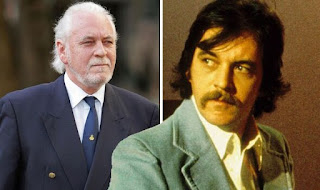
Driving in my car yesterday a DJ on 6Music played Procol Harum's ‘Homburg’ as a ‘tribute’ but I didn’t know who for until this morning when I opened up my paper and discovered that their keyboard player and principal vocalist Gary Brooker had died. I saw him alighting from a train at Guildford station one evening in, I think, 2009, like me returning from Waterloo; myself from work, him no doubt after another day in court over the vexed question of who wrote ‘A Whiter Shade Of Pale’, a case that dragged on for several years. 

        I suspect I was the only person on the train who recognised this distinguished looking gentleman, a bit portly with thinning white hair in a smart blue suit, collar and tie, looking a bit stressed by the weight of the lawsuit. No one in a million years would have taken him for a rock star. I’d met him once or twice years ago, back in my MM days, but he was unlikely to recognise me now and bearing in mind how the case was going I wasn’t about to mutter ‘skip the light fandango’ into his ear. “Best of luck,” I said. Realising I was someone who knew who he was, he nodded and smiled at me a bit wearily.

        Brooker lost the case insofar as former Procol Harum organist Matthew Fisher was deemed by the judge to have been a co-writer of ‘AWSOP’ and could therefore share in future royalties, along with PH lyricist Keith Reid who wrote the words. I suspect that defending his claim that he alone wrote the music cost Brooker a pretty penny in lawyer’s fees, and this was probably why his large detached house near Cranleigh appeared on the market not long afterwards.

        Like most music fans in my age demographic I adored ‘A Whiter Shade Of Pale’ without having a clue what it was about. Enigmatic, catchy but weirdly profound, with a hint of JS Bach, it was the anthem of 1967, the year pop came of age, the only serious rival to The Beatles’ Sgt. Pepper’s Lonely Hearts Club Band, and the leading record in a trio of singles that embodied the Summer of Love, the others ‘All You Need Is Love’ by the Fabs and ‘San Francisco (Be Sure To Wear Some Flowers In Your Hair)’ by Scott McKenzie. I bought all three. 

        ‘Pale’ spent six weeks at number one in the UK and hit the top in a dozen other countries but like so many other records by young, credulous acts signed to management and music publishing companies whose business practices were heavily slanted towards themselves, the musicians that comprised Procol Harum at the time saw very little in the way of rewards. Abrupt personnel changes didn’t help. Many years later I was told by a friend who once worked for their publishing company that the amount AWSOP earned for the musicians who created it was simply minuscule, fractions of pennies per sale or play, especially on foreign earnings and inclusion on hits compilations by various artists, on which it appeared on too many to count. This was probably adjusted at some time in the last 20 years, which was no doubt why Matthew Fisher felt it worthwhile to bring his lawsuit. 

        Oddly, Procol Harum’s second LP Shine On Brightly was the first free record I ever received, a review copy sent to the Telegraph & Argus in Bradford where in 1968 I had a column called The Swing Scene. I can’t remember what I wrote – sorry, it was a long time ago – but I can remember my delight at getting an LP I didn’t have to pay for. 

        I saw the group twice while working for Melody Maker, once at the London Palladium when they were introduced by Vivian Stanshall. “They are the most uncompromising group in England,” he intoned in that marvellous accent of his. And once again at the Hollywood Bowl on September 21, 1973, when they performed alongside the Los Angeles Philharmonic Orchestra and a large choir. 

        I enjoyed both concerts. RIP Gary. You were to Procol what Jagger is to the Stones. 


(I found the above picture the internet, credited to the Daily Express, not a newspaper I would recommend. The pic of the older Gary looks like he did on my train.)

11.2.22

GIGS THAT TRANSFORMED LIVE MUSIC

Today’s Guardian lists ‘50 Gigs that Transformed Live Music Forever’. Here’s a few that they missed.

The Beatles

Litherland Town Hall, Liverpool, December 27, 1960

Newly returned from their first gruelling Hamburg stint, The Beatles capture their home town. Writes Mark Lewisohn: “As the curtains shuffled open and Paul launched himself into Little Richard’s ‘Long Tall Sally’, everyone suddenly and spontaneously crushed forward to the front of the stage, swept away by the group’s sheer magnetism. Five hundred hours on stage in Hamburg had forged a style that would conquer the world. [They] were an absolute powerhouse, creating an inexplicable and unprecedented frenzy among the spellbound teenagers… they too were bewildered by the incredible scene they were invoking. Beatlemania was enjoying its birth pangs.”


The Who

Railway Hotel, Harrow, July 14, 1964

Billed as The High Numbers, The Who are seen by future co-manager Kit Lambert for the first time. Lambert: “They were playing there in this room with just one red bulb glowing and an extraordinary audience that they had collected. They were the loudest group I'd ever heard and they gave the whole thing a satanic quality. It just seemed to me that this had to be the face of the late Sixties. There was Keith Moon, the drummer, raised on a high stool dominating the group, battering away for all his life was worth. The rest of the group was playing on a stage made out of beer crates. And the ceiling came right down on top of them so that when Pete Townshend – the lead guitarist – was playing, he’d bang his guitar against the ceiling, and one night he physically poked a hole through the ceiling because it was getting in his way. It was only made of paper and cardboard, and he went straight through. This went down tremendously with the audience. And that's how the whole thing started.” 


Led Zeppelin

Tea Party, Boston, USA, January 29, 1969

The birth of head-banging at Led Zep’s legendary four-and-a-half-hour show, probably their longest performance ever. John Paul Jones: “As far as I’m concerned, the key Led Zeppelin gig – the one that just put everything into focus – was one that we played on our first American tour at the Boston Tea Party. We’d played our usual one-hour set, using all the material from the first album and Page’s ‘White Summer’ guitar piece and, by the end, the audience just wouldn’t let us off the stage. It was in such a state that we had to start throwing ideas around – just thinking of songs that we might all know or that some of us knew a part of, and work it from there. So, we’d go back on and play things like ‘I Saw Her Standing There’ and ‘Please Please Me’ – old Beatles favourites. I mean, just anything that would come in our head, and the response was quite amazing. There were kids actually bashing their heads against the stage – I’ve never seen that at a gig before or since, and when we finally left the stage we’d played for four plus hours. Peter [manager Grant] was absolutely ecstatic. He was crying – if you can imagine that – and hugging us all. You know with this huge grizzly bear hug. I suppose it was then that we realised just what Led Zeppelin was going to become.” 


The Rolling Stones

Hyde Park, July 5, 1969

The Stones come of age. It was the requiem for Brian Jones and the debut of Mick Taylor, the concert where The Rolling Stones began their new life as ‘The Greatest Rock’n’Roll Band In The World’, as they were introduced, for the first time, by Sam Cutler, who worked for the concert’s promoters, Blackhill Enterprises. Mick read a poem, butterflies were released and the crowd numbered over 250,000, the biggest crowd assembled in London since the Coronation of Queen Elizabeth II in 1953, but the Stones were not at their best. “We played pretty bad,” Keith confessed later. “We hadn’t played in years.” In Melody Maker, Chris Welch wrote:  “[It was a] a nostalgic, out-of-tune ritual that summed up a decade of pop.”


Elvis Presley

International Hotel, Las Vegas, July 31, 1969

Elvis returns from the dead(end world of crap movies), playing his first truly live show since before he went into the army. Las Vegas bows to the New World Order. Writes Peter Garulnick: “With his own handpicked band behind him, he simply rocked, and almost in that instant, the whole room exploded. … It would have been a scene of rare abandon in any setting, but for Las Vegas, the ultimate repository of blasĂ© show business values, carrying with it an implied embrace of genuine spontaneity on the performer’s part.”


Bruce Springsteen & The E Street Band

Harvard Square Theatre, Cambridge, Massachusetts, May 9, 1974

Bruce becomes ‘the future of rock’n’roll’. Jon Landau, Springsteen’s future manager, then a writer for Boston’s Real Paper, sees his protĂ©gĂ© for the first time, and writes: “I saw my rock and roll past flash before my eyes. I saw something else: I saw rock and rolls future and its name is Bruce Springsteen… There is no one I would rather watch on a stage today.


David Bowie

O’Keefe Centre, Toronto, June 16, 1974

The birth of rock theatre. After the tour, David never repeated this kind of concert and, of course, it never reached the UK. CC wrote in Melody Maker: “A few thousand lucky Canadians witnessed a completely new concept in rock theatre last weekend … It now seems likely that Bowie WAS speaking the truth when he announced his retirement from rock on the stage at the Hammersmith Odeon last year. For the act that David presents on this tour has as much to do with rock and roll as Bob Dylan has with the gloss of Las Vegas. The one-and-a-half-hour, 20-song show is a completely rehearsed and choreographed routine where every step and nuance has been perfected down to the last detail. There isn't one iota of spontaneity about the whole show. It is straight off a musical stage – a piece of theatre complete with extravagant mechanical sets, dancers and a band that stands reservedly to stage right and never even receives so much as a cursory acknowledgement, like an orchestra in the theatre pits.”


Bruce Springsteen

Wembley Stadium, July 4, 1985

Bruce shows London that he really is The Boss. The middle concert of three at Wembley Stadium, all of which I attended. I simply enjoyed the first night so much I didn’t want to miss any of them. CC writes: “On the 4th – American Independence Day – Bruce walked out alone, armed with only an acoustic guitar and sang The River track ‘Independence Day’, a ballad, to a crowd of 80,000 or more who’d been waiting around for hours and were gagging for rock’n’roll. That takes sheer bottle, I thought. Then it was into a blistering ‘Born In The USA’. On one of the shows – I can’t remember which – Bruce played the Stones’ ‘Street Fighting Man’, doubtless because it refers to ‘London town’. After three hours or more, all the shows closed with gloriously delivered renderings of ‘Twist And Shout’ – lasting about 20-minutes. It wasn't the first concert at Wembley Stadium but Bruce showed how it should be done.


3.2.22

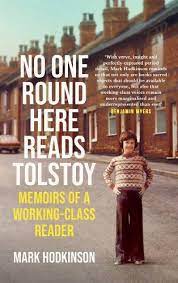
NO ONE ROUND HERE READS TOLSTOY: Memoirs Of A Working-Class Reader by Mark Hodkinson


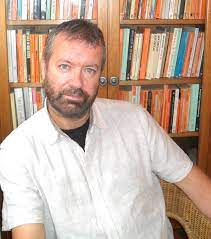
This is a book about books, acquiring them, reading them, learning from them, collecting them, reviewing them, publishing them, selling them and even loathing them when it’s necessary to recycle piles of unsold ones. Mark Hodkinson, newspaper reporter turned music writer turned football correspondent turned novelist, has written a love letter to them, for they have shaped his life, hauling him from a book-free upbringing to his present home, which he shares with no less than 3,500 of them. 

        I have known Mark since 1989, when I commissioned him to write a biography of The Wedding Present, the Yorkshire band led by David Gedge. Thank Yer, Very Glad was published a year later and I was sufficiently impressed by his work to ask Mark to write several more books for Omnibus Press. They were an eclectic bunch – Marianne Faithfull, Simply Red, Springsteen, Prince and Queen’s early days – and I soon realised that Mark was a bit different from most writers I hired. It wasn’t just his emerging literary skills or willingness to get stuck into fairly deep research, more a sense that his ambitions went quite a bit further than rock biographies or even the football reports and related features he wrote for The Times. No, Mark sought a higher calling, to become a novelist, and to write literary fiction at that, to join the club that included those writers he most admired, the ones from working-class backgrounds similar his own who brought harsh lives to the page and, through their fiction, exposed injustice brought about by systems of government that all too often rewarded those already privileged. 

        This thinking – and these kinds of books – inform No One Round Here Reads Tolstoy, its title an observation uttered to him one day by the proprietor of a second-hand book shop in his home town of Rochdale, where he still lives. Part autobiography, part idiosyncratic literary criticism, part primer to the world of book publishing, its principal message is that even if the house in which you were raised contained only one book you can rise above inbred apathy with imagination and persistence. In Mark’s case the one book his parents owned was a leather-bound volume of questionable merit called Folklore, Myths, and Legends of Britain. “Dad treated it with reverence,” writes Mark, “keeping it on top of the wardrobe with other items of great worth such as their wedding album and my Cycling Proficiency Certificate.” Mark’s book is chock-full of droll memories like that, and often had me chuckling, not least when he enters the world of local journalism, a field I know from long ago.

        Running parallel to Mark’s journey – the kind of word he despises, by the way – is the story of his grandpa, John Duffy, whose descent into dementia is movingly told, all the more so for its lack of sentimentality. We are left in no doubt, however, that in moments of clarity John, a born storyteller, influences his grandson not so much to find a life beyond the grim backstreets of fading Lancashire towns but, more importantly, to discover a better life within them. 


        The bulk of the narrative follows Mark’s progress from school, where the education system deems him suitable only for manual work, through the hurdles he leaps on the way to reporters’ offices at various northern newspapers, and to Omnibus Press, where our lives become briefly intertwined. In the meantime, he’d discovered music, fallen for The Smiths, bought a guitar and formed a band that once memorably supported The Stone Roses. All the while, though, he’s seeking out books, more and more books, mostly old, reading them and forming opinions about their authors. It comes as no real surprise that JD Salinger’s Catcher In The Rye exerts a powerful influence, along with the social realism of the ‘kitchen-sink’ writers like Barry Hines, Alan Sillitoe, Shelagh Delaney and many more.

        Neither does it come as a surprise when he forms his own book publishing company, Pomona, a risky undertaking at the best of times, and though Mark’s heart is in the right place in regard to the type of books he wants to publish, including his own, there’s an element of noble idealism about the enterprise. He reprints books by some of his favourite writers whose work has gone out of fashion – and, unfortunately for him, remains so – and comes up against harsh reality when the one book that might make his fortune – a biography of JD Salinger that, fortuitously, coincided with his death – attracts problems not unconnected with greed that oblige him to relinquish valuable US rights. His wry, often comic and always sincere observations about the authors he meets through Pomona and elsewhere are a highlight of the later chapters, along with some carefully researched facts and figures about the future of the book trade. Like me he loathes Kindle. 

        Mark is now a respected novelist himself*, with many admirers in the sphere of literature. This pleases me immensely, not just because I played a small part in it but, more importantly, because he deserves it. In No One Round Here Reads Tolstoy he has written a wonderful, beautifully sculpted, heartfelt book about climbing a ladder to that place he loves the most, a comfy armchair in which he can lose himself in the imaginary world of a printed page. 

______

*Among them The Last Mad Surge Of Youth, about a fictitious rock star, reviewed here: http://justbackdated.blogspot.com/2014/03/the-last-mad-surge-of-youth-by-mark.html