28.11.17

MY BOOK OF GENESIS by Richard Macphail


Tonight sees the official launch of Richard Macphail’s memoir My Book Of Genesis at an independent book shop in West London. I am credited as a ‘with’ on the cover, an entitlement that results from my having spent hours interviewing Richard last year, then setting it all down on a computer for him to browse through, re-arrange and agonise over the naughty bits.
Richard was a school friend, aide-de-camp and tour manager of Genesis in their formative years. He bowed out in early 1977 and after a period of ruminating on the meaning of life received a call from Peter Gabriel who was in need of a support mechanism to get him back on the road as a solo artist. “In many ways the job of tour managing Peter ought to have been easier after all my experience with Genesis but the truth is Peter became more and more demanding as time went on,” writes Richard. “It’s important also to realise that Peter was on his own now. Whereas before he was one of five, with responsibilities split amongst them all, the buck now stopped at him, and this certainly made him become more and more exacting.”
        In this second extract from the book we are on the road with Peter Gabriel in the spring of 1978, his second tour as a solo artist, and Richard is in charge of a show that features a level on inventiveness on Peter’s part that sometimes places unusually comic demands on his long-suffering tour manager.


‘Big One’ featured a long blues guitar solo in the middle, after the second verse, at which point Peter would come off stage, disappear for a few minutes and reappear somewhere in the theatre, usually on the balcony. He and I had prearranged this whole stunt: I’d meet him in the wings, we’d go out of the stage door, walk up the side of the theatre, re-enter at the front where a guy who worked for the promoter would be ready with the doors to let us in, and then Peter would go up the stairs to the balcony, the verse would start again and off he’d go, singing into a radio mike. The spotlights would be on him, somewhere in the audience, and they loved it, absolutely went bonkers some nights.
It was all Peter’s idea of course. He always was very imaginative in this way, always looking to be different, to do something dramatic that audiences wouldn’t expect. By now he’d graduated from the grey track suit into a pair of leather trousers and one of those white judo tops, so he stood out under the spotlight. So he’d be up there, and the audience is all of a flutter, and before they’d quite realised what was going on, we’d scooted off back downstairs where the spots would be on him again, and he’d walk down the aisle, still singing, and the closer we got to the stage the greater the rough and tumble as fans got out of their seats to touch him. I was right next to him throughout all this, and we’d usually get a couple of the promoter’s guys and a couple of guys from our crew who’d make their way towards us, so there’d be four or five of us around him to protect him. No one would want to hurt him, they were only people getting a bit over enthusiastic, but the judo shirt was usually ripped open before we could hoist him up on to the stage to a huge cheer, and then we’d disappear. It was a great stunt and although a few others tried something similar, Peter was definitely the first to do it like that. 
I always thought it was especially brave of Peter considering that all those years ago at Aylesbury he made the mistake of jumping feet first into a crowd that backed away and he broke his ankle as a result. This made him realise that what you needed to do was to fall back flat, and later, when he sang a song called ‘Lay Your Hands On Me’, he would stand at the front and fall backwards, trusting his fans to catch him. It was the most unbelievable thing to do, especially for someone who’s actually jumped off the stage and broken their ankles doing that. But he did it and they would pass him around. Lots of rock stars pay lip service to the idea of ‘getting down with the fans’ or ‘breaking down the barriers’ or whatever they choose to call it, but Peter put his money where his mouth was, if that’s the right metaphor.
It was inevitable, however, that it would go wrong sooner or later. On one night – I think it was Pittsburgh – Peter and I headed out of the stage door and into the street, which was always a bit weird with all these buses and taxis everywhere and Peter in his white top with a radio mike. As usual the promoter’s guy was waiting for us at the front of the theatre but this particular theatre had two rows of glass doors, both of which could only be opened from the inside.
Unfortunately, being a couple of light bulbs short of a chandelier, this guy pushed the inner door open and forgot that it would shut automatically behind him. He let us in through the front doors and they shut as well so we were trapped between the two banks of doors; no way in, no way out. Peter and I actually saw what was going to happen before it did. ‘Don’t let it shut,’ I screamed. But I was too late. It was fortunate this wasn’t picked up by Peter’s radio mike.
Of course, there was no one in the lobby as they were all inside listening to the show, and there was Peter and me and this bloke locked out. We could hear the band, just, and Peter started singing when he heard his cue. Luckily there was a loo in the lobby, and two guys walked out and saw us. We’re going, ‘Let us in’ and of course they couldn’t believe what they were seeing. ‘What the fuck… Peter Gabriel’s supposed to be on stage… what the fuck’s he doing here.’ They hesitated and then let us in. We didn’t do the upstairs bit that night, just the walk down the aisle, and the audience – apart from the two blokes who’d been in the loo – was none the wiser. The band knew something was up as they could hear him singing, all the while thinking, ‘Where the hell is he?’
We did that stunt every night on that whole tour, US and Europe, and it never went wrong again but I included the double-door eventuality in my preparations from then on, always checking the front of the house before the show started. To this day, I’ll never forget seeing that bloody door shut behind us.

22.11.17

DAVID CASSIDY (1950-2017)

The death of David Cassidy has a sad inevitability about it, and I have good reason to believe this to be more than a cliche. 
In the brief period when I encountered him, in the spring of 1973, it was difficult not to conclude that he was a pawn in the game, easily manipulated, poorly managed and deeply insecure. He was on a tour of Europe, and was surrounded by persons intent on keeping everyone else, including the press, at arm’s length, but somehow the wall of security had been breached by a man called Anthony Fawcett who had at one time worked as a PA to John Lennon and Yoko Ono. In the course of this employment Fawcett had acquired a black velvet jacket, Edwardian style with a high collar and many buttons, that once belonged to Lennon and had evidently gifted it to Cassidy, a gesture that secured Cassidy’s fierce loyalty, at last temporarily. 
This development did not sit well with Cassidy’s real managers but they were impotent to prevent their charge from retaining Fawcett as a close advisor, purely on the strength of the Lennon association and the jacket, which Cassidy wore everywhere apart from on stage. We were all on a private plane, a big one, and in these situations a class divide arises between the star and his ‘people’ and everyone else, though to a certain extent Fawcett acted as an intermediary, a state of affairs that was frowned upon by his managers. Indeed, when the tour reached the UK, Luton Airport I think, a helicopter was on standby to take Cassidy and his immediate entourage to somewhere closer to the centre of London. There was a bit of a scramble for seats among those who felt they were entitled to them and at least one member of his management team was greatly put out when their seat was taken by Fawcett.
All of this offered a rich source of tittle-tattle for the posse of journalists following the tour when we gathered in hotel bars after the shows to exchange notes or, back in the UK, sat at the back of the coach that brought us, the second-class citizens, back to the city. Journalists love a bit of gossip, especially those employed by the popular daily press, and the stress-level we observed in those connected with the tour, not least Cassidy himself, was a goldmine for speculation and cynical humour. 
I saw three Cassidy shows, two on the Continent in Germany and Holland, before returning to the UK and attending another at Wembley’s Empire Pool, as the 10,000-seat arena was called in those days. With no interview of substance to fall back on, back at Melody Maker I wrote about the circus surrounding Cassidy and the concerts themselves which, although musically lacklustre, were Grade A scream fests in which no one, not the band, audience or Cassidy himself, could hear a note of music anyway. Cassidy had a habit of turning his back to the audience, bending over and wiggling his bottom at them which was a cue for screeching that rivalled the din at any pop concert I’d ever attended. His band were also travelling with us and seemed as bemused by it all as we were, professionals doing a job and getting paid well for performing music that was far from taxing. 
Although I barely exchanged more than a few brief words with Cassidy, I sensed his frustration, that he wanted something a bit more profound than all this, but he was trapped in the syndrome that afflicted so many of his peers in the sphere of entertainment to which he had been unwillingly assigned. The Partridge Family, the US TV show in which he starred, was aimed at children, young girls especially, and his winsome looks, fluffy hair and easy smile were perfect for a teen idol. His management knew this full well – and also that the jump to serious musicianship was perilous and might see their client in limbo: alienating fans of his popular oeuvre while failing to attract older ones because of it. It’s a dilemma they all face when the screaming stops.
I came away feeling a bit sorry for him. I don’t think he even had a girlfriend with whom to confide when the lights were out, which was deeply ironic considering that a good proportion of the female population of the western world between the ages of 15 and 25 would have jumped into bed with him in the blink of an eye. Like everyone else, he seemed very stressed and this manifested itself in an outbreak of spots that required make-up to disguise. It seemed to me that only John Lennon’s velvet jacket brought him some comfort; a token of where his head was at and where he really wanted to be. 
A year later, in May of 1974, a teenage girl fan was killed in the crush at the front of the stage during a Cassidy concert at White City Stadium in west London. This sad incident presaged Cassidy’s gradual withdrawal from such concerts, and from the circus that surrounded him. 
I finally interviewed Cassidy three years later, in New York, when amongst other things he told me about the music he was hoping to make with Mick Ronson, whose freelance commissions since David Bowie now included a stint with Bob Dylan. (The interview can be found on the website Rock's Back Pages.) Cassidy explained to me that he wanted to be a part of a band with Ronson and not just a singer with a band behind him, a bit like what Bowie tried to do with Tim Machine I suppose, but it seemed an unlikely prospect and, of course, it never happened. By this time the screaming had stopped, which was a relief to him, but from what I have read about his life thereafter it wasn’t a happy one. Various illnesses connected to alcoholism dogged him until the end. He was arrested more than once for drunk driving, went bankrupt two years ago and was married and divorced at least three times. 
He made more records and toured, and appeared in stage shows, occasionally with modest success, but his past was too big a burden to hide and no matter how hard he tried he was never allowed to forget it. The teenage idols of today, like the boys in One Direction, can thank their lucky stars that their careers are handled with more expertise, sympathy and understanding than that of David Cassidy. 

20.11.17

JIM LEA – For One Night Only


When Jim Lea re-released his Therapy album last year the package included a bonus CD, a live recording from the one and only solo gig Jim has ever performed, at the Robin 2 R’n’B Club in Bilston in November 2002. It was a charity event held in honour of Jim’s late father and Jim fronted a trio, playing guitar and singing 16 songs, mostly cover versions, backed up by his friends David Birch on bass and Michael Tongue on drums, in a group he christened Jim Jam. 
Within the Slade fan community the gig has become legendary, not just because it was a one-off but for the standard of musicianship which was extraordinary. This month it is finally released on a DVD that features 11 of those 16 songs, plus a bonus track, a reworking of Slade’s biggest hit re-titled ‘Merry Christmas To The Robin 2’.
Playing a customised black Stratocaster through a muscular Marshall stack, Jim rocks out with seismic potency, clearly enjoying himself as he displays a fluent, Townshend/Hendrix-like ability to mix lead and rhythm guitar that often suggests he was wasted playing bass in Slade. His vocals might not have the clout of Noddy Holder but he sings well, gamely shouldering the lion’s share of the workload and taking time out to talk to the pumped-up crowd between songs. “Imagine,” he says, tongue firmly in cheek, before opening up with ‘Shakin’ All Over’, “imagine you’re at the gig of Slade III.”

(Photo by Ian Edmundson)

And off he goes, working his way through ‘I Saw Her Standing There’, ‘Hey Joe’, ‘I Am The Walrus’, ‘Cum On Feel The Noize’, ‘Great Big Family’ (from Therapy), ‘You Really Got Me’, ‘Far Far Away’, ‘Pretty Vacant’, ‘Go Out In Style’ (another Therapy track), and ‘Substitute’, all dashed off with the rough and ready passion of an enthusiastic garage band. Jim treats his guitar fairly callously, chucking it around and drawing feedback and sustain as he solos around chords, neglecting precision in favour of brute force and a generous dollop of showmanship. He makes it look easy but it takes great skill to play with such casual panache yet always hit the right note at the right time. 
        The video itself is not up to professional standard, and appears to have been filmed with a single camera which zooms in and out of the stage and from time to time veers a bit off focus, and the lighting occasionally casts a disturbing orange glow on the star of the show. In contrast there are between-song interludes in which Jim is recorded elsewhere talking about his choice of material. “I always wanted to play with Jimi Hendrix but he died on me,” he says before ‘Hey Joe’. “I thought that with Chas [Chander] managing us, that… I was going to get to play with him. [Jimi] rang up Chas [presumably in 1970] and asked him to manage him again and Chas asked us if we’d be upset if he managed Jimi as well. What he didn’t know during that conversation was that Jimi was already dead.”
        ‘Hey Joe’, like everything else, is approached with maximum swagger, Hendrix-style, as is ‘I Am The Walrus’ which opens with Jim playing the guitar above his head, left-hand only, before he grabs a megaphone to subvert the vocals. Unlike the record, ‘Cum On Feel The Noize’ begins at a leisurely pace, a slow singalong until Jim puts his foot down and the familiar chorus kicks in after a couple of minutes, while the only other Slade song in the set, ‘Far Far Away’, is given a more respectful, melodic treatment. On record the two Therapy songs that Jim played sound like his own work but on stage remarkably like Slade songs, this probably due to their wall-of-sound choruses and the reckless pace of the gig, and Jim makes ‘Pretty Vacant’ sound like a Slade song too, or it would if Noddy was on vocals. As it is Jim adopts the confrontationally yobbish Johnny Rotten singing style, but either way it goes to show that the Sex Pistols and their fellow punks owed a debt to Slade even if they were unwilling to acknowledge it. The final song, ‘Substitute’, sounds like The Who with a different vocalist, sharp, crisp and lively, as good a cover version of the song that gave my blog its name as I’ve heard anywhere. 
The only question remaining is why Jim, a good friend of mine of long standing now, limited himself to just this one gig. It’s a question he asks himself in the accompanying interview footage, and he doesn’t really answer it, though he does say that the power he felt on stage was greater than at any time when he was on stage with Slade. Jim, always the Slade man with the lowest profile, has deliberately avoided the limelight since the group broke up and seems happy to slink off into his studio to make music primarily for his own amusement and satisfaction. In the celebrity obsessed 21st century that we live in today this is an admirable approach to life, but it seems strangely perverse when he can light up a room as well as he does on this DVD. “The people that matter know [what I can do],” he told me when we discussed Therapy last year. “That’s all I care about.”

15.11.17

MY BOOK OF GENESIS by Richard Macphail


In between other projects last year I helped Richard Macphail, school friend, aide-de-camp and tour manager of Genesis and, later, Peter Gabriel, to write his autobiography. For almost five years Richard was the glue that held Genesis together, and in his affectionate memoir My Book Of Genesis he tells his own unique story of the group’s early years.
Richard was the singer in Anon, the Charterhouse school group that included Mike Rutherford and Anthony Phillips, which would merge with Peter Gabriel and Tony Banks’ group The Garden Wall to become Genesis. Recognising their needs, Richard became their one-man road crew, shepherding them from gig to gig, providing a cottage where they could live and rehearse and offering much-needed support when it was most needed.
            As Neil Aspinall was to The Beatles and Ian Stewart to The Rolling Stones, Richard became the nearest thing to a sixth member of Genesis, and although he went his own way in the eighties, carving out a successful career in the alternative energy sector, Peter, Mike and Tony, together with later arrivals Phil Collins and Steve Hackett, were never far away. Though it dwells on the group’s early years when they were finding their place in the hierarchy of prog rock, My Book Of Genesis is in reality the touching story of a close and valued friendship that has endured for over 50 years. 
            In this first extract we join the earliest line-up of Genesis in the summer of 1970. After a shaky start involving an album now largely forgotten that was produced by Jonathan King, the group has signed to Charisma Records, recorded their second album and now face an endless series of small-time gigs. Then comes a bombshell. 


Trespass was due to be released in the autumn and lots of gigs were coming up, including the early ones at Friars, but another problem was looming, a massive problem known only to the inner circle. Ant [guitarist Anthony Phillips] had developed the most incredible stage fright and was really struggling with it. He talked about having had an out of body experience on stage it was so bad. We’d played a college in Hackney one night with an audience of around 25 people but he was terrified out of his mind, so terrified in fact that that he developed glandular fever. So the stage fright was making him ill. It affected his ability to play too. He didn’t have an actual breakdown but he was close to it. He told Peter he just couldn’t go on, and Peter called a band meeting to tell us. 
The meeting took place one night after we’d played at the Marquee, in the van parked at the back of the club in the spot where you loaded the gear. We’d done our set and when the other band came on Peter told us we had to go sit in the van and have a meeting. That’s when he announced that Ant was leaving. Of course I knew Ant was struggling but Trespass wouldn’t have been anything like the album it was without him. So there was me, Peter [Gabriel], Tony [Banks] and Mike [Rutherford] in the back of the van, no [drummer] John Mayhew which was significant. Everyone was in shock when Peter told us. What are we going to do next? The three of them were actually for giving up. They thought they couldn’t do it without Ant but I wasn’t having it. I said, ‘For God’s sake, we’ve come this far, you can’t give up now. It’s too good. You have to go on.’
‘When Ant left the group I thought, “That’s going to be it”,’ remembers Tony. ‘I thought that because Ant was Richard’s closest friend in the group that he would go too. Obviously we were quite dependent on Richard. I thought that Ant was the most dominant person in the group, the leader in a way. He was the one that made us do it. Peter and I would never have done it, and Mike followed Ant. So I thought that’s probably it. I remember a conversation with Peter and Mike and Richard and you were saying, “You really must keep going.” And I thought that if you were saying that, as Ant’s friend, that made a big difference to me. Peter and Mike… we weren’t sure and we talked together, and then decided, “Yes, let’s find a replacement” and we know how difficult that was but we did it.’
I like to think that I persuaded them not to give up that night but it was Tony, the voice of reason, whose argument carried the day. He was the last one to speak. ‘All right,’ he said. ‘We’ll go on but we have to get a new drummer.’ 
Tony recalls this crucial decision as if it happened yesterday. ‘We had to get a good drummer and I think we all agreed with that,’ he says. ‘That was a very important thing to me because I felt that we needed a drummer who was creative and someone that we didn’t have to tell him what to do. In fact, finding a drummer turned out to be a lot easier than finding a guitarist.’
Many years later, in an acceptance speech when he won a Prog Rock God Award in 2015, Tony mentioned this in his acceptance speech, saying that without my encouragement they might well not have gone on after Ant left. He never actually said it to me personally but suddenly there we were at this awards show and he remembered that incident after all that had passed between us all. 
I think we all knew deep down inside that John Mayhew just wasn’t up to it but only Tony was prepared to say it out loud. Tony is a very smart guy and he saw past the problem with Ant and realised it was an opportunity to get a better drummer. If they were going to make one change they might as well make two was his thinking, and quite right he was too. So the decision was made. We climbed out of the van and went back into the club, me to get the gear to load into the van, Peter, Mike and Tony to give John Mayhew the news. The problems were solved, or so we hoped. 
A day or two later we told the people at Charisma that Ant was leaving the band and that we were also going to get another drummer. They were worried but mightily relieved we weren’t going to split up. Trespass had been recorded and was about to come out, and they wouldn’t have wanted to release an album by a non-existent band. I don’t know how much we owed them by then – a few thousand quid maybe as they’d picked up the studio costs and, like the wages they paid, it was all an advance against future royalties. (I do remember we were in the hole to the tune of £300,000 by the time of Foxtrot, the third Charisma album, came out.)

The book can be ordered here: www.mybookofgenesis.com

10.11.17

BEATLES MEMORABILIA


Aside from my postcard from John, my stash of Beatles memorabilia is memorably slight and most of it was picked up on a whim in 1975 from a shop in Greenwich Village for $20. I wasn’t sure what motivated me to invest in two pairs of Beatles ladies’ stockings (still unworn, incidentally), two Beatles wigs (also unworn), a scrapbook of at least 100 bubble gum cards (mostly Dezo Hoffman pix from ‘63/4), an orange plastic guitar (smashed by my kids), a yellow submarine (intact, just) and a few other odds and ends (badges, hair clip, tour programme, plate etc), but they have followed me around for years now and to my immense disappointment are, with the possible exception of the stockings and wigs, virtually worthless.

Now reduced to one, above. Back in the eighties I gave one of each to a rock-mad pal as a wedding present and he was delighted. His bride, however, was not, no doubt preferring a pop-up toaster or six wine glasses. The marriage didn’t last, and the groom tells me he hung on to the stockings and wig but was unconcerned about retaining any glassware or kitchen appliances. 

The disappointing valuation of my little collection is the viewpoint of Pete Nash, editor of The British Beatles Fan Club magazine, to which I am an occasional contributor. Unlike mine, Pete’s stash of Beatles memorabilia is memorably gigantic and a good deal of it, some 2,500 items, went on sale this week. Not to put too fine a point on it, this may well be the most valuable Beatles’ collection to hit the market this century, containing as it does some of the rarest and most sought after items that interest Beatle collectors. 
Top the list is a one-sided test pressing of The Beatles’ second album With The Beatles, an unassuming relic to be sure, especially as its label (pictured below) does not offer any information as to what the grooves contain. This is priced at an eye-watering £5,500.


Most of the items that follow, at least those that need a buyer with a fairly deep pocket, are test-pressings, promo discs and interview recordings distributed only to radio stations. I was particularly intrigued by a 10-inch shellac record of ‘I’ll Cry Instead’ b/w ‘Tell Me Why’ which was released on a red Parlophone label in India in September 1964, priced at £3,500 which, if it were being sold by an original purchaser in its country of origin, might feed its owner’s family for a decade. Two other Indian singles (‘Hard Day’s Night’ and ‘Can’t Buy Me Love’) in a similar format are a bit cheaper, probably because – unlike ‘I’ll Cry Instead’ – these songs were released as singles everywhere else.


A small selection of Pete's collection. I have a plate similar to those on the right and the orange guitar looks suspiciously like the one my kids destroyed. 

Only 14 of the 2,500 items are priced in the four figure range, with the vast majority, ie over 2,000, at less than £100, and most of those less than £50. About 300 cost less than a fiver. Bottom of the list is a bog-standard 7-inch of ‘I Feel Fine’ at a very reasonable 49p which, taking inflation into account, is probably cheaper than when it was released in 1964. I bought it then, for six old shillings and three old pence, but I must have lost it along the way, though I do still have four of my Beatles singles, all bought when they were released: ‘She Loves You’, ‘I Want To Hold Your Hand’, ‘Can’t Buy Me Love’ and ‘Day Tripper’. Since all four are irredeemably scratched due to excessive use on purchase, I estimate their value at 10p each tops, and even my Twist And Shout EP, again much played, is probably worth less than a tin of dog food. 
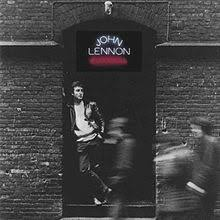
Long before the internet and e-Bay the best place to acquire Beatles memorabilia outside of specialist record shops was at fan festivals, the first of which – called Beatlefest – was held at the Commodore Hotel in New York City in September 1974. I went along to see what was happening and whilst there bumped into May Pang, with whom John was living during his sabbatical from Yoko. I’d met May once or twice before and she told me that John had sent her along with a wad of cash to pick up stuff for him from the traders in bootlegs and other Beatle bric-a-brac. May confessed that she didn’t really know what to buy for John and asked me for advice, so I chose half a dozen bootlegs that I thought he might like, and drew her attention to a picture of him in Hamburg, standing in a doorway and dressed in a leather jacket, taken in 1961 by Jurgen Wollmer. That picture, of course, ended up on the cover of John’s Rock’n’Roll LP, released the following year, and I have good reason to believe that my intervention played a role in this. 


Pete Nash’s bumper Beatle sale can be accessed here: 


6.11.17

BOB DYLAN – Rolling Thunder, It Was 42 Years Ago Today


In an era when tickets for concerts by major rock stars go on sale anything up to nine months before the show, it beggars belief that on Thursday, 6 November 1975, two hours before it commenced, I bought two tickets at face value ($7.50) for a 5pm Bob Dylan show from the box office at the 10,000-seat Civic Centre in Springfield, Massachusetts, and two tickets from a tout outside for an 8pm show for $10 each, opting to pay the extra $2.50 in order to get seats closer to the stage. 
Dylan was leading his Rolling Thunder Revue on the fifth stop on the tour, the dates of which were advertised only locally and not in advance. One ticket at Springfield – which was actually the tour’s biggest venue – was for myself, the other for my friend the photographer Bob Gruen who’d driven north with me for four hours from New York. Before both shows Bob stripped down to his briefs in my rented car and taped his camera equipment to himself, then dressed again in loose fitting dungarees and a sweater so the bulges wouldn’t show. Photographers weren’t allowed in but this was never going to stop Bob who, once inside, went to the bathroom and retrieved his camera, lenses and film. He disappeared once the shows started, edging his way towards the front, and six of his pictures accompanied my lengthy report on the shows, stretched across three pages of Melody Maker of November 15, 1975.


During the break between the first and second shows we went to a nearby diner which was packed full of Dylan fans and in there met Larry Sloman, a writer from New York, who ended up writing a book about the tour. He was following the tour everywhere it went and, because Bob knew him, I was able to pick Larry’s brain about it all. Some of the tour’s road crew were in there grabbing a bite too, and I remember chatting with them as well. 
“You need more than a weatherman to know which way Bob Dylan blows,” was my opening line in a review that, sentence for sentence, was the longest show review I ever wrote for MM. The concerts were, after all, ‘revues’ in the accepted sense of the term which meant everyone got a go, and the bill also featured Joan Baez, Roger McGuinn, Mick Ronson, Ramblin’ Jack Elliott, Arlo Gurthrie and others, all of whom played at least one song of their own alongside the band that accompanied Dylan who, naturally enough, grabbed the lion’s share of stage time, both solo and in combinations with the others. 
He was magnificent too, playing and singing not to make money or even to promote a new record but simply because he wanted to. After the hullabaloo surrounding the previous year’s tour with The Band, which was Big Corporate Rock, Dylan had opted for something completely different, a folksy down-home feel, almost like a Hootenanny, and he was happy to chime along with everyone else though there was no doubt who was the star of the show. Some of the songs he sang would appear on Desire, not yet released, and I was spellbound by ‘Sarah’, his homage to his former wife. The shows ended with the ensemble gathered round several microphones for ‘This Land Is Your Land’, Woody Guthrie’s alternative American National Anthem, a fitting finale to an evening of music in which Dylan explored his roots, mused on his past and offered a glimpse into the future. 
The tour wound up at Madison Square Garden on December 8, a benefit show for Rubin ‘Hurricane’ Carter, a boxer wrongly imprisoned on a murder charge who was eventually freed. Dylan had recorded a single protesting Carter’s innocence, and I was at this show too, way up in the seats behind the stage, but it wasn’t anywhere near as enjoyable as the smaller shows in New England. The ‘review’ format didn’t suit a big arena and the audience was unsympathetic to the other musicians. Nevertheless, the two Rolling Thunder shows at Springfield remain two of the best concerts I ever saw during my three-year stint as MM’s man in America.

3.11.17

STICKY FINGERS: The Life & Times of Jann Wenner & Rolling Stone Magazine by Joe Hagan


The image of the brooding, avaricious, power-hungry newspaper proprietor was set in stone by Orson Welles in the film Citizen Kane and through the ages many in this line of work have conformed to the stereotype. Jann Wenner, a fan of Kane, is no exception. Joe Hagan’s biography, Sticky Fingers: The Life & Times of Jann Wenner and Rolling Stone, paints a portrait of the man behind RS as obsessive, unscrupulous and unlikeable, a man forever on the make who for all his money and success seems strangely unfulfilled. 
The book was sanctioned insofar as Wenner initiated it by inviting Hagan to write it and submitting to 100 hours of interviews (and enabling access to his archives), but not ‘authorised’ insofar as Wenner did not have final approval of the manuscript which he evidently did not read before publication. Wenner did, however, try to influence Hagan’s work by putting a positive spin on matters and shrugging off that which might seem detrimental to his character. Similarly interviewed – Hagan undertook 240 interviews in total – was Jane Schindelheim, who was married to Wenner from 1968 to 2011, though they separated in 1995 after Wenner came out as gay and thereafter lived with male model Matt Nye to whom he is now married. Jane, whose own flaws are ruthlessly exposed, has good reason to dislike the book too, but in her case the ugly truth is tempered by her ongoing loyalty towards her husband, boundless charm and innate warm disposition. 
In this respect – the Wenners’ personal lives – the book reads a bit like a melodramatic novel. To say it is ‘explosive’ or ‘sensational’ is an understatement, and since its publication Wenner has described it as ‘deeply flawed and tawdry’. He hasn’t spoken to the author since June. Hagan doesn’t seem surprised by Wenner’s reaction, and nor am I for Sticky Fingers chronicles rampant drug abuse and promiscuity with both sexes that would make Caligula blush, profligate spending on superfluous luxuries to gratify Wenner’s gargantuan ego and an abysmal lack of moral values in which his word is as worthless as a bent roach clip. 
It will come as no surprise, therefore, to learn that Wenner has a propensity for making enemies, among them John Lennon, Bob Dylan, Mick Jagger, Paul Simon, Jimmy Page et al. Lennon never spoke to Wenner again after the publication in 1971 of Lennon Remembers, the series of interviews John gave to Wenner for RS on the expressed understanding they did not become a book. Dylan was angry that RS published a photograph of his daughter against his wishes. Jagger felt Wenner ripped him off by naming his magazine after his band (and might now be equally pissed off that the title of this book borrows a Stones’ album title). Simon received unfavourable coverage because he slept with a girl who Wenner fancied but who’d turned him down. Page was furious at negative coverage of Led Zep. And while we’re at it let’s add Jackie Kennedy who took a dim view of Wenner ‘pouncing’ on her daughter Caroline. 
The only A-grade rock stars that Wenner seems not to have alienated at one time or another seem to be Springsteen and Bono, and although an understanding is reached with most of them it’s an uneasy truce that might fall apart at any time. In short, no one trusts him and with good reason. 
With ugly confrontations run of the mill for a man whose skin seems as thick as an elephant, you have to wonder how Rolling Stone survived. The answer is Wenner’s dogged determination to rescue it against all odds despite hovering on the brink of bankruptcy, enduring staff mutinies, tolerating wildly delinquent behaviour, especially on the part of Hunter S. Thompson, and simply picking himself up time and time again regardless. Much of the time he has the long-suffering Jane to thank for easing social situations, though the burden drives her to an addiction to Quaaludes and periods when she stays in bed for days at a time. 
Of course Sticky Fingers also chronicles the rock scene of the era from the inside, the shift from pop groups to rock bands, the corporatisation of the music industry, the way in which its fortunes are reflected in the circulation of Rolling Stone. Wenner was old school. He liked The Beatles, Stones, Dylan and The Who, and he disliked glam, metal, punk, disco and electronic dance music. He had to put up with it, of course, accepting only grudgingly that RS should cover changing styles. Thankfully he employed editors and writers who knew better but sooner or later almost all of them come up against his authoritarian ways and are fired or quit. Similarly, for someone with his foresight, he was curiously slow to adapt to MTV and, more importantly, the emergence of computers and the internet. He lost fortunes on launching other magazines, US Weekly aside, and nearly lost everything in the financial collapse of 2008. 
        In many ways Wenner’s role in the establishment of the Rock And Roll Hall of Fame – slightly dubious actually – allowed him to rise above the controversies that dogged his position in the music business. Here he could indulge his groupie tendencies and promote the acts with whom he felt comfortable, but this placed him alongside many in the industry – both performers and executives – that he had wronged in the past. Still he rode it out, even a nasty spat with Paul McCartney. In 1994, when Lennon was inducted as a solo performer, McCartney agreed to give the introduction speech on the understanding that he (Paul) would be inducted the following year. Wenner reneged. McCartney was furious and it wasn’t until four years later that he was inducted, which explains why daughter Stella, who accompanied him on stage, wore a T-shirt with the slogan ‘About Fucking Time’. 
There’s plenty more aggro in Sticky Fingers, plenty about RS’s coverage of American politics, current affairs and drug-related issues, plenty about its famous writers, notably Hunter S. Thompson and Tom Wolfe, plenty about the libidinous deeds of top RS photographer Annie Leibowitz, and plenty about Wenner’s social climbing and reckless spending on mansions and private aircraft to impress his peers. And sometimes I had to laugh, like when Hagan draws attention to Wenner’s weight problems and Jane’s attempts to slim him down. “Jane had cleaned the house out of anything that was good to eat except frozen foods,” literary agent David Obst tells Hagan. “Jann, hungry beyond his comfort point, went to the freezer and actually ate the frozen foods without thawing them out and they expanded in his stomach and he had to go to the emergency room.”
There, in a nutshell, is Wenner’s greed and impetuosity perfectly summarised. Sticky Fingers is a terrific read; unputdownable if, like me, you were part of the music scene in the era on which it dwells, and literate, entertaining and enlightening in the extreme wherever you were.


27.10.17

JANN WENNER & ME: A Preview of a Biography by Joe Hagan


In June of 1966 a 22-year-old American called Jann Wenner turned up at Melody Maker’s offices on Fleet Street to look up jazz expert Max Jones whose name had been given to him by Ralph Gleason, the jazz critic on the San Francisco Chronicle. He brought with him a review he’d written of The Beach Boys’ Pet Sounds, which MM declined to publish, but he hung around the MM offices for a while observing its staff at work. 
“He was astonished to see a working newsroom populated  with reporters smoking cigarettes and talking shop,” writes Joe Hagan in Sticky Fingers: The Life & Times of Jann Wenner, a just-published biography of the founder of Rolling Stone magazine. A few pages later we learn that in the spring of the following year Wenner, now back in San Francisco, approached Gleason with an idea. “[He said] how about a magazine,” recounted Gleason, “like the Melody Maker and Musical Express but an American one that would be different and better and cover not just the records and the music but the whole culture.”
Thus was born Rolling Stone whose founder, it is implied, was not only inspired to launch his magazine by his visit to MM but based his editorial philosophy on it as well. And that’s not all. The first issue, which rolled off the presses on October 18, 1967, contained several stories lifted from MM, rewritten by early staffer Susan Lydon. 
Unfortunately I was unaware of all this when I met Jann Wenner on two occasions while I worked for MM in New York between 1973 and 1977. The first was at Rolling Stone’s 1975 Christmas Party, held in an office building on the Upper East Side. Wenner, an irredeemable social climber, was in the company of Caroline Kennedy, daughter of JFK and Jackie, to whom I was also introduced, but neither showed much interest in me which wasn’t really surprising and after a few seconds chat they drifted away. On the second occasion I was in the company of Peter Rudge, manager at large who at that time was involved with The Who and The Rolling Stones. If I remember rightly Peter and I had dined together in a restaurant in which Wenner was also a customer that night, and when he spotted Peter he joined us for coffee and then invited us back to his fancy apartment which was located nearby. Once there we attacked his booze with gusto and hoovered up his top quality cocaine. Wenner tried to glean information from Rudge on activities and/or inner secrets of the Stones and Who. Rudge, canny as ever, resisted but did so with sufficient tact to ensure that Wenner remained convinced Rudge knew more than he was letting on. 
I kept my own counsel during their exchange, though at one point Wenner quizzed me about MM and seemed surprised that it could afford to maintain a full-time New York correspondent. “We do sell about 200,000 copies a week,” I pointed out. “It’s 96 pages and plenty of advertising, too much in my opinion.” Wenner seemed impressed though the concept of ‘too much advertising’ was probably foreign to him. I thought for a moment that because I was clearly on good terms with Rudge he might offer me a job, but he didn’t. In hindsight, he struck me as the kind if person who often made promises on the spur of the moment and forgot about them soon afterwards, so if he had offered me a job and I'd turned up at Rolling Stone’s offices the following day it’s likely he wouldn’t have known why I was there or even recognised me. 
Thereafter my opinions of Jann Wenner were formed by others, invariably writers who’d come into conflict with him and his autocratic ways, chief among them Timothy White whose superb biography of Bob Marley, Catch A Fire, I published while at Omnibus Press. Timothy, who went on to edit Billboard, America’s premier music industry trade magazine, was not a fan. 
I long ago ceased to pay any attention to Rolling Stone which nowadays is insufferably bland, at least as far as its music coverage is concerned. “If it’s popular it must be good,” seems to be its mantra, an attitude that has infected pretty much the entire music press everywhere, and a far cry from ‘my day’, which I suppose brings me into line with the old bores in blazers and regimental ties sipping G&Ts in their Golf Club bars, for which I apologise. 
But back to Sticky Fingers whose author, Joe Hagan, has evidently fallen out with Wenner following publication of the book. It seems that what he’s written is not what Wenner anticipated, always a good sign and reason to buy a book. From what I can glean from the internet Wenner doesn’t like it because there’s too much about his sex life, which involves both women and men, deriding it as gossipy but Penguin Random House in America (Canongate in the UK) know what sells and a man of Wenner’s experience of the media ought to realise this. 
I haven’t finished reading the book yet and when I do I’ll review it properly here, but those mentions of Melody Maker in the first 100 pages that I have read seemed worthy of a Random Note in themselves and, of course, made me smile, and I have a feeling I’ll be smiling a lot more as I devour its pages in the coming week.

25.10.17

ROCK AND ROLL HALL OF FAME – 2018 Inductees


The arrival through my letter box yesterday of the Official Ballot for the 33rd Annual Nominees to the Rock And Roll Hall of Fame reminded me that, having become a voter in 1992, I am now in my 25th year as a voter to this institution, which probably makes me one of the longest serving. Nowadays there are about 500 of us but I suspect it was far less 25 years ago. 
In the beginning we were sent a cassette containing tracks by the nominees and I still have mine from ’92: The Yardbirds, Velvet Underground, Sam & Dave, Gene Pitney, Frankie Lymon & The Teenagers, Etta James, The Isley Brothers, Jimi Hendrix Experience, Duane Eddy, Cream, Johnny Cash, Buffalo Springfield, David Bowie, Booker T & The MGs. Of those, only Bobby Blue Bland has failed to make it in eventually. I still have four of those cassettes but they were superseded in 1997 by CDs, of which I have seven, and thereafter a digital playlist has been created annually for voters to ‘refresh their memory’.
The Rock and Roll Hall of Fame began inducting artists in 1986 but not until 1988 were British performers nominated, and then only The Beatles. The following year saw The Rolling Stones so honoured and they were joined in 1990 by The Who and The Kinks. By this time there were 39 US acts to the UK’s four and while the balance has evened out a bit over the years, it seems to me that an American bias has contaminated the institution since its launch 32 years ago. 
During that time 169 North American (ie, including Canadian) acts have been inducted against 40 from the UK (and I’m being generous here by including in that the Jim Hendrix Experience, who were formed in London, Anglo-US Fleetwood Mac, U2, from Dublin, and Van Morrison, though Belfast is in the UK of course). The only inductees from outside North America and the UK are Bob Marley, Abba and AC/DC. In addition to this there are now categories for Early Influences, Non-Performers, Musical Excellence and Sidemen which are not voted upon by folks like me but decided on in secret by committee. I assume this is because some of the names in these groups – but by no means all – might not be known to some voters and might therefore lose out, but I am familiar with about 99% of them. 
So, to the 2018 Ballot paper on which, like 2017, there are 19 nominated acts from which I am required to select five nominees. In alphabetical order they are: Bon Jovi, Kate Bush, The Cars, Depeche Mode, Dire Straits, Eurythmics, J. Geils Band, Judas Priest, LL Cool J, MC5, The Meters, Moody Blues, Radiohead, Rage Against The Machine, Rufus Featuring Chaka Khan, Nina Simone, Sister Rosetta Tharpe, Link Wray and The Zombies.
Interestingly, neither The Smiths nor Kraftwerk – two acts nominated more than once in the past but never inducted – appear in the list, presumably because the organisers fear Morrissey’s truculence might upset someone and the rather bitter feelings over Ralf Hütter’s annexation of Kraftwerk as his personal domain. Both deserve to be inducted, as does Richard Thompson, whose omission is a scandal I bang on about in overwhelming frustration year after year. If the mysterious ‘secret committee’ – believed to be headed by Rolling Stone founder and editor Jann Wenner – feels he lacks ‘voter’ appeal, then surely Thompson merits inclusion in the Musical Excellence category? 
Who to vote for this year then? As before I’ll pick four and throw my fifth choice open to Just Backdated readers. Let’s eliminate a few before we go any further, and because we are reducing 19 to five we have to be pretty ruthless. Kate Bush is not rock and roll and not to my taste. Neither are Bon Jovi, Judas Priest, LL Cool J, Moody Blues and Rage Against The Machine. I salute Nina Simone’s voice and activism but believe that she, along with Sister Rosetta Tharpe and Link Wray, really belong in the Early Influences category, and The Meters in Musical Excellence. 
That’s ruthlessly eliminated 10 nominees, so the nine remaining are The Cars, Depeche Mode, Dire Straits, Eurythmics, J Geils, MC5, Radiohead, Rufus and The Zombies. This is where personal preference trumps any other criteria so although all nine probably deserve to be inducted sooner or later, I’ll plump for Dire Straits, Eurythmics, J Geils and Radiohead.
The first time I heard Dire Straits, on a car radio in 1978, I thought for a moment it was Bob Dylan, but when I heard the words of ‘Sultans Of Swing’ I realised Dylan would never sing a song about a jazz band playing in a London pub. I like the way Mark Knopfler plays guitar, I like the way he’s managed his career and, like me, he used to be a newspaper reporter in Yorkshire – three good reasons for getting my vote.
A long time ago I was in a legal dispute with Annie Lennox in which I felt she overplayed her hand in order to secure an undeserved victory but I can forgive her for that now. ‘Love Is A Stranger’ is as good a pop song as any and at least a couple of Eurythmics LPs were constantly spinning in my little flat in Hammersmith back in the eighties. They sort of bridged the period between vinyl and CDs for me, as I bought Eurythmics records on both formats, and although that’s no reason to give them my vote I liked them a lot and saw them a couple of times too, once at Hammersmith and again at Wembley when my date was a girl I remember fondly who broke my heart. 
I saw J. Geils two or three times, in London, LA and New York, and liked them a lot too, a very American mix of rock and R&B. I also had a memorable encounter with Faye Dunaway who at the time was the girlfriend of J. Geils singer Peter Wolf which I write about elsewhere on Just Backdated. So that’s vote number three. 
Finally Radiohead are surely a shoe-in. I know they can be miserable old buggers and, if not restrained by the more level-headed among them, a tad on the pretentious side but their Glastonbury set this year was second only to Nile Rodgers & Chic, they’ve made some wonderful music over the years and OK Computer really was one of the best albums of the nineties. Furthermore I offer as evidence the photograph below, scanned from the booklet that accompanies the R&RHoF voting form. I mean to say – have you ever seen a more desperate looking bunch of cutthroats in your life? I rest my case, m’lud.

All that remains is to ask who gets my fifth vote?

20.10.17

THE POP QUIZ

When Nick Drake observed that fame is but a fruit tree he was conveying the wisdom that fame can endure only if its roots are sufficiently strong. Today’s TV talent show winners rarely last the course but, given the right breaks, musicians who truly master their craft before fame beckons certainly deserve to reach the finishing line, their prize a lifelong career that sees them into old age, a few awards to sit on their trophy shelf and the satisfaction of a five-star review in Mojo when the career-spanning 4-CD anthology box set is released.
I don’t think it ever occurred to me or my colleagues on Melody Maker that we would ever become famous, and that was never the motive when I applied for the job in the first place. Such fame, of course, was microscopic compared to that of those about whom we wrote, not just the big stars who filled arenas and had gold albums but even the also-rans whose fleeting visit to the charts was followed by termination of contracts after their second album sold less than 3,000 copies. 
Nevertheless, we probably did become slightly famous. I was a bit awed at first to be sharing an office with Richard Williams, the first presenter of The Old Grey Whistle Test whose day job was MM’s assistant editor, the first TV personality I ever encountered, not that Richard ever felt at home in front of the cameras, or so he told me. Chris Welch too had achieved a modicum of fame for his idiosyncratic coverage of the pop scene for many years by the time I found myself sat next to him. MM sometimes put our pictures alongside the articles we wrote, albeit only about the size of postage stamps, and when I became its news editor my by-line occasionally appeared above stories that became front page leads. We didn’t get many fan letters addressed to Melody Maker but the odd one arrived every now and then and, very occasionally, readers, often girls, would make their way to 161 Fleet Street, somehow talk their way past the doorman, and wander into the offices.
On such occasions a hush would descend as visitors and writers eyed one another speculatively.
“Can I help you?” one of us might ask. 
“Is this Melody Maker’s offices?”
“Yes.”
“Do you have any pictures of Marc Bolan?”
As often as not Roy Burchall, the hard-nosed office manager, would show them out but if they were lucky one of us might take them for a drink in the Red Lion, or if they were really lucky, well, who knows? In 1971, I recall that two girls who’d come all the way from San Francisco showed up and, after squiring them around London, Roy Hollingworth and photographer Barrie Wentzell both looked rather pleased with themselves the following morning.
It wasn’t all moon in June. A man from Japan famously arrived in the office in search of Chris Welch who, on a recent visit to Tokyo with ELP, had encountered this chap and rashly offered to put him up if ever he was in London. The deadpan Japanese gentleman had taken Chris at his word, all of which led to a rather awkward situation when he, accompanied by his wife and a mountain of luggage, appeared in the offices. 
Among the many benefits of fame, lasting or otherwise, the magnetic appeal to members of the opposite sex seemed to me to be the biggest prize of all. It is the prerogative of rock stars to enjoy the attentions of beautiful women to a greater degree than most other men and in the two years I’d spent on MM I’d had plenty of opportunities to observe this in practice. Some rock stars took the fullest advantage of this privilege and I couldn’t help feeling a bit envious. But it can go wrong, as I discovered for myself in the spring of 1972, and all because of a letter from a student at Keele University in Staffordshire that arrived at MM’s offices addressed to me. 

This occurred around the time of my 25th birthday which I had been anticipating eagerly since that was the age when a fast car could be insured without paying through the nose. Earlier in the year my maternal grandmother had passed on and left me £1,000 in her will. Instead of sensibly putting down the deposit on a house in Hammersmith that today would be worth well over £1 million I decided to blow it (and whatever I could get for my Mini) on a used Lotus Elan sports car, yellow too, a fabulous little toy that went like a rocket because beneath its ultra-light fibreglass body was a souped-up 1,600cc engine. Steering it was like driving on rails and it had a kick like a mule in second gear, but there were snags: like a racehorse it needed to be kept fit, ie driven a lot; it was fragile; there wasn’t much room in it; it was noisy; and although it attracted welcome attention from girls there was an opposite reaction from speed cops, especially if its driver had long hair. Also, to be honest, it wasn’t very reliable. 
In the fullness of time the engine of my beloved yellow Lotus would explode on the M1 just south of Sheffield, the engine oil from its sump draining on to the piping hot exhaust beneath the undercarriage and sending out plumes of smoke that had I been an Apache warrior would have been perfect for summoning the RAC. I was lucky it didn't catch fire with me in it but all that was in the future as I scanned the letter from Keele University. My correspondent, name of Christine*, wrote to the effect that she was a big fan of Elton John and had greatly enjoyed reading an interview I’d done with him at his house in Sunningdale the previous week. Having once given Elton a glowing review before he was famous he was very cordial to me in those days, and I recalled the visit well. I had driven to Surrey in the Lotus with Barrie W, spent an afternoon chatting with Elton and admiring his brac-a-brac, taking tea with him and his mother and finally beating him at table-tennis, all of which I mentioned in my article. Christine’s letter was in extremely neat handwriting, on light blue scented paper with a floral illustration, and was very flattering, and she wanted to know how to get in touch with Elton. It begged a reply and I felt it would be churlish of me to chuck it in the bin. Also, I had some distant history with Keele since that was where an ex-girlfriend of mine from my home town of Skipton had studied, and I’d visited her there back in 1968. 
My curiosity piqued, I wrote back to Christine, giving the address of Elton’s management company, standard policy, and the name of his PR, Penny Valentine, whom I knew well. Christine evidently wrote to Penny and, much to her surprise and delight, received a signed photograph of Elton in return – ‘To Christine, love Elton xx’ – so she wrote to me again, thanking me effusively. I was quietly satisfied that I’d done a complete stranger a nice favour and thought no more of the matter. 
But that wasn’t the end of it. A month or two elapsed before Christine wrote again, this time inviting me to adjudicate a pop quiz that was to be part of her college’s rag week festivities in July. It was for charity, she pointed out, and I would be treated as a VIP, fed and watered and given a place to sleep for the night within the university’s halls of residence. All I had to do was make a witty speech about being a music writer, ask the questions, some of which I could make up myself, and present the prize. I accepted. 

On the appointed day, a Saturday, I drove from London to Newcastle-under-Lyme where Keele University is located. I followed Christine’s written instructions and arrived in the late afternoon, leaving the Lotus in the car park where it looked a bit ostentatious to say the least. Christine described herself as tall and blonde, which sounded promising, and I simply had to find my way to the students’ bar and ask for her there.  
She did indeed turn out to be tall, taller than me in fact, and blonde and it was evident from the moment I introduced myself that she was exceedingly pleased to meet me. Indeed, because I was news editor of MM and had met Elton John she had probably made up her mind well in advance to be exceedingly pleased to meet me even though she had never set eyes on me before. It was a bit overpowering. She steered me away towards a table away from anyone else and came on very strong, far too strong for my liking, and to my utmost regret I found this rather unappealing. Her blonde hair was too blonde to be natural, probably the product of peroxide, her smile seemed affected and there was an element of unsettling anxiety in the slightly brittle way she spoke to me. Rock stars were do doubt accustomed to girls being nervous in their company and had developed ways to cope with it, but I wasn’t a rock star and wasn’t used to this type of encounter, and I felt a bit uncomfortable. It didn’t help that Christine laughed at her own jokes, which weren’t particularly funny, but I did my best to be sociable, smiled as appropriate and answered whatever questions she put to me. I guess I was trying to put her at her ease, which was clearly necessary, and I had no reason to dislike her, but even at this early point in our association I sensed that it wasn’t one I’d look back on fondly. After a drink in the bar I inquired where I would be sleeping.
“Come with me,” she said, grinning. 
“I need to get my bag.”
We went outside to where the Lotus was parked. It had what would have been the desired effect were it not for my growing disillusionment with the situation.
“What a fantastic car!”
For once, I wished I still had the Mini. 
We went back inside and I followed her up a flight of stairs, down a corridor and into a small hall-of-residence room that was clearly her own, and she closed the door behind us. It was furnished sparsely with a desk, chair, cupboard, dressing table with mirror and extremely narrow bed. A window looked out on to green fields. On the desk were a few books, some LPs and a record player, and on the dressing table were cosmetics, scent bottles and a hair bush. She extracted her signed photograph of Elton from a drawer and showed it to me proudly. 
“Thank you so much for this,” she gushed. “I’m so grateful to you. I don’t know how to thank you.”
I sensed she wanted me to kiss her so I did, quite chastely on the cheek. I think she expected more. “We’ll sleep here,” she murmured, indicating the bed. 
I was dumbstruck. Having by now reached the disappointing conclusion that Christine was not a girl with whom I would have chosen to embark of a relationship, brief or otherwise, I was simultaneously faced with the sudden realisation that my reward for having secured Elton’s autographed photo was to share her bed when the evening’s festivities were over. I honestly didn’t think she’d be that forward, especially as she seemed like a nice middle-class girl to me, well-spoken and quite virtuous in her appearance and dress, but she’d obviously planned this in advance without seeking my assent beforehand. For all she knew I could have been married. Like John in ‘Norwegian Wood’, she showed me her room, isn’t it good? 
This really did fill me with trepidation and I couldn’t help but think that if the situation was reversed, by which I mean that if I had been the female party and she the male, then I would almost certainly have felt justified in objecting. But this way round? What to do? I was in a quandary. I wanted to enjoy myself, have a few drinks and not have to do any more driving, but if I did I’d have to stay the night and sleep with her or ask for a room of my own which probably wasn’t available anyway and which might have offended her, and here she was being ultra nice to me, far too nice in fact, which was probably what made me want to extricate myself from this whole predicament. Also, if I did sleep with her, there was a distinct possibility that she might take this as a sign that an ongoing relationship was on the cards, an impression I certainly did not want to give. Neither, for that matter, did I fancy a one-night-stand with me leaving in the morning and her thinking I was a ‘love rat’ as the tabloids so aptly put it these days.
Should I stay or should I go? It was no win situation and to make matters even worse there was an added distraction that would gnaw at me as the night progressed. Christine’s best friend, name of Janet*, a brunette with wavy hair down to her shoulders and big blue eyes, was drop-dead gorgeous in her black minidress, more confident, more fun, more attractive, more sexy than Christine in every way, and she was tagging along with us, as she would do throughout the evening, smiling away at me and certainly giving the impression that she was envious that Christine had evidently snagged me for herself. Oh, the irony! Of course, I’d have given anything for the roles to be reversed so that I could be with Janet, and maybe even establish a proper relationship with her somehow – but this was clearly unthinkable in the circumstances. I decided to wait, to play it by ear and see how things panned out. 

From the point of view of my official reason for being at Keele University that night the course of the evening went swimmingly. I made a brief but funny speech, adjudicated the pop quiz, handed out the prizes, got a big round of applause and lots of students wanted to shake my hand and have a chat. I think I did a good job promoting Melody Maker and many in that crowd no doubt went to bed contemplating a career as a music writer.
Still, the more delicate issue had yet to be resolved. I bided my time and at one point as the revelry drew on Christine excused herself to go the bathroom. I turned to Janet.
“I need to talk to you alone.”
        Janet stared at me with a quizzical expression on her face. What did he want, she must have thought. Christine had gone off somewhere, momentarily, but she was bound to be back soon. Why did he want to talk to me alone? What did he have to say that he couldn’t say here, in the bar? 
        “What is it?” she asked. 
        “Please… is there somewhere we could go, somewhere quiet?”
        Janet took in my pleading look and stood up. “Follow me,” she said, leading the way out of the bar, through a hallway and finally outside and into the night. 
        “I have a dilemma,” I said, glancing around to confirm that no-one was about. “Well, it’s two dilemmas actually.”
        “Go on,” she said.
        “It seems that Christine is expecting me to spend the night with her in her room. It’s a very small room, as you probably know, with a very small bed. She took me up there to see it.”
        She nodded in agreement.
        “It would be difficult to sleep with someone in that bed without… er… well you can guess surely?”
        “Yes,” she said, nodding, trying not to grin.
        “Well, the fact is Janet... I don’t really fancy Christine. And I don’t really want to sleep with her and then leave in the morning and have her thinking I’m just some guy who was after a one-night stand or, even worse, expecting this to be the start of some relationship with her. So I’d rather it didn’t happen at all. So I have to leave tonight. I can’t stay.”
        “So, why are you telling me this?”
        “Well, that brings me to the second dilemma which is sort of tied up with the first.”
        “Well…”
        I hesitated, searching for the right words. “Let’s put it like this. If the situation was reversed, and if it was you who’d invited me up here tonight and it was your room I was expected to stay in, well I wouldn’t be having this conversation with Christine.”
        “I don’t quite follow you.”
        “Christ Janet… what I’m trying to say is that although I realise it’s probably out of the question, and there’s no other way to put this… the thing is… I’d much prefer to spend the night with you.”
        Janet blinked. I couldn’t tell whether she was offended or pleased, but at least she didn’t slap me in the face. Although she didn’t give anything away the fact that she faltered before replying gave me a slim hope. “I thought you were going to say that,” she replied eventually. “But I can’t. I don’t want to hurt Christine. She’d hate me.”
        “Really?”
        “Really.”
        “You don’t mind me asking, though?”
        “No. It’s OK.”
        “Really?”
        “Really.”
        “You won’t tell her about this conversation.”
        “No, of course not.”
        “Thank you.”
        I wanted to hug her and I’d like to think that she wanted to hug me back, but we didn’t. We just went back to the bar together. Christine was waiting for us and asked where we’d been.
“I just fancied a bit of air,” I said.
“Me too,” said Janet.
Nothing much more was said, though Christine looked slightly concerned. Five minutes later I excused myself and called my dad to say I’d be arriving in Skipton, late, and could he leave a key for me in the garden shed? I’d already stopped drinking beer. I went back to the bar and told Christine that I couldn’t stay overnight for family reasons. I needed to see my old dad. She looked crestfallen. I had a pint of water to flush out my system, then drove to my dad’s house, about an hour and a half up the M6, turning right half way through Lancashire. 
I was to pay a price for disappointing Christine, however. About five miles east of Skipton, as I was driving through West Marton, I sensed that the lights on the Lotus were dimming and knew that the fan belt had snapped. By now it was about one in the morning. I needed to keep the car running because if it stalled it wouldn’t start again and I would be stranded. I revved it like there was no tomorrow, eking out the dying battery but eventually it ground to a halt in Gargrave, about two miles from my destination. I left it by the side of the road, and trudged home in the darkness. The next day was a Sunday so my dad had to arrange for it to be picked up and towed to a garage, and it wouldn’t be mobile again until the following week. Monday was news day at MM, my big day, and I had to be there. I returned to London that night by train, then got another train back to collect the car the following weekend, all of which cost me a few bob. 
And I never saw Christine, or Janet, or Keele, again.


* Not her real name.
* As above.